

Goal: choose an authentic singing bowl that is pleasant to the ear and built to last, without being misled by industrial copies. This practical guide sets out clear reference points for a thoughtful purchase in France.
We will first explain what a Tibetan bowl is and why sound comes first: resonance, harmonics, stability. Then you will find concrete criteria: material, manufacturing, sound test and traceability.
The article compares the options: specialized online shops (a good compromise), physical stores (in-person testing, often more expensive) and marketplaces (riskier). Beware of prices that are too low, unverifiable stories and product pages with no audio or real photos.
Expected result: by the end, you will know where to buy, what proof to ask for (photos, videos, certificates) and how to test an instrument before completing the purchase.
Understanding What an Authentic Tibetan Singing Bowl Is
A singing bowl is an inverted bell that emits a fundamental note and harmonics when struck or rubbed. It is first and foremost a sound instrument used for relaxation and meditation.
In France, the most common uses include meditation, yoga, sound therapy, sound massage and everyday well-being rituals. These practices value resonance quality more than the stories surrounding the object.
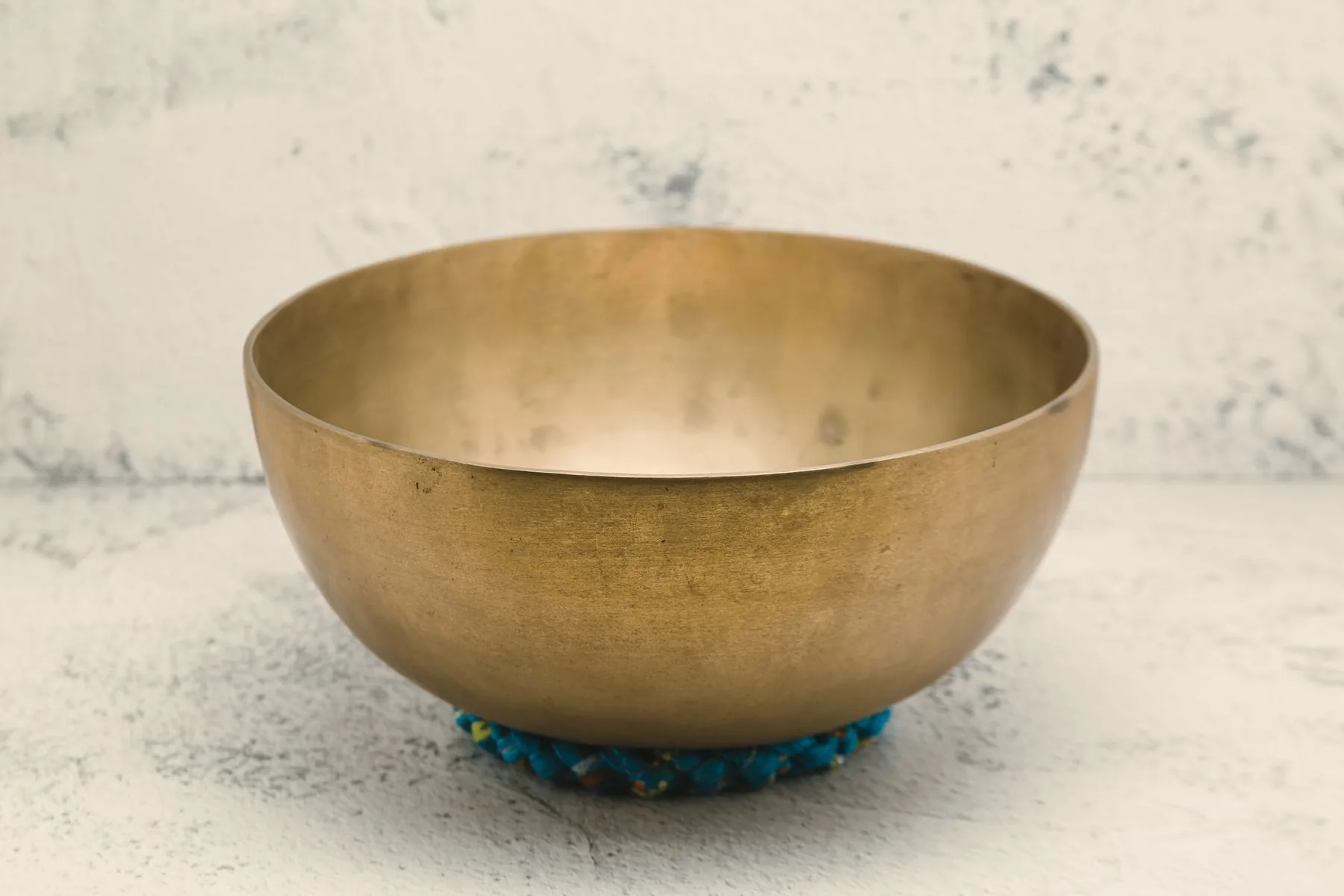
Authentic generally means hand-hammered and made from a coherent metal composition, not an esoteric promise. Handmade bowls show hammering marks and a natural patina.
The origin lies in Himalayan traditions: Tibet, Nepal, India and Bhutan. The bowl has shamanic roots (Bon), then Buddhist ones, and some regions such as Nepal preserve stricter know-how than industrial production.
Understanding what you are buying helps you distinguish a handmade metal bowl from a decorative object or a crystal bowl. For practical pointers, see this recognition guide: markers for recognizing a singing bowl.
Essential Criteria for Recognizing a Genuine Tibetan Bowl
The signs of authenticity are read as much by sight as by ear. A good alloy changes the way the instrument vibrates. The traditional so-called “7-metal” alloy (gold, silver, mercury, copper, iron, tin, lead) brings a more complex vibration and a richness of tone. A real alloy produces audible harmonics rather than a flat sound.
Alloy and Manufacturing
Look for signs of hammering: irregularities, strike marks and thickness that is not perfectly uniform. These signs of hand hammering indicate artisanal work, unlike mass-cast pieces.
Simple Sound Test
Lightly strike the rim: listen for sustain (resonance), pitch stability and harmonics. Rub the rim to check that the vibration “catches” without squeaking.
Size, Weight and Physical Parameters
Diameter and thickness influence frequency and power: larger often means lower-pitched. Weight, size and construction determine useful projection in sound therapy.
| Parameter | Effect on Sound | Visual Indicator |
|---|---|---|
| Alloy (7 metals) | Rich harmonics, full note | Patinated finish, variable shade |
| Hammering | Warmer resonance, complex timbre | Strike marks, uneven thickness |
| Diameter / thickness | Frequency, vibrational power | Weight proportional to size |
Require a detailed product sheet: material, weight, approximate frequency, real photos and audio/video files. Ask for traceability or a certificate to limit the risk of brass copies. With these markers, the next section compares purchase channels according to your standards.
Where to Buy a Genuine Tibetan Bowl: Criteria and Good Places to Shop
Comparing sales channels helps you decide according to your profile. Choosing the right place to buy determines the level of guarantee, the possibility of testing and the price.
- Specialized online shops: often the best compromise. Wide selection, educational product pages and audio files so you can listen before buying. Good choice-to-quality ratio.
- Physical stores: ideal for testing vibration and comparing several models. Prices are generally higher and stock is limited.
- Esoteric shops: limited selection. You may find interesting pieces, but sound quality is not always the priority.
General marketplaces: greater risk of counterfeits, vague descriptions and generic photos. Be cautious if the alloy is not specified.
Second-hand (Le Bon Coin, flea markets): rare good deals. Check oxidation and the lack of possible returns before completing the purchase.
Buying in Nepal / Kathmandu: huge choice on site, but vigilance is necessary when facing unverifiable stories and pushy sellers.
Why Nepalese Origin Is Often a Sign of Quality
Nepal is still often cited as a reliable reference point for anyone looking for traditional manufacturing. This reputation comes from workshops where knowledge is passed down from generation to generation.
On site, manufacturing often follows manual methods. Craftspeople spend more time on hammering, tuning the sound and final inspection. This care gives the acoustic result a better perceived quality.
In concrete terms, strict manufacturing means visible strike marks, coherent thickness and repeated sound tests. These steps influence tonal color and note sustain.
By contrast, a large share of production comes from India. There, the range runs from very artisanal to cast series. Manufacturing is more variable there, which is why you must judge by proof: sound, material and seller transparency.
On a good Nepalese example, you often find traces of manual work and a richer sound. After origin, you now need to spot the traps circulating on the French market.
Common Traps on the French Singing Bowl Market
The market is full of attractive offers that often hide industrial copies. Stay alert when stories replace proof.
Prices that are too low: if the price seems abnormally low for a piece described as handmade, treat it as a warning sign. Immediately ask for audio, video, weight and origin.
Doubtful Alloys and Their Consequences
A non-traditional alloy, such as pure brass, often gives a drier sound and shorter resonance. Undeclared metals affect harmonic richness and durability.
False Signs of Authenticity
Beware of uniform patinas, “sticker” engravings and untraceable certificates. Vague descriptions (“sacred metal”, “secret alloy”) are suspect if they do not state weight, diameter or thickness.
“For equal quality, prefer the seller who provides audio and accepts returns over the sensational story.”
- Anti-scam checklist: audio/video proof, real photos, measurements, return policy.
- Ignore unverifiable stories (meteorite, ancient monastery) without supporting evidence.
| Signal | What It Indicates | Risk | Recommended Action |
|---|---|---|---|
| Very low price | Industrial production | Poor sound, short lifespan | Ask for audio and manufacturing proof |
| Vague alloy | Undeclared metals | Altered resonance | Require composition and detailed photos |
| Perfect patina | Artificial finish | Looks only | Check hammering marks |
| Exotic storytelling | Marketing | False certificate | Ask for written traceability |
To better assess the price / quality ratio, browse this guide to prices by size and quality: price references.
Which Type of Tibetan Singing Bowl to Choose for Your Practice
Each practice requires different sound qualities: stability, depth or balance.
Meditation Bowl: Stable Note and Rich Harmonics
What you are looking for: a stable note, little wavering and present harmonics without harshness.
This kind of model supports concentration because the note remains steady. Fine-hammered Patan or Ulta Bathi variants illustrate this profile.
Therapeutic Bowl: Thick Wall and Deep Vibrations
For sound therapy, choose a thicker wall. It produces deeper vibrations and better projection.
Test the sensation by holding it; the vibration should be felt in the hand or forearm. Om Sajan-type examples are often suitable.
Versatile Bowl: A Good Compromise for Beginners
The versatile model sits in the middle: neither ultra-stable nor excessively powerful. It suits beginners and mixed practices.
Simple decision rule: 80% meditation → stability; mainly treatments → power; unsure → versatile, then specialize.
Once the type is chosen, the question of note, chakras and feeling becomes the final filter. To help refine your choice, consider choosing a bowl according to use and sound.
Note, Chakras and Feeling: How to Choose a Bowl That “Resonates” With You
The relationship between the note and your body often guides the choice more than theory.
Simple markers: here is a practical correspondence to help you orient yourself without turning it into an exact science.
| Note | Chakra | Perception |
|---|---|---|
| C | root | low, enveloping |
| D | sacral | warm, centered |
| E | solar plexus | direct, present |
| F | heart | open, soft |
| G | throat | clear, communicative |
| A / A# / B-flat | third eye | focused, penetrating |
| B | crown | high, ethereal |
Frequency influences the sensation: lower = more enveloping; higher = more focusing.
Prioritize the experience: first listen to the strike. Then make the instrument sing by rubbing it for a few seconds.
Quick protocol: strike, rub, then check that there is no squeaking or instability. If the sound tires you in 10-15 seconds, it is not the right companion, even if it matches the target chakra.
“The ear and the felt sensation always matter more than a theoretical correspondence.”
Tibetan Bowl Ranges and Finishes: What Really Changes
The idea of range covers finish, alloy and acoustic work – three decisive elements in the result.
Entry Level: Natural, Engraved, Shiny
Entry-level models have “natural”, engraved or very shiny finishes. Their alloy may vary, which influences sustain and harmonics.
Advantage: good value for money when starting out if the sound is clean.
High End: Patan, Ulta Bathi, Artist Pieces
Patan and Ulta Bathi bowls show more advanced hammering and a richer harmonic palette. Artist bowls offer a unique character and better precision between the stated note and the perceived note.
Special Bowls: Foot Baths and 7-Chakra Sets
Foot baths (40-60 cm) are designed for immersion. 7-chakra sets provide overall coherence to cover several notes.
- Practical advice: prefer one well-chosen piece over a standard set if your goal is daily meditation.
- After identifying the range, the next section gives price markers in France.
How Much Does a Genuine Tibetan Bowl Cost in France Today?
In practice, many merchants charge by the kilo: this is the most common rule. The final price therefore follows the real weight and chosen range more than size or decoration alone.
Factors that raise the price: range/finish, alloy richness, hammering quality, sound regularity, artisanal work and rarity of a series.
Price markers per kilo (examples): Shiny €226/kg; Natural €236/kg; Engraved €260/kg; Patan €330/kg; Om Sajan €370/kg; Ulta Bathi €390/kg; Full Moon €959/kg.
For a first purchase, aim for a budget that covers a documented instrument (audio/video, weight, diameter) rather than a too-cheap bargain with no proof.
Tip: compare pieces of similar weight, then choose by sound (resonance, harmonics) rather than looks. In France, favor a seller that clearly mentions the 14-day right of withdrawal to secure a distance purchase.
Focus on the Full Moon Tibetan Bowl: Myth, Manufacturing and Real Interest
Full Moon often refers to a series made during full-moon nights and presented as carrying a particular energy.
Clarification: for most craftspeople, this is a production ritual – nighttime hammering and sometimes ritual pauses – rather than a magical transformation of the alloy.
Materially, some so-called Full Moon examples show a richer alloy, often with more silver and tin. This can influence sound color.
In concrete terms, several Full Moon bowls are known for long resonance, clear vibration and bright harmonics. But that reputation varies greatly from one piece to another.
Measurable criteria to check before buying:
- listen to the stated note (audio/video files);
- check stability, sustain and harmonic richness;
- verify weight / diameter / thickness coherence.
Recommended uses: deep meditation, listening-focused yoga sessions, nighttime practices and sound baths where a more airy tone is desired.
Budget and buying advice: the positioning remains premium (e.g. €959/kg). Pay the Full Moon premium only if the instrument convinces you when listening or if you can try it in a shop.
| Claimed Benefit | Possible Impact | Recommended Check |
|---|---|---|
| Full-moon hammering | Ritual, marketing | Workshop photos, craftsperson testimony |
| Enriched alloy (Ag, Sn) | Brighter sound, clear harmonics | Composition, comparative audio |
| Long resonance | Ideal for nighttime meditation | Audio file, sustain length (s) |
Buying Online From France: Guarantees, Returns and Proof to Request
Distance selling mainly requires sound proof and a clear return policy.
Right of withdrawal: in France, you have 14 days to withdraw. Check who pays return shipping, refund timeframes and the condition required for a full refund.
Listening Before Buying
Require audio/video of the exact product. The displayed note must match the supplied sound file. Otherwise, each bowl may surprise you on delivery.
Reviews, Customer Service and Expertise
Favor shops that answer precisely about the alloy, manufacturing and usage choice (meditation, sound therapy). Detailed reviews about sound, delivery and returns are more useful than raw ratings.
- Safety checklist: 14-day right of withdrawal, who pays return shipping, condition required for refund.
- Ask for photos of the real product (engravings, hammering marks, weight/diameter).
- Accept tolerance on the note: musicality and stability come first.
| Signal | Check | Action |
|---|---|---|
| No audio | Unknown note | Ask for the file of the real product |
| Vague returns | Timeframe/who pays | Refuse without clear conditions |
| Slow service | Unanswered questions | Favor another seller |
Buying in a Store: How to Test a Tibetan Bowl Before Paying
In-store testing reveals tonal subtleties that no photo can show. Use the proximity to check its attack, sustain and harmonic quality.
On-Site Test Checklist
Proceed in this order:
- Light strike: listen to the attack and fundamental note.
- Rubbing the rim: check whether the resonance sets in without squeaking.
- Sustain duration: note how many seconds the sound persists.
- Harmonic quality: look for sound layers, not a simple “cling”.
Comparing Several Examples
Choose at least two bowls with the same diameter and the same size for comparison. You will quickly notice that manufacturing and alloy radically change sound color.
Test the hand feel or place the instrument on a cushion. The vibration should be comfortable, not aggressive or dizzying.
Decision protocol: eliminate those that squeak or saturate, keep 2-3 finalists, then repeat the tests. Watch out for store noise: ask for a quiet corner or come back another time to confirm your experience.
To refine your choice online afterward, also see the page for choosing a bowl according to use.
Essential Accessories for Getting the Best From Your Singing Bowl
The right accessories often turn the performance of a simple instrument into a rich sound experience.
Leather Mallet, Felt Mallet, Bare Wood: Which Sound for Which Use
Leather mallet: soft strike, round sound. It brings out the harmonics without squeaking. Ideal for meditation and calm sessions.
Felt mallet: broader attack and powerful vibration. Suitable for large models used in sound baths or guided relaxation.
Bare wooden stick: emphasizes high harmonics. More technical, it requires precision in the hand to avoid saturation.
Stabilizing Cushion and Stand: Comfort, Safety, Resonance Quality
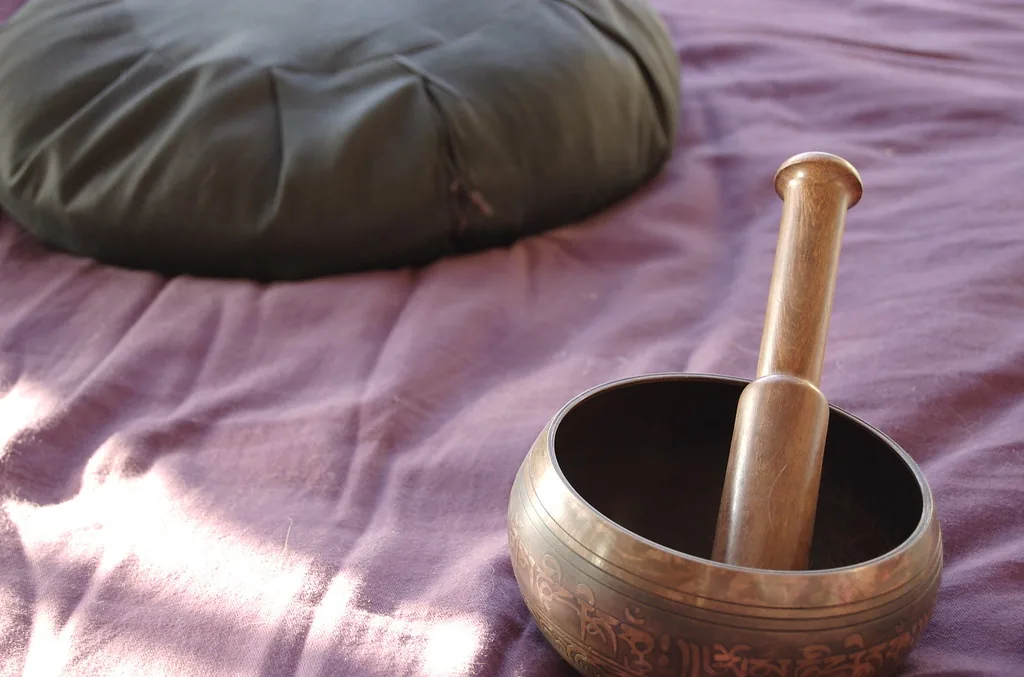
The cushion stabilizes the piece, protects the surface and prevents muffled vibrations. A fitted stand improves sustain and projection.
Practical advice: when starting out, choose a good cushion plus a suitable mallet rather than several gadgets. This choice optimizes use and vibration from the first practices.
| Accessory | Sound Effect | Recommended Use |
|---|---|---|
| Leather mallet | Round sound, present harmonics | Meditation, gentle rubbing |
| Felt mallet | Broad attack, strong projection | Sound baths, large models |
| Bare wooden stick | Bright harmonics | Technical playing, accentuation |
| Cushion/stand | Better resonance, stability | Safety, comfort of use |
Techniques for Making a Tibetan Bowl Sound and Sing
Two simple gestures are enough to master the sound: controlled striking and circular rubbing. They bring out the fundamental note and its harmonics without forcing.
Striking Technique: Revealing Harmonics Without Saturating
Aim for the rim with a firm but flexible movement. Strike lightly, then let the resonance unfold. Avoid repeating too quickly: several light strikes are better than one very strong strike.
Striking too hard crushes the sound and makes the harmonics less readable. To test, look for the “sweet spot” where the note lasts longest without distortion.
Rubbing Technique: Speed, Pressure and Anti-Squeak Gestures
Place the mallet below the rim, tilted at 20-30°. Move in a circle with regular speed and progressive pressure until the instrument catches.
If the sound squeaks, slow down or change the pressure. Switching to a leather mallet softens the sound color compared with wood.
- Gesture and frequency: slower speed favors low harmonics; faster speed emphasizes highs.
- Learning routine: 2 minutes a day to stabilize the hand and ear.

| Technique | Key Point | Sound Effect |
|---|---|---|
| Striking | Strike the rim, controlled gesture | Clear note, clean harmonics |
| Rubbing | Progressive pressure, circular path | Continuous sound, harmonic richness |
| Anti-squeak | Slow down, leather rather than wood | Softer sound, less saturation |
To go further, discover tutorials and audio files for learning to make your Tibetan bowl sing correctly.
Care and Storage: Preserving Quality, Alloy and Resonance
Preserving the sound of a piece requires simple but consistent gestures. Good care maintains sound quality and protects the metals that make up the instrument.
Gentle Cleaning and Protection Against Oxidation
Clean with a dry or slightly damp microfiber cloth after use. Avoid aggressive products that remove the patina or alter the alloy.
If the bowl has taken on moisture, dry it immediately. For cosmetic care, a thin layer of beeswax can protect without muffling the resonance.
Storage Conditions: Humidity, Heat, Transport
Store bowls in a dry, temperate place, away from direct sunlight. Extreme heat and humidity encourage corrosion and dull the piece.
During transport, use a padded cover or separate packaging. Avoid direct contact with hard objects (mallets, stones) that mark the rim and degrade the bowl.
Second-hand advice: inspect the inside, rim and outer face. Ask for close-up photos to spot pitting, impacts or traces of oxidation. Slight tarnishing is not always serious, but deep pitting can affect sound sustain.
Conclusion
Finally, a structured approach lets you obtain a reliable instrument suited to your practice.
First define the use (meditation or sound therapy), check the alloy, hammering and sound result, then choose the channel that offers guarantees (audio/video of the real product and right of return).
A good Tibetan bowl is recognized by its note and resonance, not by the marketing story. The price should follow the weight and range: a price that is too low is often synonymous with industrial production.
Finally, a good mallet and cushion transform the experience. Practice the striking and rubbing techniques regularly, then expand your collection according to your sound needs.