

Why talk about an instrument’s price in 2026? The market mixes sound objects with decorative items. You need concrete benchmarks to choose without making a mistake.
Goal of this guide: help you estimate authenticity, avoid commercial traps, and choose a suitable model according to your use.
We suggest using a cluster of clues: manufacturing method (hand-hammered vs cast), composition, provenance, condition, then validation by listening. A high price guarantees neither authenticity nor sound quality.
Marketing shortcuts such as “handmade” or “7 metals” will be unpacked with practical examples.
By the end, you will know how to define your budget and compare options for a thoughtful purchase. To go further, see our complete guide.
Understanding the Tibetan bowl market in France today
With such a vast offer, it has become difficult to distinguish an authentic instrument from exported series. The French market offers everything from decorative souvenirs to genuine sound tools. Price gaps are explained by marketing, materials, and workmanship.
Why Himalayan craftsmanship and industrial production coexist
Western demand since the 1960s has pushed the market toward industrialization. Traditional workshops coexist with standardized production lines. Export volume and the search for inexpensive pieces encourage catalogue batches.
Why a high price is not proof of quality
A high price can reflect storytelling: engravings, careful packaging, spiritual keywords. This increases appeal without improving sustain or timbre.
“A beautiful visual does not guarantee sustain or rich harmonics.”
Buying online vs in a shop: what changes
In a shop, buying gives you a chance to test the instrument: striking, rubbing, and feeling the vibrations. Online, ask for macro photos, measurements (weight/diameter), and recordings. Check the return policy before any purchase.
- Criteria for a good experience: specialist seller, clear technical answers, transparency about the alloy.
- Avoiding confusion: compare models with the same measurements and the same recordings.
| Context | What it changes for the buyer | Recommended action |
|---|---|---|
| Broad offer (souvenir → instrument) | Price and quality gaps | Ask for weight, diameter, macro photos |
| Industrialization and batches | Standardization, similar product sheets | Look for workshop proof or recordings |
| In-shop purchase | Direct sound test | Compare several models with the same mallet |
| Online purchase | Risk of photo/sound mismatch | Require returns, videos, and a warranty |
The next section turns this landscape into concrete benchmarks and easy-to-spot warning signs. For a practical supplement on costs and choices, see our dedicated page: how much a Tibetan bowl costs.
Price of a Tibetan Bowl: Benchmarks and Mistakes to Avoid
To navigate the 2026 market, you need clear price ranges and simple warning signs.

Realistic ranges by tier
Entry level: about €15-60. Often small diameters, basic accessories, and a risk of cast models. Suitable for discovery or light meditation.
Mid-range: about €100-400. Better quality control, longer sustain, and decent finishing. This is often the best value for a serious first purchase.
High end: over €500, up to €1,500+. Careful hammering, stable alloy, rich harmonics, and consistency for advanced sound therapy.
Rare pieces and offers that are too good to be true
Rare/antique pieces: several thousand euros. Their value comes from rarity, documented provenance, and unique sound.
Suspicious offers: a large model advertised as “handmade,” engraved, “7 metals,” and shipped from a warehouse at a rock-bottom price. That is economically incoherent: weight, labor, and finishing do not allow that price.
Comparing models
To compare bowls of similar diameter, always ask for the weight and an identical recording. At a similar diameter, a heavier model will often have more material and a richer timbre.
Simple rule: if the price seems impossible, the alloy or manufacturing method has probably been simplified; the sound will confirm it. To choose according to your needs, see our practical guide: which bowl to choose for your needs.
What really changes the price: size, weight, diameter, and thickness
When finishing and alloy are comparable, the cost almost always follows the grams of metal. The diameter/thickness/weight trio explains most price differences. The more material there is, the more the price rises, at comparable finishing quality.
Why weight dominates
Weight reflects the amount of metal. At the same diameter, a thicker object weighs more and requires more alloy, work, and energy. These elements mechanically justify the value.
Small vs large: use and vibrations
Small models produce higher notes. They suit individual practice and quick starts.
Large models offer broader vibrations and longer sustain. They serve sound therapy and group work better.
| Criterion | Impact | Practical advice |
|---|---|---|
| Weight | Price and harmonic richness | Compare weight + diameter |
| Diameter | Approximate note | Choose according to use (solo vs group) |
| Thickness | Vibration stability | Favor balanced models |
When a small bowl can cost more
A small model can cost more if it is very thick, hammered for a long time, or made from a superior alloy. Do not judge by size alone: weigh it and listen.
Final advice: choose 2-3 sizes that match your real use and space. Size alone is not enough: the manufacturing method also strongly affects the bill.
Manufacturing: hand-hammered bowl or industrial cast bowl?
The artisan’s gesture leaves traces: manufacturing directly influences the sound and how well the sustain holds.
Process and cost
A hand-hammered bowl requires heating, repeated blows, and thickness control. This work takes time and justifies a higher price.
Casting or machining standardizes the shape with less effort. The result is fast and uniform.
The “30-second” visual checklist
- Coherent irregularities and micro tool marks on the surface.
- A slightly asymmetrical rim rather than a perfectly circular one.
- A less mirror-like surface, with a more matte finish on genuinely hammered pieces.
Signs of an industrial model
Perfect circularity, uniform thickness, and an even mirror finish often indicate a serial process.
Spotting a simulated hammered effect
Tilt the object under raking light: a pattern that is too regular reveals embossing or a printed effect.
| Observation | Artisanal | Industrial |
|---|---|---|
| Surface | Irregular, micro marks | Mirror-like, smooth |
| Shape | Slightly asymmetrical | Perfect circularity |
| Sound | Rich harmonics, long sustain | More neutral, short sustain |
Tip: compare 3-5 instruments from the same seller. Genuine handmade traces are unique and quickly noticeable.
After manufacturing, the metal composition will determine timbre and durability.
Composition and metals: bronze, copper, tin… and the limits of “7 metals”
Understanding composition helps you predict timbre, vibration stability, and the instrument’s longevity.
The most common reference is bronze: copper + tin. This alloy often favors long sustain and rich harmonics. In practice, a well-balanced bronze will give a warm, stable timbre.
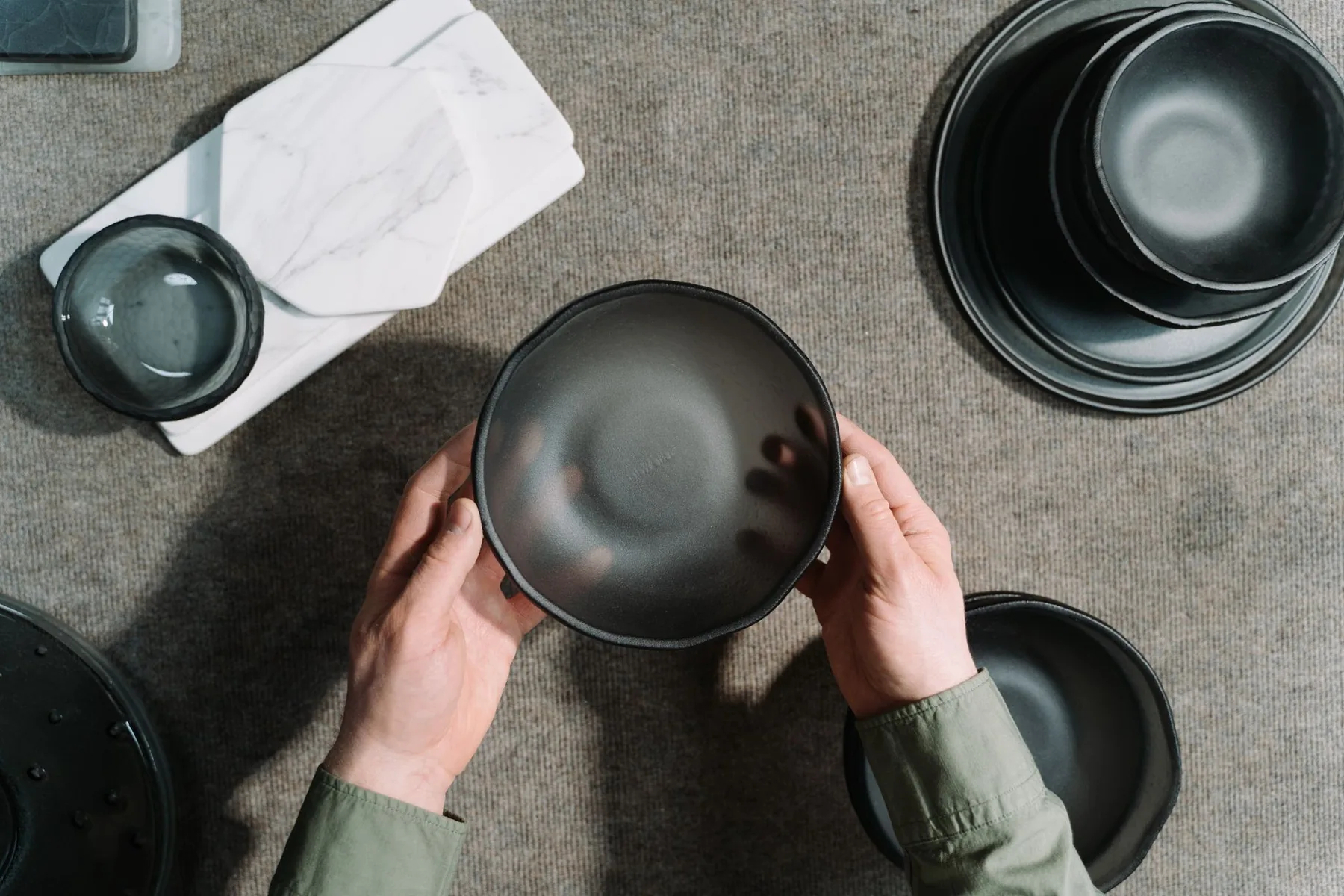
Visually, bronze looks browner/warmer, while brass (copper + zinc) tends toward golden yellow. Warning: patina, polishing, or varnish can deceive the eye.
“The phrase “7 metals” often remains a marketing argument: it is not a certificate of quality.”
Cheap alloys, such as steel or unclear mixtures, produce a drier sound, short sustain, and sometimes parasitic noises. Their durability is lower.
- Ask for the stated composition and proof consistent with the provenance.
- Always validate by a sound test: the ear remains the final judge.
If the seller dodges questions about composition, treat the price as risky. Composition alone is not enough: complete traceability will determine the true value.
Provenance, traceability, and seller: what does, or does not, justify value
A documented origin – workshop, valley, method – brings tangible guarantees for the purchase.
What counts as evidence: the name of the workshop or cooperative, a precise city or region, manufacturing method (hammered/handmade vs cast), and visible proof (workshop photos, recordings, coherent story).

Simple questions to ask before buying
- Is the model hand-hammered or industrially cast?
- Who made the piece, and where?
- How long has the seller worked with this workshop?
- Can you provide close-ups of the rim, base, and walls?
Warning signs on the product sheet
Beware of listings with a single generic image, no macro shot, vague descriptions (“ancestral,” “temple”), or the same photos copied across several models. A risky example: the same perfect engraving found at several sellers, probably indicating an industrial batch.
“Seller transparency greatly reduces the risk of a bad surprise on delivery.”
Practical strategy: favor a specialist shop that documents each piece and answers technical criteria clearly. Good traceability strengthens value and makes the sound test that follows easier.
To deepen your choices before buying, see our how to choose guide.
Testing sound and vibrations before buying: the protocol that prevents regrets
A properly conducted sound test prevents most disappointments after purchase. In a shop, follow a repeatable protocol: same place, same mallet, same intensity. Compare three singing bowls of similar size to obtain reliable criteria.
Practical protocol
Place the instrument on your palm or on a suitable cushion. Strike it first with a wooden mallet to assess the attack.
Then rub the rim with felt or suede to make it sing. Repeat the same gesture on each tested piece.
What to listen for and feel
Listen for a clean attack, the rise into the note, and multiple harmonics. Good sustain should decay evenly, without rattling or abrupt cutoff.
Feel the vibrations: they should be stable in the palm or on the cushion. Avoid parasitic buzzing or rough trembling.
Accessories and final check
Bring or ask for a wooden mallet, felt/suede, and a cushion suited to the diameter. A spectrum-analysis app can make the partials more objective.
Practical advice: if you buy online, require a strike + friction video of the exact model before buying and confirm a clear return policy.
Total budget: accessories, finishes, delivery, and consumer protections in France/EU
The final cost often exceeds the displayed price. To estimate your budget properly, add shipping costs, accessories, and possible returns. Do not forget the 2-year legal guarantee in France/EU and the 14-day right of withdrawal.
Accessories to plan for
Suitable mallet: wood for small models, felt or suede for larger sizes.
Stable cushion, carrying bag, and maintenance kit to preserve the metal.
Finishes and extra costs
Polished: a simple polish is quick. Natural patina requires a bath and work time.
Etched engravings require lengthy work: expect a real surcharge for complex designs.
If fine engraving + large diameter + “handmade” mention still comes cheap, question the real quality.
Online buying and marketplaces
Before any purchase, check the return policy: who pays shipping, what condition the object must be returned in, and what deadlines apply.
On marketplaces, be wary of generic listings and counterfeits. Ask for macro photos, a video of the exact model, and weight/diameter to secure the value-for-money ratio.
| Item | Impact | Benchmark |
|---|---|---|
| Accessories | +10-30% | Mallet, cushion, bag |
| Finish/engravings | +15-50% | Patina or etching = work time |
| Delivery/return | Variable | Check the terms before confirming |
“Pay for what matters: sound, alloy, and traceability, not marketing words.”
Conclusion
The buying decision should first answer your practice, then be verified by listening.
Define the use (meditation, sound therapy, decoration), sort models by manufacturing method, composition, and provenance, then test timbre and vibrations.
Actionable mini-checklist: check size, weight, and diameter. Ask for macro photos of the rim, base, and walls. Require a strike + friction video of the exact model and a clear return policy.
Sound-quality criteria: clean attack, rise into singing tone, audible harmonics, stable vibrations, and no buzzing.
Favor a progressive purchase: start with a coherent model (practical size and good sustain), then add to it according to your use. Hand hammering and a documented alloy strengthen value when they are proven.
To go further on sizes and quality, see our guide by sizes and qualities. In practice, start gently: low volume, short sessions, and stop if you feel any hearing discomfort.