
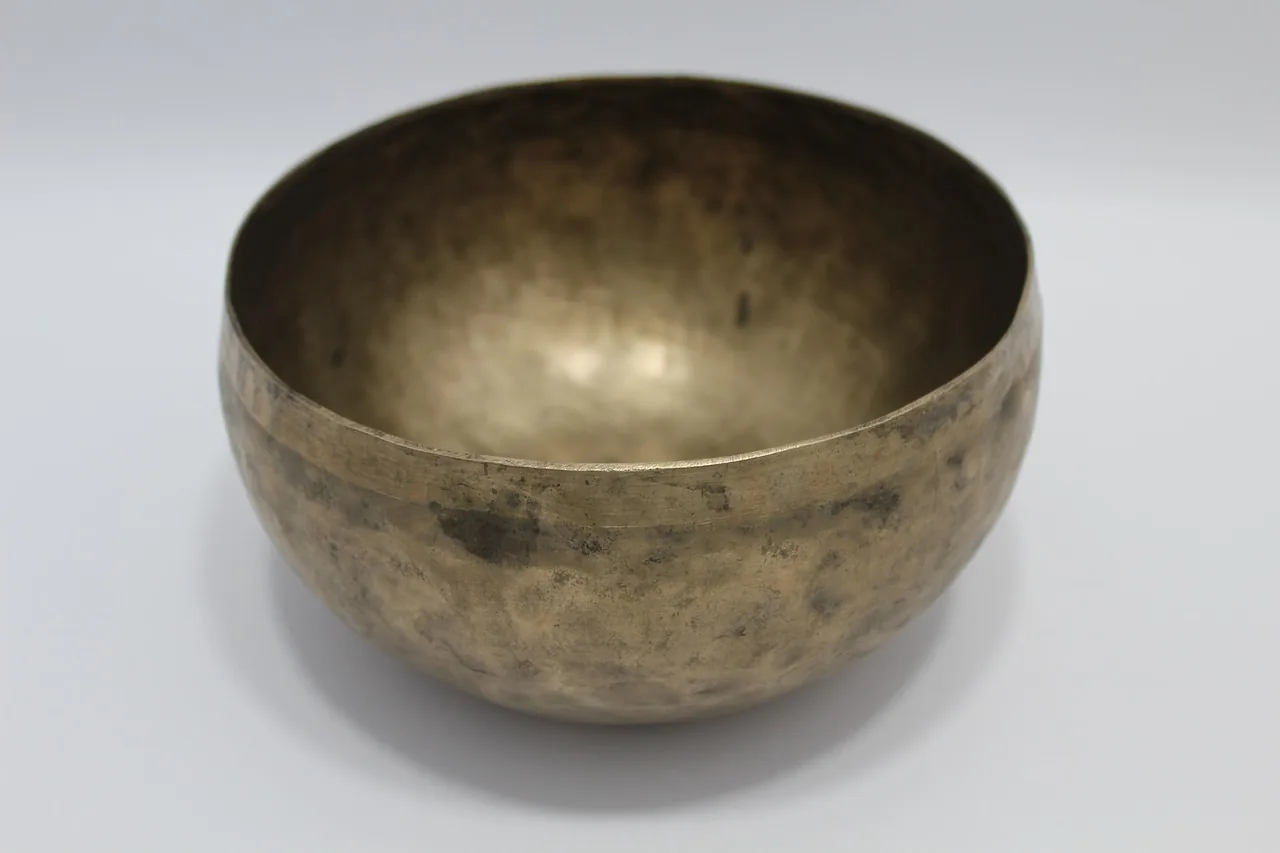
This guide explains how to place a singing instrument on the abdomen during a sound massage, with priority given to safety, comfort, and adaptation.
Objective: aim for relaxation and grounding, without making medical promises. We detail precautions related to weight, stability, and volume to limit excessive pressure.
We answer two central questions: when should you refrain from doing it (precautionary principle, contraindications), and how should the sound object be placed (support, intensity, duration).
This text applies to practices in spas, private practices, workshops, or at home, with different levels of supervision. Sensations vary depending on experience and sensitivity; always listen to the body’s signals.
To explore contraindications further, see this detailed guide.
Why place a singing bowl on the stomach during a sound massage
Placing a singing instrument at abdominal level is mainly intended to amplify the feeling of grounding and release. In France, sound massage and sound therapy are offered in spas, private practices, or group workshops with realistic goals: relaxation, grounding, and support for meditation.
Sound massage and realistic goals
Sound massage consists of an enveloping field of sounds produced by instruments, including Tibetan singing bowls, to help reach a calm state. Participants may expect better relaxation, reduced stress, and sometimes self-reported better sleep.
What vibrations on the body are meant to do
Vibrations provide a direct tactile perception. They encourage the diaphragm to release, support abdominal breathing, and create a feeling of grounding.
The “chakra” approach: belief vs. evidence
Some schools associate this area with the sacral chakra. This is a symbolic interpretation that may be useful for the experience, but scientific evidence is lacking. No singing bowl replaces medical care.
“The value lies in offering a state of muscular relaxation and a subjective slowing of mental activity.”
Understanding the effect of sounds and vibrations on the stomach
The vibrations emitted by a bowl act differently depending on whether they travel through the air or through direct contact. Waves spread through the air and provide diffuse immersion. With contact, the perception becomes more physical and localized.
Striking vs. rubbing: two sensations
Striking produces short impulses. A light strike gives a clear, punctual peak.
Rubbing creates a continuous sound, rich in harmonics. If poorly controlled, it can become shrill.
Frequency, volume, and exposure time
Three variables shape the sensation: frequency (low or high), volume (intensity), and exposure time (cumulative duration).
A low sound penetrates differently from a high sound. High volume or a long duration increases sensory load.
Sound bath around the body or direct contact
A sound bath with several bowls encourages overall immersion. Direct contact accentuates vibrations in the flesh.
Practical rule: favor several gentle, spaced-out stimuli rather than one powerful sound. For precautions, see the contraindications guide.
Tibetan singing bowl on the stomach: when to avoid it and how to place it
Certain situations require adapting the practice to protect the person and avoid any complication. The precautionary principle applies whenever weight, vibrations, or sound volume are involved.
Contraindications and cases to adapt
Always mention medical history, hypersensitivity, or heavy treatment. Here are the cases that require adapting the session:
- Pregnancy: avoid direct pressure (pressure + vibrations). Prefer a gentle sound bath at a distance.
- Epilepsy: ask for medical advice; work very progressively, with low volume and long pauses.
- Implanted devices: pacemakers, cochlear implants, pumps, or stimulators require medical approval.
- Auditory sensitivity: avoid strikes close to the head and high volumes (>80 dB).
- Metal allergies, eczema, wounds: place clothing or a towel between the bowl and the skin to avoid direct contact.
- Unexplained abdominal pain, post-operative period, or fragility: refrain and refer the person for medical advice.
Operational rule: when in doubt, choose the gentlest version (distance + low intensity) or stop the session.
Preparing the person and the setting for safe placement
Preparing the session begins with a clear conversation about expectations and limits.
Consent and preliminary discussion
Before any handling, ask the person about their history: hearing, migraines, epilepsy, implants, and painful areas.
Also ask what sound comfort level they expect. Obtain explicit consent for contact and remind them that they can stop or request an adjustment at any time.
Positioning and posture
The recommended position is lying on the back. It stabilizes the body and limits involuntary movements.
A cushion under the knees improves relaxation and makes it easier to keep the support in place.
Comfort, hygiene, and environment
Keep the room quiet, with soft lighting and the phone turned off. Offer water before and after the session.
Warm the instrument to room temperature or place a textile between it and the body if the metal feels cold. Check that it is clean and dry.
| Option | Contact | Key advantage | Impact on vibrations |
|---|---|---|---|
| Bare skin | Direct | Maximum perception | Strong |
| Thin towel | Indirect | Hygienic barrier | Moderate |
| Thick clothing | Indirect | Thermal comfort | Reduced |
Respecting continuous consent ensures a safe, well-adjusted experience.
How to place a Tibetan singing bowl on the stomach without discomfort or risk
Before any placement, start by checking the stability of the surface and the person’s calmness.
Rule no. 1 — stability. Choose a motionless base: a stable low table or the floor covered with a mat. A bowl that slips breaks the moment of relaxation and can cause injury.
Recommended supports
Use a “donut” cushion to let the base resonate. A folded towel offers a practical solution. Thick clothing adds comfort; bare skin transmits more vibration.
Step-by-step procedure
- Check the stability of the support.
- Place the bowl flat, centered, without forcing pressure.
- Make a micro-strike to test the sound and tolerance.
- Scan for comfort: free breathing, neutral pressure, no pain.
Managing weight and support
Choose a small to medium bowl to reduce pressure on the abdomen. If necessary, hold the instrument lightly with your hand, as minimally as possible, to stabilize it without choking the sound.
Safe method: if there is instability, remove the contact and switch to a sound bath around the body.
Playing techniques suited to a bowl placed on the stomach
The practitioner’s gesture must prioritize listening and gradual progression. Use a gentle method to favor comfort and avoid overstimulation.
Light strike: angle, rhythm, and pauses
Find an angle of about 45° and aim near the rim for a clear impulse. Strike gently, then let the sound fade before intervening again.
Insert regular pauses to avoid the accumulation of vibrations. Start with very low volume and increase gradually according to the person’s reaction.
Rubbing: constant pressure and steady movement
To obtain a singing tone, maintain constant pressure with the hand and make a steady circular movement. If the sound becomes shrill, stop immediately.
Modulating in real time according to sensations
Ask for frequent feedback: “too loud? too present?” Adjust volume, speed, or duration without waiting.
- Simple corrections: if it rattles, slow down; if it is too high-pitched, lighten the pressure; if it is too loud, reduce the volume.
- Strike = short impulse; rubbing = continuous vibration, often felt more in the flesh.
- Place the hand to stabilize without gripping; avoid any parasitic contact that would choke the sound.
Practical rule: the right intensity remains breathable and pleasant, not spectacular.
Duration, frequency, and warning signs during the session
Planning the time of a session helps prevent overstimulation and maximize the relaxing effect.
Simple guidelines: 5 to 10 minutes of preparation to test tolerance, a 30 to 45 minute core session depending on the setting, then 5 to 15 minutes of quiet integration.
Expected effects and frequency
Reported effects include relaxation, stress reduction, and sometimes sleep support after several sessions. Moderate, regular sessions are preferable to one long exposure.
Signs of overstimulation
- Pressure or pain in the head
- Headaches, ringing or buzzing
- Unusual fatigue, nervousness, or abdominal discomfort
What to do if something feels wrong
- Stop immediately and move the sound source away.
- Reduce the volume, breathe slowly, and hydrate.
- Note the sensations after the session to adjust the next practice.
If doubt persists, switch to a sound bath at a distance or consult a healthcare professional.
| Phase | Duration | Objective | Cases to monitor |
|---|---|---|---|
| Preparation | 5–10 min | Test comfort and volume | Discomfort, fear |
| Core | 30–45 min | Stable rhythm, controlled exposure | Vibration accumulation |
| Integration | 5–15 min | Let the nervous system settle | Excessive sleepiness |
Choosing the right bowl and accessories for use on the stomach
Choosing the instrument and its accessories often determines the quality of the tactile and sound experience. Favor a small or medium Tibetan singing bowl: reduced weight, better comfort, and greater stability.
Size, weight, resonance, and sustain: test how the sound holds when you receive it. A light strike should offer balanced harmonics.
Practical criterion: the note should hold for about 30 to 45 seconds to indicate good resonance without striking hard.
Alloy and sensitivities: common alloys are bronze (copper + tin) or traditional compositions known as “seven metals”.
Watch for skin reactions: if the skin is reactive, place a textile between the bowl and the body or prefer an approach without direct contact.
Striker, mallet, and cushion: wood gives a lively attack; felt gives a rounder tone. A donut cushion stabilizes without choking the vibration.
A good instrument/mallet pairing makes it possible to obtain a noticeable perception at moderate volume, which is useful close to the body.
Practical alternative: the suction cup offers a way to work on a targeted area without metal-to-skin contact. It is useful in cases of allergy or during a post-operative period.
Care: avoid prolonged humidity, wipe after contact with water, and dry carefully to preserve the patina and sound.
Conclusion
: this instrument placed on the abdomen can offer deep relaxation and grounding if stability, measured pressure, moderate volume, and controlled duration are respected. The vibrations must remain comfortable to preserve the intended effect.
Precautionary principle: some cases require avoiding direct contact (pregnancy, unexplained pain, post-operative period) or asking for medical advice (epilepsy, implants). Consent and safety always come first.
Listen to sensations: some people prefer contact, while others choose a distant sound bath. Tolerance can vary from day to day.
Quick placement: stable support (cushion, towel, clothing), suitable bowl, free breathing, and a micro sound test before insisting. Play lightly: gentle strikes, steady rubbing, pauses, and continuous modulation.
Warning signs — pressure in the head, headaches, ringing or buzzing, unusual fatigue —: stop, move the source away, breathe, hydrate, and review the next session. Important reminder: this practice can complement medical care but does not replace it. If contact is uncomfortable, prefer distance or a suction cup. Choose a pleasant note, a suitable mallet, and protect the skin if necessary.