
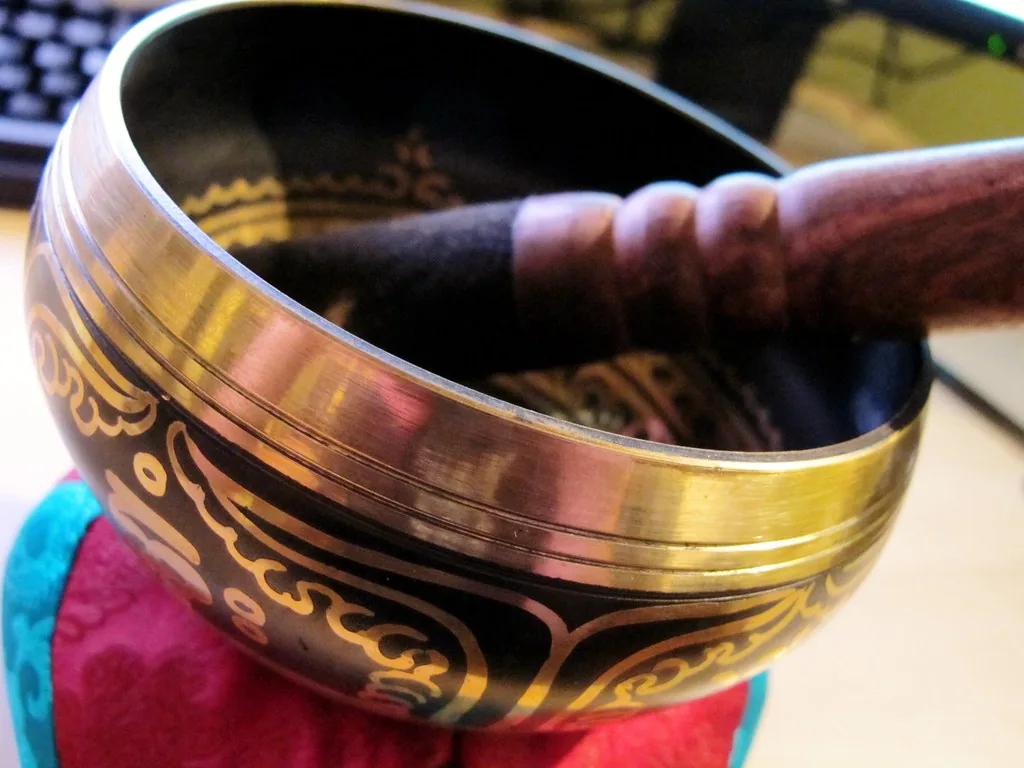
Practical guide to building a session, from choosing equipment to guiding the experience. This text offers clear frameworks for grounding, vibrational baths, seven bowls, and sound massage.
You will find concrete reference points for adapting the experience to a group or to one person. Beginning professionals, yoga teachers, and private individuals will find simple structures they can put into practice.
The expected benefits are relaxation, mental calm, and better body awareness, without promising medical results. The progression follows a logical thread: intention → vibrational build-up → peaks → silences → integration.
This guide draws on current practices and uses reported from the Himalayas and monasteries. It also includes safety precautions and comfort tips for a responsible session.
To learn more and consult practical information, follow this link.
Understanding the sound journey with Tibetan singing bowls and its benefits for body and mind
Receiving continuous sounds and guided silences often helps the mind slow down and the body relax. This practice takes the form of a meditation session in which the participant follows a sound progression. The main aim remains letting go and exploring a state of deep relaxation.
Deep relaxation, mental calm, and letting go
The repetition of strikes and the steadiness of the tempo help reduce rumination. A slow rhythm helps the mind move out of active mode and settle into calmer inner listening.
Sound massage: how vibrations travel through the body
Vibrations travel through the whole body, which is highly receptive because it is mostly composed of water. People often speak of a “massage” because the sensation can move through muscles and tissues.
Energy, circulation, and harmonization
Practitioners and facilitators describe a feeling of overall rebalancing and perceived support for blood and lymphatic circulation. These sensations remain subjective and do not replace medical advice.
Origins and historical uses
“First used as ritual bowls in the Himalayas, these instruments were incorporated by monks into their meditative practices.”
- Traditional use: rituals, offerings, and monastic chants.
- Modern use: relaxation, yoga, and meditation in the West since the twentieth century.
To take part in a healing and meditation circle, consult local offerings and try this practice safely.
Preparing a sound relaxation session: bowls, instruments, space, and intention
To make a session successful, preparing the space and equipment makes all the difference. Choose your bowls according to sustain, harmonic richness, and how easily they can be made to “sing.” Each instrument remains unique: trust your ear more than a product sheet.
Build a coherent set according to your goal: low notes for grounding, midrange tones for soothing, and higher tones for clarity. Combine other instruments: chimes or koshis for texture, a gong for depth, an ocean drum or shruti box for breath.
Set out mats, cushions, and blankets, switch off phones, and check the room temperature. Keep the bowls within reach so you can play without disturbing participants, and provide support under the knees if needed.
Follow safety rules: ask for consent before placing a bowl on the body, and replace that practice with playing nearby if someone has pain or hypersensitivity.
Open the session with a short check-in on the person’s current state, define a simple intention, then guide an entry into meditation (breathing, body scan). Announce the total duration, playing time, and integration time to reassure participants.
To enrich a contemporary practice, consider incorporating a gong bath when the space and number of participants allow it.
Sound journey with Tibetan singing bowls: sequence ideas
Use a flexible format (10–60 minutes) to guide listening and calm step by step. Always begin with a clear intention and a breathing setup.
Grounding sequence
2–5 minutes of guided breathing, then a few slow strikes on a low-pitched bowl. Gradually increase the sound density without startling the body.
“Seven bowls” sequence
Place each instrument according to its note and chakra, or play nearby if placing the bowl is not desired. Prioritize vibrational coherence rather than performance.
Sound bath and sound massage
Move around the participants to create a sound envelope. Vary distance and intensity. For a targeted massage, bring a bowl closer to an area (shoulders, abdomen) and monitor comfort.
Release, integration, and closing
Offer a controlled rise in intensity, followed by spaces of silence. Then slow down, return to delicate sounds, and finish with a few chimes, a moment of gratitude, and transition instructions.
| Phase | Duration | Goal | Adaptation |
|---|---|---|---|
| Grounding | 2–5 min | Regulate breathing | 1 low-pitched bowl |
| Seven notes | 10–20 min | Chakra-based harmonization | Place on the body or play at a distance |
| Bath / massage | 10–25 min | Surround and transmit vibrations | Vary distance and instruments |
| Integration & closing | 5–10 min | Return to calm | Silences and gentle instructions |
Practical tip: adapt duration and intensity according to the number of instruments and the participants’ level of experience. For more technical details, consult this resource.
Conclusion
In summary
A well-built session relies on a clear intention, a prepared space, and a progression that respects the rhythm of the body and mind.
The reported benefits include deep relaxation, letting go, calm, and a feeling of overall harmonization. Always listen to your limits and adapt the intensity and duration.
Listening and technique complement each other: instrument choice matters, but presence, silence, and the coherence of the flow often make the real difference in the experience.
Start simply (grounding, bath, then integration), note what you feel, hydrate, and return slowly. To learn more and access additional information, trainings, or reading, this resource offers useful leads.