
Goal: answer the question clearly and provide practical reference points.
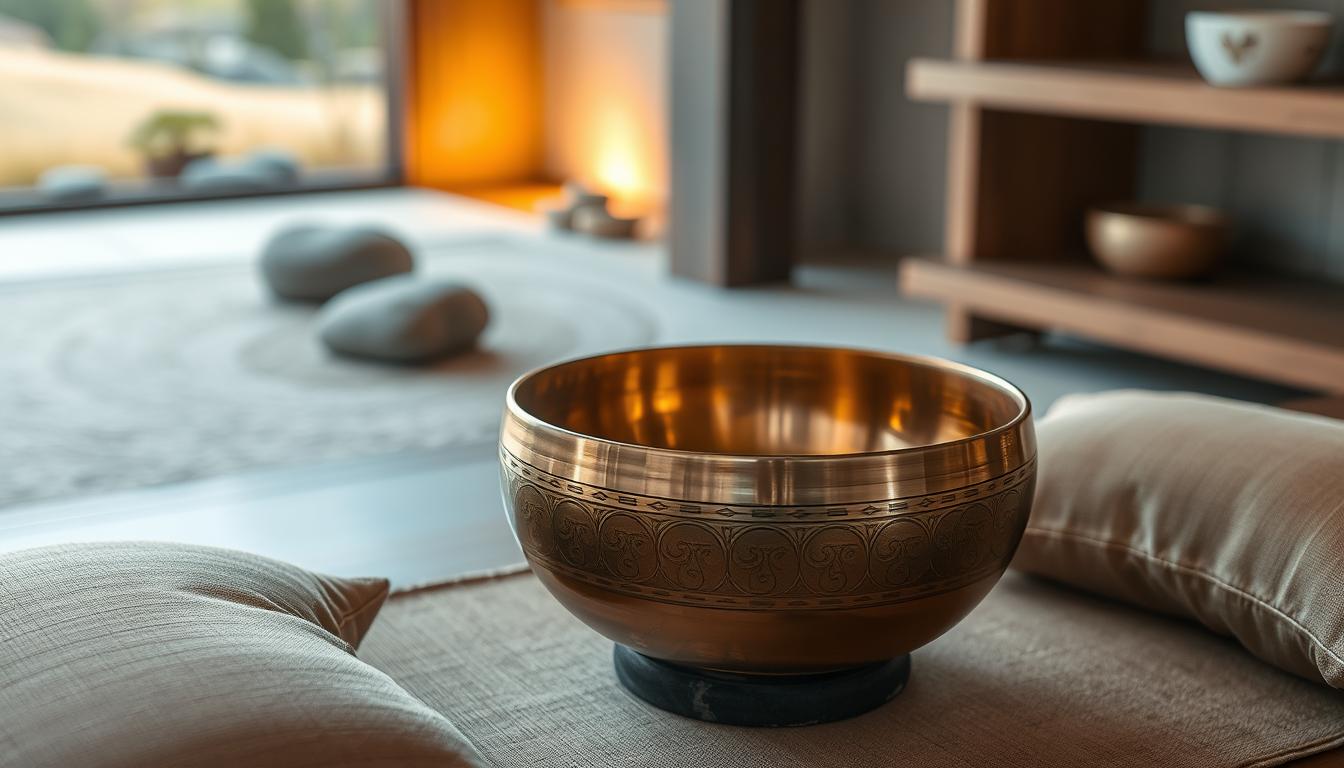
What is it? It is a sound instrument used in wellness practices. Beginners often wonder about the risks linked to volume, duration, and medical claims.
This article takes a factual, prevention-focused approach. It explains the three safety areas that guide this guide:
– sounds: volume and frequencies.
– vibrations: contact, pressure, and duration.
– composition: metals, allergies, and traceability.
“How-To” reading frame: learn how to use a bowl without hurting yourself, recognize warning signs, and know when to consult a healthcare professional.
Golden rule: this tool does not replace medical follow-up. Wellness use should remain complementary.
This text offers concrete reference points: decibel levels, simple settings, at-risk profiles, and buying advice to limit risks.
Why ask about the safety of Tibetan singing bowls today?
When a wellness instrument becomes widely used, understanding its risks and limits becomes essential.
In France, sound instruments are now common in yoga studios, sound baths, and meditation spaces. Singing bowls also support relaxation at home. This spread makes the safety question more pressing.
Popularity increases use errors: playing too loudly, staying too close to the ears, extending a session without breaks, or placing the bowl in contact with the body without considering a health condition. Sounds and vibrations can become uncomfortable if the setting is unsuitable.
- Start by listening from a distance, then increase the duration.
- Avoid aggressive strikes and strong reverberation in a closed room.
- Choose an instrument suited to the intended use.
| Situation | Risk | Recommended action |
|---|---|---|
| Long session without a break | Hearing fatigue | Limit to 15-20 min, take breaks |
| Direct contact with the body | Discomfort, irritation | Test without contact first, consult if pain occurs |
| Loud use in a small room | Excessive reverberation | Reduce the volume, open up the space |
Note: the word “danger” does not mean the instrument should not be used. Above all, it highlights the value of prevention, moderation, and a progressive practice. By keeping a critical view, you can distinguish benefits for stress management from unsupported therapeutic promises.
Tibetan Singing Bowl: danger or safe practice? What current knowledge says
State of knowledge: the sound instrument is generally harmless if simple limits are respected.
A generally harmless object… as long as it is used within reasonable limits
Research shows few serious adverse effects. The most consistent benefits relate to wellness: relaxation and centering for some people.
Evidence remains limited for precise contraindications. In practice, risks may be linked to volume, duration, and direct contact.
The real risk: overestimating its effects and delaying advice from a healthcare professional
No solid evidence shows that this instrument treats serious diseases. The main risk is replacing a medical consultation with belief in a curative effect.
- Example of misuse: believing that a single sound is enough to treat a chronic disease.
- Simple rule: use the tool as a complement, never as a substitute.
- If symptoms persist, consult a healthcare professional without delay.
| State of knowledge | Conclusion | Recommended action |
|---|---|---|
| Recreational use studied | Relaxing effects are likely | Use for relaxation |
| No therapeutic proof | No substitute for care | Consult a professional if needed |
| Risks are limited, but present | Rare cases of discomfort | Adjust volume and duration |
Practical view: stay critical, respect limits, and seek medical advice if unusual symptoms appear.
Understanding the hearing risk linked to sounds and volume
Understanding the numbers helps you manage a session better. A large bowl can reach around 80-85 dB. This level is comparable to the noise of a busy street and justifies controlling distance, volume, and exposure time.
When the risk increases
Hearing risk rises if the instrument is played near the face, during a sound massage with the device close to the ears, in a small reverberant room, or during a sequence of strong strikes.
How to identify an aggressive sound
A sound becomes aggressive if high frequencies dominate, if piercing harmonics appear, or if you feel pressure in your head. These signs should lead you to reduce the intensity.
Warning signs of overload to watch for
Monitor the effects: hearing fatigue, temporary ringing in the ears (tinnitus), headaches, and irritability to noise are warning signs. If these problems persist, stop the session and consult a professional.
Simple steps to protect your hearing
- Increase the distance between the instrument and the ears.
- Reduce striking force and favor gentle rubbing with the mallet.
- Take regular breaks and limit the session to progressive durations.
- Ventilate and reduce reverberation by moving away from reflective surfaces.
| Context | Main risk | Recommended action |
|---|---|---|
| Close to the ears | Temporary hearing loss, tinnitus | Lower the volume, keep some distance |
| Small reverberant room | Amplification of high frequencies | Open up the space, reduce strikes |
| Sequence of strong strikes | Hearing fatigue, headaches | Space out strikes, choose gentle rubbing |
For people who are already sensitive from a hearing standpoint, adopt a slow increase in duration and always test at low volume. For more safety reference points, consult reliable sources before increasing the intensity.
Vibrations and contact with the body: when the practice can become uncomfortable
Vibrations applied directly to the body clearly change how a sound session is perceived. It is important to distinguish listening from a distance, where the sound remains mainly auditory, from sound massage, where resonance becomes tactile.
Difference between listening and sound massage
When listening, sound travels through the air and remains gentle. In direct contact, vibration becomes localized and the body feels it as pressure. This amplification can be beneficial, but it can be too intense for some people.
Back area and caution
For the back, localized resonance can affect fragile areas. If you have back pain, avoid strong intensities and test gradually. Never let a session continue if discomfort increases.
Intensity and duration: a simple protocol
Start with a light, short vibration, then increase in stages. Watch for signs of excess: agitation, muscle tension, deep discomfort, or the feeling that “it vibrates too much.” If the effect becomes counterproductive, return to listening from a distance and reduce the duration.
Composition of singing bowls: metals, allergies, and alternatives
The legend of the “seven metals” often coexists with a simpler industrial reality. On today’s market, most instruments mainly contain copper and tin, sometimes at more than 90%.
Traces of lead or mercury may appear depending on manufacturing. That is why traceability and the product sheet are essential for users’ health.
Allergies and practical steps
Some people develop contact reactions: redness, itching, or irritation after handling. These signs should lead you to stop contact, wash the area, and consult if it persists.
To limit effects, use a cushion, a thin textile barrier, or avoid placing the bowl directly on the skin if you are sensitive.
Recommended alternatives
Two reassuring options: choose a simple bronze alloy (mainly copper + tin) or a quartz crystal instrument, with no metal alloy. Crystal remains fragile and requires precautions during use.
| Option | Composition | Advantage |
|---|---|---|
| Common alloy | Copper + tin | Warm sound, accessible price |
| Simple bronze | Mostly copper + tin | Easier traceability, fewer varieties of metals |
| Quartz (crystal) | Silica (no metals) | No metal-related contact allergies, different sound |
To learn more about seven-metal composition and precautions, always check the seller’s origin information and certifications.
Contraindications and precautions: profiles that should seek medical advice
Some people should check their situation before exposing their body to sounds and vibrations. A simple check can turn potential wellness into a safer practice.
Profiles that should consult
- Epilepsy: reported cases remain rare, but the combination of sounds and vibrations can trigger seizures in some people. Consulting a healthcare professional before any session is strongly recommended.
- Pregnancy: as a precaution, aim for a distance of about 1 m, avoid placing the bowl on the abdomen, and limit strong vibrations near the lower back. Ask a healthcare professional for advice.
- Anticoagulant treatment, heart disease, advanced diabetes: direct vibrations may increase the risk of bruising or physiological stress. Consult a professional if you have these conditions.
- Pacemaker, cochlear implant, metal implants: avoid direct contact on the affected area, reduce intensity, and consult a specialist if in doubt.
| Profile | Main risk | Recommended action |
|---|---|---|
| Epilepsy | Possible triggering by sounds and vibrations | Consult a healthcare professional before the session |
| Pregnancy | Unknown effect on the fetus, discomfort | Distance >= 1 m, no placement on the abdomen |
| Anticoagulants / Heart / Diabetes | Bruising, physiological stress | Favor listening from a distance, medical advice |
Conclusion: seek advice if you have health conditions. A professional can adapt the session to your case and advise you to consult another professional if necessary.
Possible side effects: warning signs you should not ignore
Some reactions during a session indicate that the body has reached its tolerance limit. Here, side effects are most often overload signals: too loud, too close, or too long.
Hearing discomfort, dizziness, ringing, hypersensitivity: what to do immediately
Signs to watch for: hearing discomfort, dizziness, ringing, hypersensitivity, headaches, feeling of pressure in the head.
Immediate response: stop the session, move away from the source, breathe calmly, and hydrate. Note the duration, intensity, and distance so you can explain the problem better if needed.
Consult a healthcare professional if symptoms persist, worsen, or reappear even at low intensity.
Skin reactions: redness, itching, and what to do
Skin reactions may appear as redness or itching at the contact point. They may be linked to metal sensitivity.
What to do: stop contact immediately, clean the area with water, and avoid any further exposure. If irritation lasts more than 48 hours, consult a professional.
| Symptom | Immediate action | When to consult |
|---|---|---|
| Hearing discomfort / ringing | Stop, move away, breathe | If it persists > 24 h or worsens |
| Dizziness / headaches | Lie down, hydrate, rest | If it repeats systematically |
| Redness / itching | Clean, avoid contact | If inflammation occurs or duration > 48 h |
How to use a Tibetan singing bowl safely in everyday life
To benefit from sounds without exceeding your limits, adopt a gradual and controlled method.
Step-by-step method: place the instrument on a stable support and choose a quiet moment. Start at a very gentle level.
Recommended duration
Begin with 5-10 minutes. Add a break and observe your reactions.
If all goes well, progress toward a maximum of 15-20 minutes. Never force the duration.
Distance, intensity, and mallet
Move farther away if you feel discomfort. Prefer gentle rubbing to a dry strike.
Choose a felt-covered mallet to reduce volume and soften the sound.
Indoor setup
Reduce reverberation with rugs and curtains. Avoid small rooms with bare walls.
Do not strike hard in a confined space.
Listening only vs application on the body
Favor listening from a distance if you are tired, highly stressed, or sensitive. Reserve direct contact for days when you feel well.
Precaution threshold
If a symptom persists after the session, note its duration and intensity. Consulting a healthcare professional is recommended if discomfort returns regularly or does not disappear.
Choosing the right instrument to reduce risks (and improve relaxation)
Favoring a manageable model helps avoid overly strong strikes and aggressive resonances.
Recommended size: for beginners, a medium diameter (about 15-20 cm) is ideal. A bowl of this size is easier to control, limits volume, and supports a comfortable session.
Sound quality: look for a clear sound, stable resonance, and no piercing harmonics. A clean tone tires the ear less and improves relaxation.
Warning about crystal: crystal instruments are attractive, but more fragile. They can crack or send out fragments if struck or played too intensely.
- Ask about the composition (presence of copper and tin or alloys).
- Require origin information and the manufacturing method.
- Ask for usage recommendations (listening vs sound massage).
Traceability: prefer sellers who can provide clear information rather than vague promises. For additional reference points on sound therapy, consult a dedicated source such as health fact sheets.
Promises, benefits, and misconceptions: keeping a critical view
Sounds can promote a state of relaxation, but subjective effects must be distinguished from scientific data. This article gives reference points for staying clear-headed about promises.
What really helps
Observed benefits: relaxation, centering, improved sleep, and reduced stress in some people.
These effects are often explained by a soothing ritual, attention to the body, and a calm setting that supports relaxation.
What is not proven
There is no solid evidence that the instrument can “cure” serious diseases such as cancer or Alzheimer’s. Marketing messages sometimes exaggerate its abilities.
The role of placebo and complementarity
Part of the improvement may be linked to the placebo effect. This does not reduce the comfort felt, but it does not replace medical follow-up.
In case of persistent conditions, consult a healthcare professional for appropriate advice. This article encourages complementary use, never substitution.
| Aspect | Finding | Advice |
|---|---|---|
| Immediate well-being | Stress reduction in some people | Use as a relaxation tool |
| Curing diseases | No proof | Do not replace medical care |
| Placebo effect | Improves how it feels | Accept the effect, consult a professional if needed |
Conclusion
Bottom line: the answer to “Tibetan Singing Bowl: Danger or Safe Practice?” is simple: use remains accessible if you stay moderate, progressive, and attentive.
Three levers to reduce risks: control volume and distance (sounds), moderate contact and duration (vibrations and body), and choose a traceable composition (metals).
Warning signs: hearing discomfort, dizziness, ringing, headaches, or skin reactions. If a symptom appears, stop the session and note the details.
Some people (epilepsy, pregnancy, anticoagulants, implants) should seek advice and consult a healthcare professional before any direct contact.
How-To advice: start small, test, note your reactions, and adapt your use. This article informs, but does not replace a healthcare professional.