

This guide explains how to combine the sound of a bowl with coherence to create a simple, regular practice. The idea is to use rhythmic breathing as a natural stress reliever and the sound cue as a sensory metronome.
In just a few minutes, you will learn an easy breathing rhythm (5/5 or 6/6), a quick preparation, and variations suited to the time of day. A typical session lasts 5 minutes and can be done with your eyes open or closed.
You will find a concrete example and a video to guide you. The goal: reduce stress quickly and build a lasting routine, following the 365 rule.
Why Combine a Tibetan Singing Bowl with Cardiac Coherence to Reduce Stress
The sound cue helps you maintain a breathing rhythm without the effort of counting. Cardiac coherence is a simple rhythmic breathing technique that regulates heart rate variability. It helps manage everyday stress more effectively by stabilizing the exchange between action and rest.
Breathing as a Natural Stress Reliever
Inhalation tends to activate the sympathetic branch of the nervous system, while exhalation stimulates the parasympathetic system. Following a regular rhythm creates a smoother balance between activation and recovery.
The Role of Sound
Sound acts as an attentional anchor: you follow a rise and then a fall, without counting. This reduces mental effort, makes regularity easier, and prevents you from losing track of time. Audio or visual guidance helps establish the habit in just a few minutes.
Expected Benefits
With regular practice, people often notice lower cortisol, a sense of calm, and better mental clarity. Calm may be felt from the first sessions; over time, the practice requires little effort and you become less tense when facing a stressful situation.
To learn more about natural solutions for stress, see this useful resource: natural solutions for stress.
This sound anchor is explained in detail in the practical guide available here: singing bowl guide.
Tibetan Singing Bowl and Cardiac Coherence: Guided Exercise
Sit down with your back straight and your feet on the floor. Rest your hands and relax your shoulders. A few seconds are enough to begin without a long ritual.
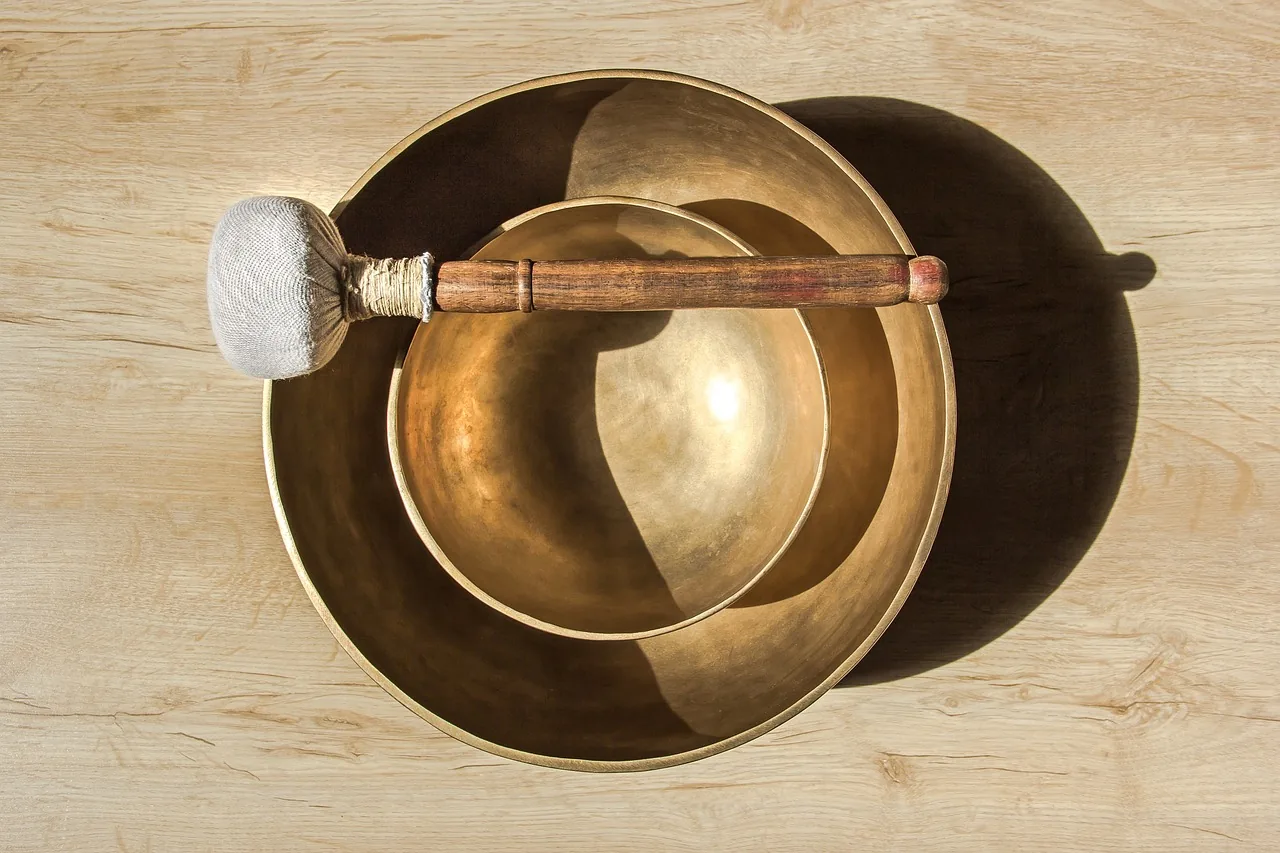
Prepare in a Few Seconds
Sit comfortably. Keep your back straight and breathe smoothly, without holding your breath.
Find the Rhythm in a Few Minutes
Start with natural breaths. If you feel tense, slow down rather than forcing it.
Synchronize Breathing and Sound
Inhale as the sound rises, exhale as it fades. The sound cue removes the need to count and stabilizes the rhythm.
Recommended Timing
5/5 protocol: inhale through the nose for 5 seconds, exhale through the mouth for 5 seconds. Repeat for 5 minutes.
A Gentle Alternative
If that feels too short, choose 6 seconds / 6 seconds. It is a slower, more comfortable way to begin.
Choosing Eyes Open or Closed
Close them to relax, or keep them open if you are afraid of getting drowsy. Choose what suits you best.
Practical Tip and Mistakes to Avoid
- If inhaling for 5 seconds is difficult, imagine a straw in your mouth to smooth the breath.
- Avoid lying down, forcing, speeding up, or tensing your body.
For hands-on practice, follow a sound cue video and complete 5 minutes without a stopwatch.
Anchor Cardiac Coherence in Daily Life with the 365 Rule
To turn breathing into a reflex, it is better to choose a clear, repeatable framework.
365 rule: 5 minutes, 3 times a day, about 6 breaths per minute.
Practical Rhythm
Practice for 5 minutes in the morning, at midday, and in the evening. Count 6 breaths per minute mentally or follow a sound cue.
Which Times to Choose
Choose steady time slots: when you wake up, after your main meal, and in the late afternoon.
How Long the Effects Last and Strategy
One session produces effects for about 4 hours. Three pauses therefore cover most of the day.
“Choose the same place, prepare the tool in advance, and repeat: regularity matters more than intensity.”
- Build the practice into calm moments (waiting, before a meeting).
- When traveling, replace the bowl with an app (Handflow) or a 5-minute video.
- Prepare the tool to reduce friction and keep the daily habit going.
Mini plan: choose your 3 moments, keep the same rhythm, and adjust after a few days according to how you feel.
Conclusion
This conclusion recalls the essentials for turning the practice into a habit.
Simple posture, rhythmic breathing, synchronization with the bowl sound, and repetition for five minutes: that is the method. Use 5 seconds / 5 seconds as your reference. If needed, switch to 6/6 for a gentler version.
The key is regularity: practicing according to the 365 rule is better than rare intense sessions. For an easy start, launch a sound session or a five-minute video and focus on one goal: breathing without forcing, cycle after cycle.
Try it for a few days, note the impact on your stress level, and adjust the rhythm. For a sound cue, follow this cue video or explore other vocal practices such as singing to strengthen breath control (why sing gospel).