
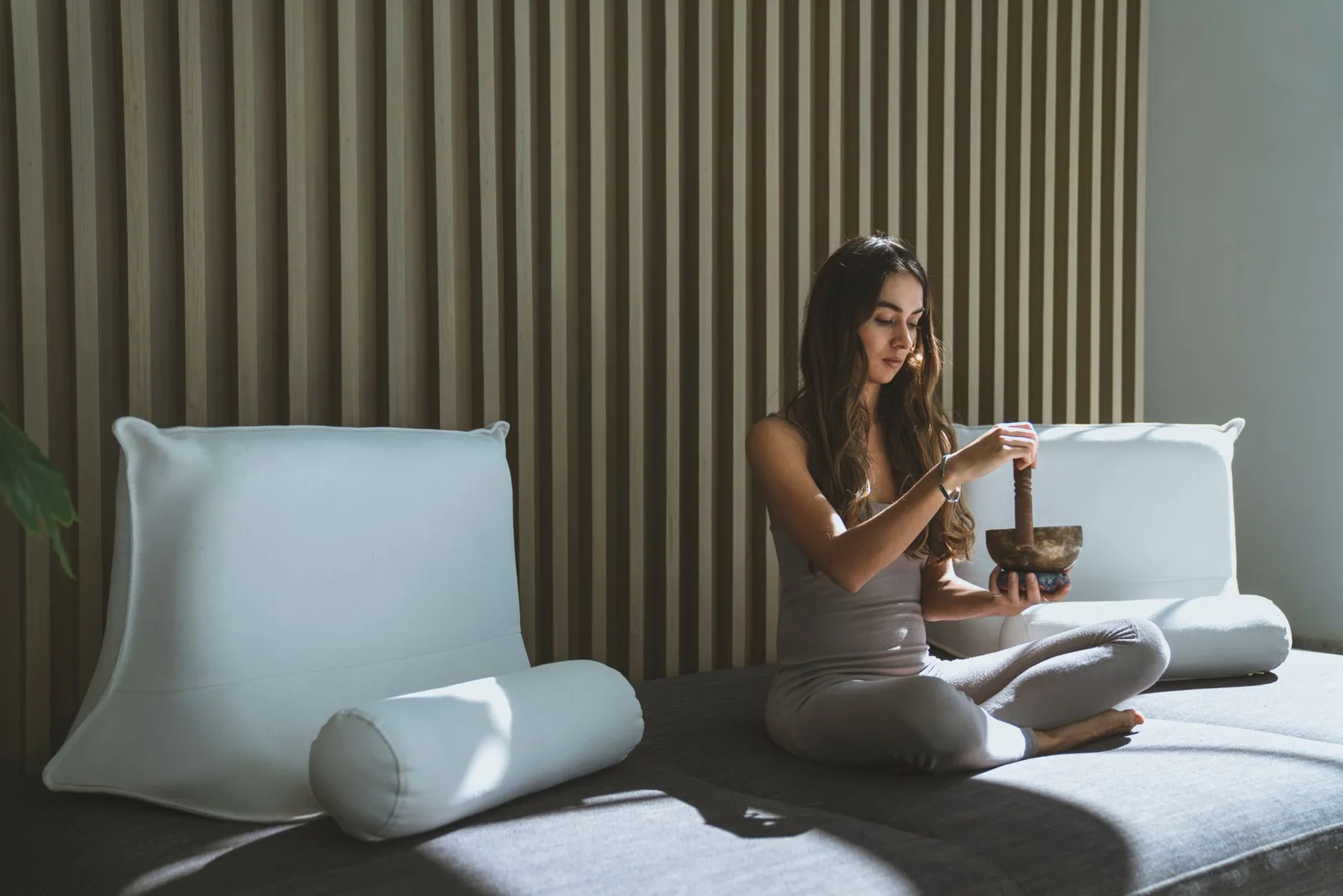
Guide objective: to explain step by step how a sound healing session unfolds, what you may feel, and how to prepare for the experience for the best possible result.
The practice is generally done fully clothed, on a table, in a quiet room with dimmed lighting. Singing bowls are placed around the body, sometimes on certain areas with consent, then set vibrating by striking or rubbing.
What you will find here: welcome, settling in, bowl placement, activation of the vibrations, and a gradual return. A minute-by-minute overview will help beginners follow along without jargon.
Who it is for: stressed people, sleep difficulties, physical tension, and anyone curious about holistic approaches. The text also explains contraindications (epilepsy, medical devices, pregnancy) and the importance of consent if a bowl is placed on the body.
Realistic promise: deep relaxation is often reported, with no guarantee of healing. Later, a section will cover prices, session lengths, and criteria for choosing a practitioner in France.
Understanding Sound Massage with Tibetan Bowls
Sound and vibration play a central role in this simple form of wave-based relaxation. The approach aims to calm the mind and encourage physical release through resonance.
Sound massage, sound bath, and sound therapy: what are the differences?
Sound massage refers to a session in which sound and vibration are central, sometimes complemented by light touch.
A sound bath is more immersive: several instruments create a collective soundscape. Sound therapy covers these approaches from a wellness perspective, without medical claims.
Origins and traditional uses in meditation
Historically, bowls have been used by monks to support meditation and offering rituals. Today, this practice has become popular in wellness centers in France.
How vibrations affect the body and mind
Vibrations spread through the space and invite the body to release. They often help pause mental analysis and make room for listening.
Some people are more receptive to sound than to touch-based techniques when the mind remains restless. Testimonials highlight relaxation and better sleep quality, while noting that scientific evidence remains limited.
To learn more about the instruments and their impact, read this practical guide before continuing.
Tibetan Bowls: Composition, Sizes, and Sounds to Know
Each instrument tells a sound story shaped by its alloy, diameter, and form. A Tibetan bowl is a percussive instrument whose note and vibration vary according to how it is made.

Metal alloy: tradition often mentions a blend of seven metals (gold, silver, mercury, copper, iron, tin, lead). This symbolic combination influences appearance and resonance, without claiming medical effects.
Sizes and sounds: large bowls (>25 cm) produce deep, low tones, useful for grounding. Medium bowls (12-25 cm) offer a balanced sound. Small bowls generally produce higher tones and finer harmonics.
Thickness, weight, and note explain why two bowls with the same diameter can respond differently: attack, sustain, and harmonic richness change according to finishing and casting.
Mallets and accessories: a felt mallet softens the attack, wood emphasizes the transient, and leather nuances the timbre. A bowl can be placed on a towel, or a little water can be added to modify the vibrations, depending on how the practitioner uses it.
These parameters guide the choice of pieces and influence the session flow. For more detail, see an article on singing bowls.
Tibetan Bowl Massage: How a Session Unfolds and Practical Advice
Welcome and discussion: the welcome begins with simple questions about your tensions, your sleep, and your expectations.
Contact preferences are also clarified, along with anything you want to avoid. This discussion takes a few minutes and helps build trust.
Preparing the Space
The room stays quiet, with dimmed lighting. Cushions and a blanket provide comfort and prevent chills.
Settling In
You remain clothed on a table. A towel sometimes stabilizes the instruments near the back.
Placement and Activation
The bowls are placed around the body or, with explicit consent, on certain areas. The practitioner strikes or rubs them to create waves.
The intensity is adjusted gradually to avoid any auditory or physical discomfort.
Synergy with Touch
Light pressure and a few stretches may accompany the sound. These techniques deepen relaxation without replacing the role of sound.
Ending and Recommendations
The return is slow: silence, verbal sharing if desired, then hydration. The total time may be 60 to 90 minutes.
Practical reminder: immediately mention any discomfort or intense emotion. To go further, read this practical guide.
Benefits of Tibetan Bowl Massage: What to Realistically Expect
When listening to the vibrations, the main reported effect remains a reduction in stress. Many people describe a calmer mind and a sense that the flow of thoughts has paused.
Deep relaxation: auditory stimulation encourages focus and opens space for real release. Breathing slows, and the jaw and shoulders loosen.
Sleep: several accounts mention easier sleep onset that same evening and more restorative recovery after the session.
Pain and discomfort: some testimonials report a reduction in chronic discomforts (headaches, neck tension). These observations should remain cautious and do not replace medical advice.
Emotions and energy: listening may bring emotions to the surface (tears, relief, joy). The traditional framework around chakras explains placement near energy areas, but scientific limits should be made clear.
- Summary: realistic goals: relaxation, stress regulation, better rest.
- Avoid expecting guaranteed healing; effects vary from person to person.
Contraindications and Precautions Before Booking a Session
Certain health conditions require medical advice before any sound-based practice. The goal is to ensure your safety and comfort.

When to Consult a Professional
Ask for medical advice if you have epilepsy or severe psychiatric disorders. Stimulation can trigger an altered state that may feel uncomfortable.
Pregnancy and Medical Devices
If you are pregnant, especially in the first trimester, talk to your doctor. For pacemakers, cochlear implants, or hearing aids, mention them before the session.
Recent Surgery, Tinnitus, and Metal Rods
After recent surgery, it is often better to postpone. Tinnitus or sound hypersensitivity can be managed by reducing intensity or moving the instruments farther away.
Children and Sensitive People
For children or highly sensitive people, the duration is reduced and heavy pieces are not placed on the body. Prior communication allows the practice to be adapted.
| Situation | Main Risk | Recommended Action |
|---|---|---|
| Epilepsy | Stimulus-related trigger | Consult before booking |
| Pregnancy (first trimester) | Fetal vulnerability | Medical advice; adapt or postpone |
| Devices (pacemaker, implants) | Interference or discomfort | Inform the practitioner; keep instruments farther away |
| Post-surgery / pain | Inflammation, fragile scar | Postpone or ask the surgeon for advice |
Simple rule: an adapted or postponed session is better than an endured experience. For a practical complement, see this dedicated article: contraindications and precautions.
Preparing Well for Deep Relaxation on the Day
To arrive relaxed on the scheduled day, a few simple steps prepare the body and mind. Clear preparation helps the practitioner adapt the protocol and lets you fully enjoy the experience.
Comfortable Clothing, Hydration, Light Meal: the Basics
Loose clothing: choose clothes that do not restrict breathing or movement. Avoid noisy jewelry.
Hydration: drink before and after the session. This helps limit feelings of emptiness or mild fatigue.
Light meal: choose a snack rather than a heavy dish so you stay alert without heaviness.
Arriving with a Simple Intention
Set a short goal: relaxation, sleep, or letting go. Do not expect a mandatory result; presence is enough.
What to Tell the Practitioner
Mention tinnitus, pain, fragile areas, pregnancy, or implants. Also specify your preferences for volume and placement.
- Loose clothing and no noisy accessories
- Arrive 5 to 10 minutes early
- Drink water before and after
- Tell the practitioner about any sensitivity
Tip: turn off your phone and come curious. For more practical details, read this practical guide.
Advice During the Session to Better “Receive” the Vibrations
During the experience, simple instructions make relaxation and entry into a meditative state easier. Breathe slowly, and let your attention follow the sound rhythm without forcing it.
Slow Breathing and Visualization
Inhale deeply through the nose for 4 counts, then exhale more slowly for 6. Repeat a few cycles to stabilize attention.
Visualization: imagine a wave moving through the body with each sound, and release on the exhale. Keep the image simple so the mind does not become overloaded.
Letting Sound Guide You
Rather than analyzing each vibration, observe them without judgment. Welcome variations as passing sound events.
Managing Possible Reactions
Chills, tears, or sleepiness may occur. These reactions are often temporary.
- Mention any discomfort related to volume or the proximity of the instruments.
- Ask for a pause if emotions become too intense.
- Falling asleep is not a failure: sometimes it is the deepest form of rest.
| Reaction | What It Reflects | What to Do |
|---|---|---|
| Chills | Muscle release | Add a blanket |
| Strong emotions | Emotional release | Ask for time to speak or take a pause |
| Drowsiness | Deep relaxation | Allow rest; plan quiet time afterward |
| Local tingling | Temporary sensory response | Inform the practitioner; adapt placement |
Reminder: the goal remains relaxation and stress reduction, not a spectacular performance. Communicate in real time to adjust the experience.
After the Session: Extending the Effects in Daily Life
A gradual return to reality helps extend the feeling of calm and clarity.
Hydration and Rest
Hydrate as soon as the session ends to support integration of the effects. A glass of water helps limit a heavy-headed feeling.
Plan quiet time before resuming any demanding activity.
Simple Home Rituals
Breathe for five minutes while following a slow rhythm. Do a few gentle stretches or take a slow walk to anchor the relaxation.
Improve sleep hygiene: reduce light, turn off screens, keep a regular schedule.
Frequency and Benchmarks
Common duration: 60 to 90 minutes; some sound baths can last longer depending on the practitioner.
For chronic stress, monthly follow-up may be relevant. For a one-time need, a single session may be enough.
Getting Started at Home
You can try using bowls at home by striking or rubbing them gently. Stay within the spirit of relaxation, without aiming for healing.
Note how you feel (low or high sounds, placement, duration) to adjust future appointments.
| Action | Why | Practical Advice |
|---|---|---|
| Hydration | Support integration | Drink immediately afterward |
| Quiet time | Return gently | Plan 10 to 30 minutes |
| Sleep rituals | Strengthen the benefit | Turn screens off 1 hour before bed |
To go further with using bowls, read this practical guide.
Choosing a Practitioner or Venue in France: Useful Benchmarks
Finding a competent practitioner comes down to simple criteria: location, duration, price, and safety.
Where to Find a Session
Common venues: spas, wellness centers, yoga studios, meditation retreats, and sound therapy practitioners. Wellness events and group workshops are also available.
Duration and Prices
Benchmarks: the usual duration ranges from 60 to 90 minutes. Observed prices generally vary from EUR40 to EUR120 depending on the city, experience, and format (individual or group).
Quality and Safety
What makes the price vary: reputation, duration, number of instruments, venue (spa or private practice), and personalization.
- Listening and health questions.
- Consent for instrument placement.
- Adapted volume and a calm setting.
- A professional who knows when to refuse in case of risk (epilepsy, implants, high-risk pregnancy).
“A good practitioner explains the protocol, adjusts the intensity, and respects contraindications.”
| Criterion | What to Check | Why |
|---|---|---|
| Training | Experience in sound therapy or sound healing | Safety and quality of practice |
| Protocol | Discussion time before/after | Adaptation to needs and contraindications |
| Reviews | Comments from local people | Reputation and comfort |
Before booking, ask questions about instrument placement, sound intensity, and implant management. To learn more, first try an introductory session and read reviews to check whether the practice suits you.
Conclusion
To conclude, remember the essentials: initial discussion, clothed positioning, placement of bowls around the body or, with consent, on the body, activation by striking or rubbing, then a calm return and hydration.
Equipment: each Tibetan bowl responds according to its size, weight, alloy, and the sound it produces. The mallet also influences the attack and sustain of the sound.
Realistic benefits: deep relaxation, stress relief, muscle release, and sometimes better sleep. Concepts such as chakras or energy remain a traditional framework, not a medical guarantee.
Safety: consent for any contact, adaptation in case of sound sensitivity, and caution with medical devices. To begin, book an introductory session or test gradually at home. After the practice, allow yourself 24 gentle hours: rest, hydration, and sleep to prolong the effects.