
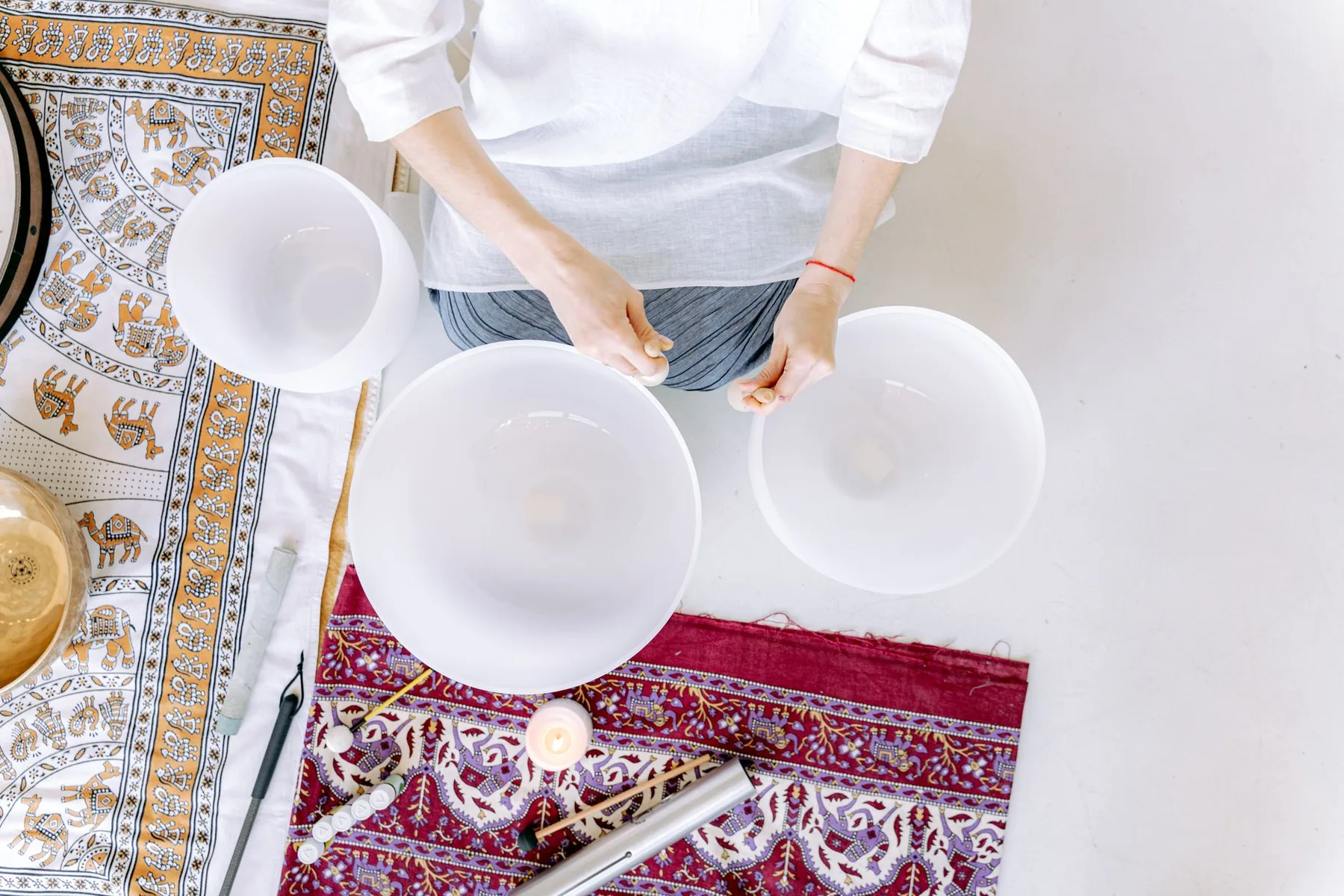
The singing bowl is presented as a wellness tool used for thousands of years. Its vibrations and sounds are attracting interest today for relaxation, meditation, and emotional support.
You can expect effects on tension, mood, and letting go, according to recent studies, while clearly distinguishing what belongs to tradition or belief.
We will cover the three families of benefits — physical, emotional, and mental — then the limits you need to know to avoid unrealistic promises.
The method will distinguish between sensations reported by practitioners and measurements observed by research on sound meditation.
Finally, this buying guide explains how to choose a suitable size, alloy, and sound quality, and how to use the instrument daily. For practical techniques, see our guide on use and techniques.
Important: this tool can complement a wellness approach, but it does not replace medical care.
Tibetan singing bowl: understanding the instrument and its uses today
The Tibetan singing bowl is a resonant metal instrument used in personal practice and guided sessions. It helps create a space of your own that supports relaxation, meditation, and sound-based care.
Origins and historical path
The traces point back to ancient Mongolian practices, followed by diffusion into Tibet and Nepal, where the craft became more refined. Today, these Tibetan bowls retain a strong artisanal identity.
Contemporary uses
The singing bowl is used in meditation, yoga, sound therapy, Reiki, and Feng Shui. Depending on your intention, you may favor formats for sound massage, ritual, or daily practice.
What acts: sounds and vibrations
Sounds reach the brain through the auditory nerve, and listening supports mental calm. Vibrations travel through the tissues when a bowl is placed on the body, creating bodily resonance.
To choose according to your goal, also see our guide on the crystal Tibetan bowl, which compares formats and sound qualities.
Tibetan singing bowl: benefits, virtues, and precautions for use
Sound work targets three distinct levels: the body, emotions, and the mind. This structure helps connect a symptom (tension, sleep, pain) with a suitable practice.
Physical
On the physical level, sessions encourage muscle relaxation and a feeling of release. They may reduce tension, help with falling asleep, and provide temporary comfort in cases of pain, through the release of endorphins. These effects are supportive, not therapeutic treatment.
Emotional and mental
Emotionally, listening helps reduce stress and anxiety, and makes letting go easier thanks to a sound perceived as soothing. Mentally, the timbre serves as an anchor point to improve concentration and enter a meditative or deeply relaxed state more quickly.
Evidence and limits
Several studies show a decrease in tension after sound sessions (2016, 2014) and signs of pain improvement (2008), but causality remains debated and a placebo effect is possible. Uses linked to chakras or room purification interest some audiences, without strong scientific validation. Useful reminder: being helpful for feeling better does not make it a medical treatment.

Precautions and limits: enjoying the effects without risk
This sound device remains a wellness aid and belongs to a complementary medicine approach. It cannot replace medical treatment for serious conditions such as cancer or neurodegenerative diseases.
Complementary medicine: what the instrument does not replace
If you are following a medical protocol, continue that care. For any severe condition, consult your doctor before adding sound sessions to your care path.
Possible side effects and adjustments
Some people report fatigue, overstimulation, auditory discomfort, or emotional release. Adjust accordingly: lower the intensity, shorten the duration, or increase the time gradually.
Choosing a responsible setting for use
At home, set up a quiet space and a stable seat. In a session with a practitioner, choose someone who is transparent about their training.
To learn more about the risks of excessive use, see this article on the dangers of excessive use.
Composition and making: why Tibetan bowls are not all equal
Understanding the composition helps you choose a good instrument. The making process shapes the timbre, resonance duration, and perceived quality.
Handcrafted production
Heating, hammering, and a unique piece
The process begins by melting a percentage of metals, then casting them into discs. Repeated heating keeps the material malleable.
Manual hammering comes next. Each strike changes the thickness and shape. The result is often a unique piece.
Seven-metal alloy
The classic alloy cites copper, tin, iron, mercury, silver, lead, and gold. These metals serve as cultural reference points.
Planetary correspondences vary according to tradition. To learn more about the meaning, see the spiritual meaning.
Note and harmonics
The announced musical note is indicative. A bowl produces several harmonics. Thickness, diameter, and finish explain the sound differences.
| Criterion | Sound impact | What to check before buying |
|---|---|---|
| Thickness | Resonance and duration | Consistency of the singing tone |
| Diameter | Low or high pitch | Suited to the use (meditation/massage) |
| Finish | Absence of unwanted vibrations | Regular surface, without dents |
Finally, the idea that seven metals equal seven chakras belongs to a traditional reading. If you believe in this energy, it can be a criterion; otherwise, favor sound quality.
Buying guide: how to choose the ideal Tibetan bowl for your goals
Choosing an instrument starts with defining the main use: meditation, sleep, stress management, pain relief, or an energetic approach.
Define your intention
For relaxation and meditation, favor a clear, stable timbre. For sleep or deep relaxation, choose a more enveloping sound. If you are looking for a tool to relieve tension, focus on the richness of the vibrations.
Size and weight
The larger and heavier a bowl is, the deeper the sound becomes and the easier it is to make it sing. Smaller models produce higher notes and are easy to carry. For beginners, a wooden mallet helps produce a regular singing tone.
Sound quality and testing
Check the resonance duration, absence of buzzing, and presence of harmonics. Simple test: strike it to start the note, then rub the rim to observe the rise of the singing tone. Also notice physical and emotional sensations.
Note, chakra, and authenticity
The indicated note remains a reference point; one bowl has several harmonics. Favor transparency: origin, craftsmanship (Nepal/Tibet), and recordings of the exact model improve confidence.
Budget and checklist
A high price is explained by the alloy, hammering, finish, and musicality. Mini-checklist: goal → size/weight → sound test → authenticity → budget. This path reduces hesitation and helps you find the right model.

Using a Tibetan bowl daily: techniques to make it sing and optimize the benefits
A few easy techniques are enough to obtain a stable singing tone and enjoy a short relaxation session. The gestures are simple: posture, contact point, and rhythm.
Holding the instrument properly
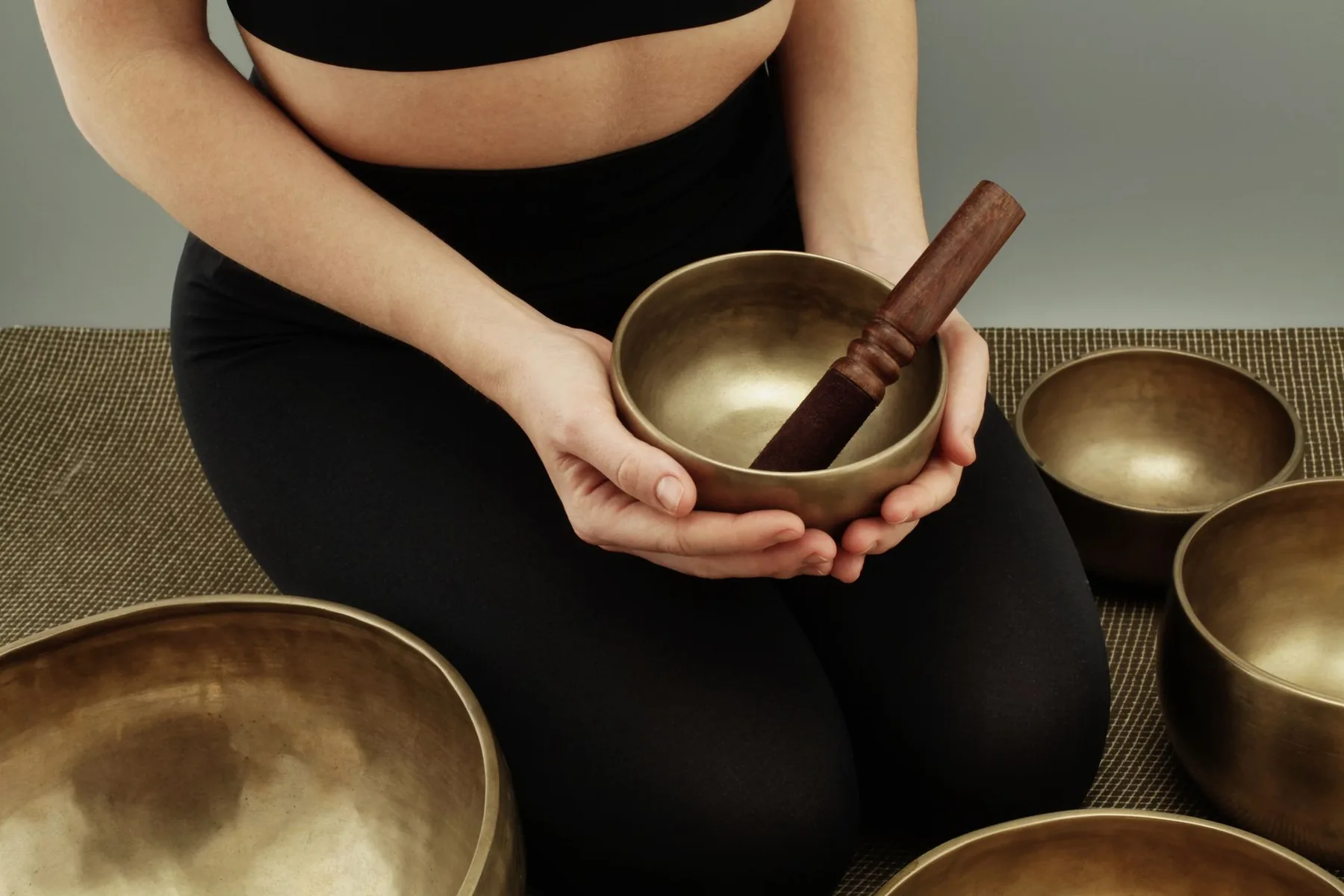
Hold the bowl on your open palm, with a relaxed hand. Do not tighten your fingers, so you do not dampen the sound.
A stable posture supports clean resonance and better transmission of the vibrations.
Making it sing: rubbing the rim
Rub the outer rim with a leather or wooden mallet. Maintain firm pressure and a steady speed.
If the sound “jumps,” slow down or slightly increase the pressure until you obtain a smooth singing tone.
Strike, then sing
Gently strike with the mallet to start the note, then move to rubbing to prolong the singing tone. This method helps beginners.
Typical sessions and practical tips
- Anti-stress (3–5 min): slow breathing + gentle singing tone.
- Post-work relaxation (10–15 min): alternate striking and rubbing.
- Evening ritual (15–20 min): low sounds, moderate volume to support sleep.
Sound massage
Placing the bowl on or near the body allows you to feel the waves spreading through the tissues.
Start gently and reduce the duration if the person feels discomfort.
Using it for space and energies
Some traditions make the instrument sing in the corners of a room to “purify” the atmosphere. Present this as a cultural practice, not as scientific proof.
Practical tip: note your sensations (mood, tension, sleep quality) for two weeks. Adjust the frequency, mallet type, and duration according to your feedback.
Conclusion
In summary, a Tibetan bowl can bring relaxation, stress support, sleep support, and subjective comfort to some people. Effects vary according to each person’s sensitivity.
Studies (especially in 2016 and 2014) show improvements in perceived tension and mood after sound sessions, without validating therapeutic promises.
Before buying, keep a simple compass: intention → size/weight → sound quality → transparency (origin, craftsmanship) → budget. Try several models and compare timbre and resonance.
Start with a quality instrument, a suitable mallet, and 5–10 minutes per day. To go deeper, see our overview of evidence and misconceptions here and meditative musical resources there.