
Introduction: This article offers a clear guide to understanding two major families of sound instruments: those made from metal alloys and those made from quartz. The goal is to help with your choice according to use, budget, and experience level.
We explain their manufacturing, sound signature, care, fragility, and contraindications. You will learn why the same shape can create very different sensations depending on the material and its consistency.
This text also sets the context in France: availability, price expectations, and uses in studios or wellness settings. Relaxation benefits are often reported for both types, even though science remains limited on some points related to chakras.
To compare models and choose according to your goals (meditation, sound bath, energy work), consult this practical selection: guide and models.
Understanding Singing Bowls: Two Instruments, Two Approaches
Singing bowls are resonance instruments played by striking or rubbing. They are used in meditation, sound therapy, or musical creation.
Traditional Tibetan bowl: alloy and craftsmanship
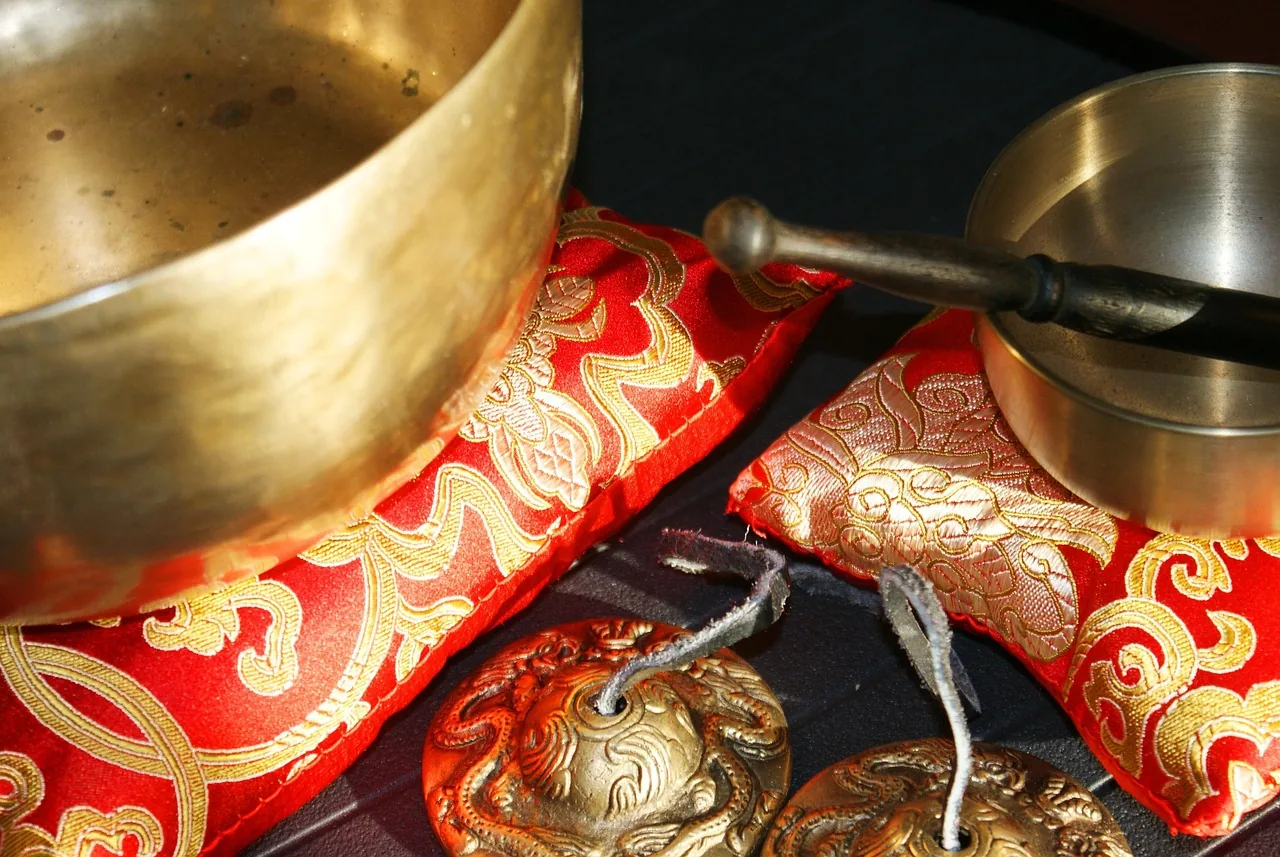
Tibetan bowls come from manual work. They are made from a bronze-type alloy: copper, tin, and traces of other metals. Hand hammering creates unique variations. Each piece offers a sound signature that can change from one item to another.
Modern approach:
Crystal singing bowl: the purity of quartz
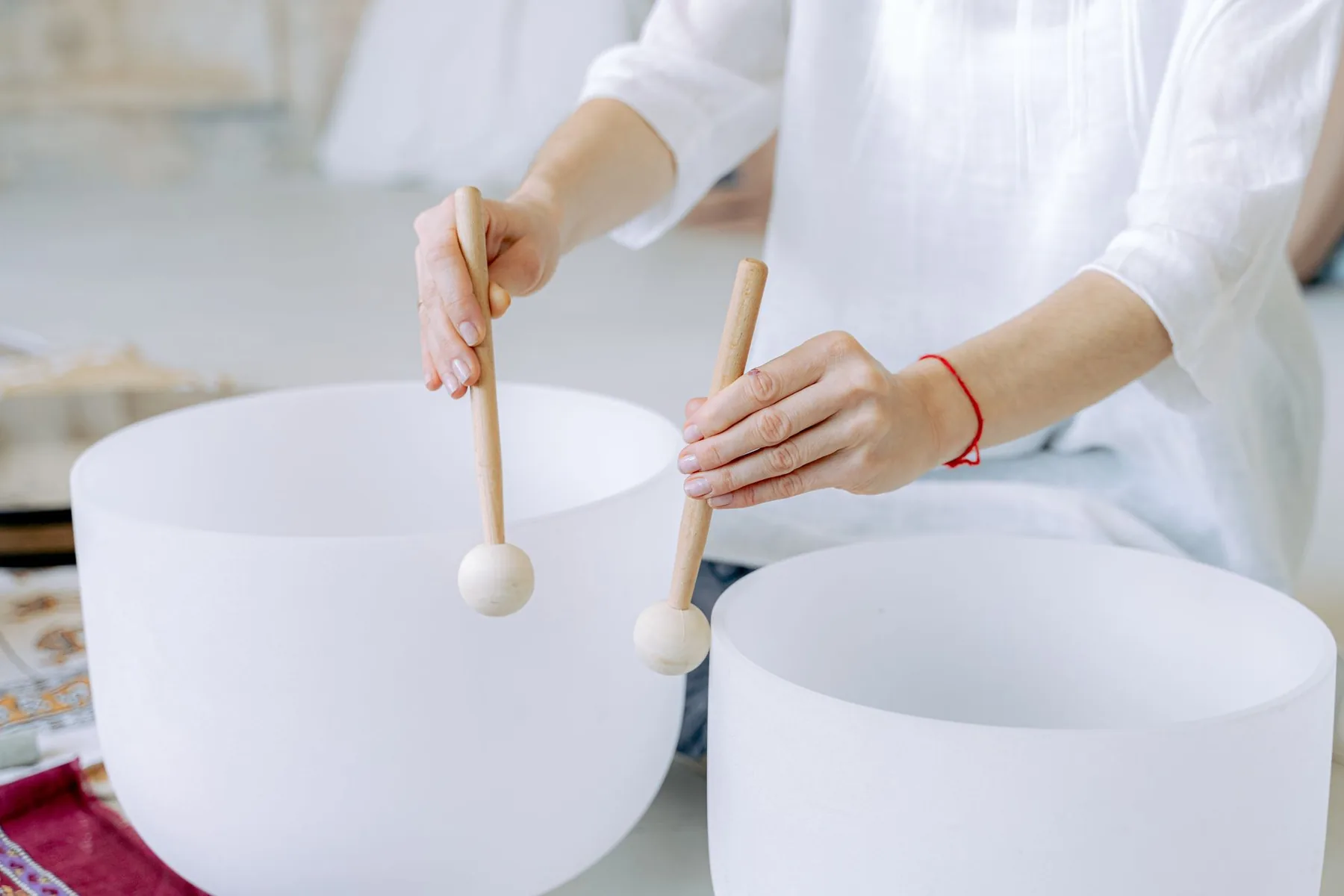
Crystal bowls are molded at high temperature from very pure quartz. The homogeneous material produces more regular notes and a more targeted frequency. They are often chosen for their clear, stable timbre.
- Shared principle: vibration, sound wave, and resonance.
- Frequent use: metal for a rich and overall result, crystal for frequency focus.
- Feeling: preference remains subjective: two people may pursue the same goal and feel things differently.
Origins and History: Ancient Tradition vs. Recent Invention
On one side, we find inherited craftsmanship; on the other, a creation born from modern industry. This dual path explains why the object sometimes carries a strong symbolic charge, or instead the image of a contemporary tool.
The Tibetan bowl: a handmade object passed down by artisans
Transmission: know-how is passed from master to apprentice. Gestures, hammering, and finishing produce unique pieces.
Each piece keeps the patina of its workshop. Sound and visual variations feed a small collection of rare pieces appreciated for their aesthetics.
The crystal bowl: from industrial crucibles to sound baths
Crystal is a recent arrival, born from silica crucibles used in the computer industry. Their resonance quality was discovered, then the material was adapted to wellness practices.
Its use evolved: first a technical object, then a meditation instrument, and finally a tool for group sessions such as sound baths.
"Age gives meaning, but it does not guarantee better sound effectiveness."
- History and symbolism influence perception.
- Time and transmission explain aesthetic value.
- Contemporary use blends ritual and therapeutic application.
Manufacturing and Material: Hammered Metal vs. Molded Quartz Crystal
The manufacturing processes explain why two instruments with the same shape respond so differently.
Handmade metal process
The process begins with a disc of an alloy made from 3 to more than 10 metals. The piece is heated, then hammered by several workers to form an inverted bell.
It is then deburred and polished. This manual hammering creates micro-irregularities that make each bowl unique, both visually and in its notes.
Quartz crystal process
Silica (SiO₂) is purified and then melted at very high temperature (often > 4,000 °C). The resulting glass is poured into a mold or centrifuged.
Thickness and shape determine the frequency. Finishes range from frosted white to colored transparent.
Consistency and regularity of notes
Quartz offers a more homogeneous material. Sound travels through it without major internal breaks.
As a result, it is often easier to obtain a precise and reproducible note on a quartz instrument than on an alloy instrument.
“Alchemy” variants
Some bowls fuse minerals or small amounts of metals into the quartz for a desired look and energy. This choice is mainly aesthetic and symbolic.
| Step | Hammered metal | Molded quartz |
|---|---|---|
| Material | Multi-metal alloy | Pure silica (SiO₂) |
| Production | Heating, hammering, deburring, polishing | High-temperature melting, molding, finishing |
| Sound | Rich spectrum, variation between pieces | Regular note, targeted frequency |
| Practice | More resistant but variable | More fragile, more consistent |
To compare models and practical choices, consult this selection of crystal bowls.
Crystal Tibetan Singing Bowl: Differences from the Traditional Bowl
In everyday use, the material changes how you transport, strike, and maintain the instrument.
Immediate differences:
- Type of mallet: felt or suede for metal, often rubber or lightweight silicone for a crystal singing bowl.
- Ease of transport: the quartz instrument is often heavier at the same diameter.
- Sensitivity to impact: glass is more fragile; metal tolerates minor knocks better.
- Sound feel: more “pure” and sustained sounds with crystal, a richer and more complex spectrum with metal.
The choice affects your routine. For a short recentering session, a crystal instrument offers a targeted note that makes focus easier.
In professional practice, practitioners appreciate the variety of metal for group sound baths. The choice depends on the goal: clarity and precision or harmonic richness.
Care: the crystal singing bowl tolerates water well, but is vulnerable to scratches and impacts. Metal requires care with humidity and harsh products to prevent oxidation.
"Whatever the material, the goal is to generate vibration by striking or rubbing."
What does not change: the principle remains the same. A vibration is created (stick-slip), and the resonance of the instrument body is used.
Practical advice: adopt the same posture, the same breathing, and the same intention. The tool supports the practice; it does not replace it.
To compare models and accessories, consult our model selection before buying.
Sound Signature, Notes, and Harmonics: What You Really Hear
The signature of a tone comes from a fundamental note and a set of harmonics that color our listening.
Main note and harmonics
A fundamental note sets the perceived pitch. Around it, harmonics add layers. Imagine a string vibrating at several points: same pitch, different timbres.
Rich spectrum of metal instruments
Alloys generate many partials. The result: warm, deep, evolving sounds.
The sound changes over time. It begins rich, then unfolds and fades in layers. This complexity creates an enveloping sensation in the body.
Clarity and targeting of quartz bowls
The homogeneous material produces a purer note. The frequencies are more centered and the timbre seems crystalline.
Perception is often more directional, sometimes more intense. Long sustain makes focus easier in meditation.
Resonance, duration, and bodily perception
The resonance duration changes the experience: long sustain prolongs the meditative state.
You may sometimes feel the vibrations in the chest, hands, or floor. This is why some practitioners choose a more physical result for grounding.
In a mix or a sound bath, choose the instrument according to the role you want it to play in the music.
Vibrations, Frequencies, and Chakras: Which Bowl for Which Energy Work?
To target a chakra, some practitioners use specific frequencies and notes as a care framework. This common reference often links seven notes (C→B) to the seven energy centers, but it is a practical model, not scientific proof.
Note-chakra associations: references and limits
Reference used: each note generally corresponds to a chakra to guide the session. Limit: scientific literature does not establish the objective existence of chakras; this system remains a symbolic and experimental tool.
Why choose crystal to target a center
Crystal singing bowls produce a purer note and fewer harmonics perceived as distracting. For targeted work, this clarity makes it easier to listen and concentrate on a single frequency.
Specific frequencies and tunings
Some practitioners prefer 432 Hz or 528 Hz for historical or subjective reasons. These are tuning options, not medical guarantees.
Practical advice: test, observe how it feels, and adapt. In a session, isolate a frequency with a crystal singing bowl for targeted care, or use a metal instrument for broader harmonic work.
To explore technical and usage comparisons further, consult this resource: crystal singing bowl comparison.
Benefits for Body and Mind: What Studies Suggest
The use of singing bowls in meditation protocols seems to produce physiological responses linked to relaxation.
Relaxation, stress, and pain:
Studies often report reduced stress and anxiety after a guided session. Some work also observes lower blood pressure and reduced perceived pain.
These effects remain trends: they depend on context, breathing, and guidance during the session. There is a clear difference between “observed effects” and causal proof.
Metal or quartz: observation and subjectivity
Comparisons do not show clear superiority of one material over the other for perceived benefits.
Personal preference and intention have a major influence. To make your experience more objective, follow simple criteria: sleep quality, reduced mental tension, regularity of practice, and ease of entering meditation.
"An instrument supports care; it does not replace medical follow-up."
In practice, consider this tool a wellness complement for daily life. The next section helps you choose according to your goal: grounding, focus, or sound bath.
Meditation, Sound Therapy, and Music: Recommended Uses According to Your Goal
Depending on your session goal, each instrument guides listening and practice.
For grounding and relaxation: favor the Tibetan bowl
Short scenarios: 5 minutes in the morning to center yourself, 15 minutes in the evening for relaxation.
Alloys offer rich harmonics. They fill the space and support deep grounding.
For mental clarity and focus: favor crystal
For targeted meditation, this type of instrument produces pure notes. It helps calm mental chatter.
In practice, use it in a guided session to isolate a precise frequency.
In a sound bath: combine several instruments
Practical advice: layer metal then crystal, add gong and voice for a complete soundscape.
Alternate striking and rubbing. Increase volume gradually and manage resonances.
| Goal | Recommended instruments | Typical duration |
|---|---|---|
| Grounding / relaxation | Metal (alloy): singing bowls | 5–20 minutes |
| Clarity / focus | Crystal: targeted note | 10–15 minutes |
| Sound bath | Combination: metal + crystal + gong/voice | 30–90 minutes |
"In music and sound therapy, the coherence of notes and timbres matters as much as the material."
Price, Budget, and Value: What to Expect in France
In France, prices range from beginner models to highly refined artisanal pieces.
Practical benchmarks: entry-level metal models can be found under €50 for small diameters. An equivalent crystal model often starts around €100.
To build a realistic budget, think in three tiers:
- Entry level: practical and affordable.
- Mid-range: better tuning control and better finishes.
- Artisanal/tuned: high price, but sound quality and rarity.
Factors that increase the price:
- Metal: hand hammering, alloy quality, origin, and finish.
- Crystal: quartz purity, energy and kiln cost, tuning control, finish (frosted/transparent/color).
| Category | Indicative range | What influences it |
|---|---|---|
| Entry | <€50 (metal) / ~€100 (crystal) | diameter, simplicity, basic accessories |
| Mid-range | €50–€200 | better tuning, finishes, transport safety |
| Artisanal / tuned | €200 and up | hand hammering, precise control, rare pieces |
Anti-disappointment advice: favor an instrument that is in tune and pleasant to play rather than a large object that is difficult to make sing. To compare models and refine your choice, consult this practical resource.
Weight, Diameter, Transport: The Practical Side Not to Overlook
Weight and diameter directly affect setup, transport, and sound result. These criteria define your everyday comfort of use.
Metal: compact and resistant
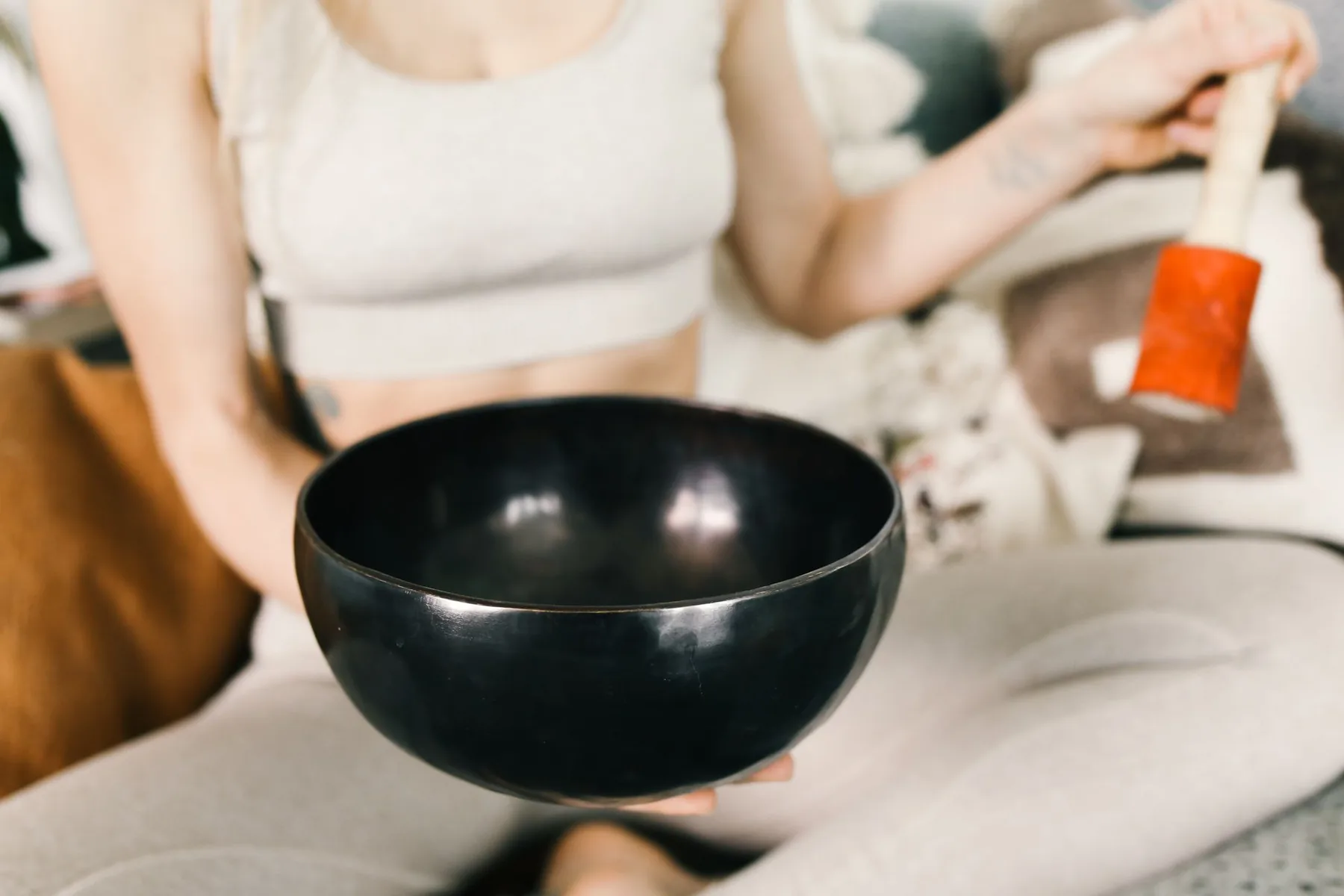
Metal models generally remain lighter and more compact. They tolerate small impacts and frequent handling better.
A fall may deform them without necessarily causing breakage. For people who travel often, this choice reduces logistical stress.
Crystal: heavy and fragile
Crystal often weighs two to three times more for the same diameter and cracks easily if dropped.
It requires a padded bag, clear separation of accessories, and very careful handling.
Practical advice
- Why weight matters: stability on an O-ring, practitioner fatigue, transport to a studio.
- Transport: thick bag, separate mallets, avoid pressure and thermal shocks.
- Playing comfort: large diameter = strong presence, but more space and precautions.
| Criterion | Metal | Crystal |
|---|---|---|
| Weight (same diameter) | Lighter | 2–3× heavier |
| Robustness | Tolerates small impacts | Very sensitive to falls |
| Recommended transport | Standard bag | Reinforced bag + hard case |
| Recommended use | Frequent travel, facilitation | Fixed home setup, stationary sessions |
If your instrument needs to travel often, favor a metal model for a calmer everyday choice.
Care, Cleaning, and Accessories: Mallet, O-ring, and Safe Gestures
Simple care preserves sound quality and safety during sessions for a long time.
Cleaning a metal instrument
Routine: wipe with a soft cloth after each use. Dry immediately to avoid moisture and oxidation.
Avoid soaking and any harsh product (detergents or acids). Watch for stains and treat them with a light cloth and a little suitable oil if necessary.
Cleaning a quartz instrument
Cleaning is simple: warm water and microfiber. Dry without rubbing hard to limit micro-scratches.
Avoid abrasives, polishing pastes, and hard objects inside the cavity. Good protection preserves appearance and sound.
O-ring and mallet choice
The O-ring stabilizes the base, frees the vibration, and protects the bottom while playing. It improves stability and sound result.
For striking, prefer felt or suede on alloys for soft attacks. For quartz pieces, use silicone or soft rubber to avoid chipping.
Use gestures and frequent mistakes
Two techniques: striking to punctuate, rubbing the rim for a continuous sound. Control pressure to modulate volume.
Especially with quartz, avoid placing it without a support, inserting stones or objects, making abrupt rotations, or changing direction quickly. These gestures greatly increase the risk of breakage.
| Action | Metal | Crystal |
|---|---|---|
| Daily cleaning | Soft cloth, drying | Warm water, microfiber |
| Products to avoid | Acids, prolonged soaking | Abrasives, solvents |
| Recommended mallet | Felt / suede | Silicone / rubber |
| Useful accessory | Standard O-ring | Reinforced O-ring + padded bag |
"Safety first: the better you protect your instruments, the more regular and calm your practice remains."
To estimate a budget or compare models and accessories, consult our price references and choose suitable protections.
Contraindications and Safety: Allergies, Metals, and Fragility
Safe use deserves simple but systematic attention, especially if you are sensitive to materials or if the instrument travels frequently.
Metal allergies and skin sensitivities
Some alloys can cause reactions during prolonged contact, especially with perspiration. People with reactive skin: place a support between the skin and the object, clean regularly, and wear gloves if necessary.
Traces of mercury/lead in some alloys: what to remember
In rare so-called “7-metal” models, tiny traces of mercury or lead have been reported. These are traces, not massive contamination.
Advice: ask the seller for transparency and favor a supplier who is clear about composition if this worries you. The seller’s guide helps with the choice.
Breakage risks: storage, bag, and handling
The main risk linked to crystal is breakage. Do not stack, and avoid impacts and temperature changes.
- Transport: padded bag and separate mallets.
- Storage: hard case or stable support, with no heavy objects on top.
- Use: place on an O-ring and avoid aggressive strikes.
If you have health doubts, consult a professional: the instrument supports care; it does not replace medical advice.
Aesthetics, Feeling, and Personal Choice: The Tool That Suits You
The appearance of an instrument often influences our desire to use it every day. The object attracts, reassures, or stimulates. This visual connection supports regular practice.
Engravings, patina, and traditional charm
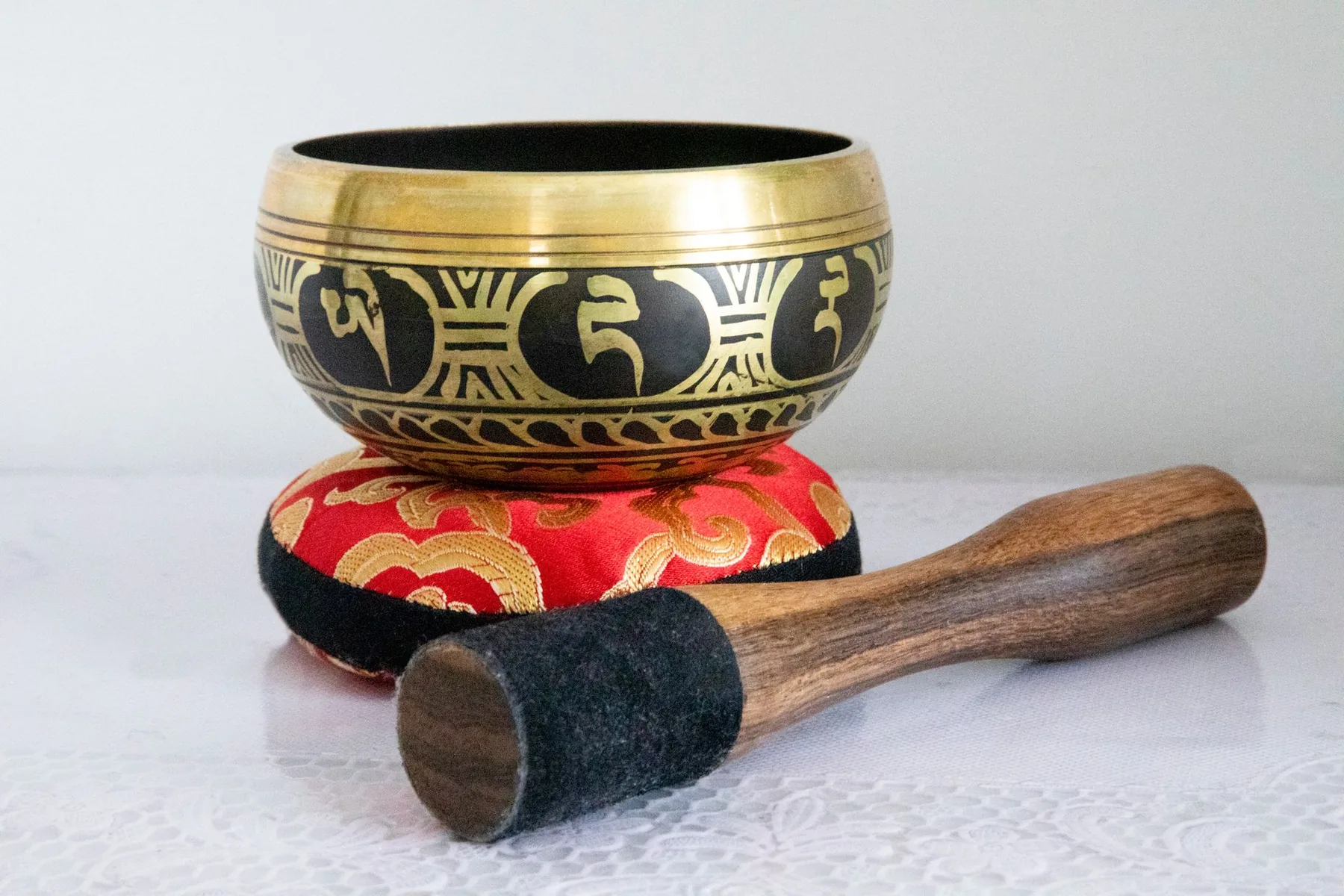
Metal models offer a patina, hammering marks, and sometimes engravings obtained with wax and an acid bath.
These traits give a warm, artisanal look. They suit an earthy atmosphere that supports grounding.
Frosted white, transparent, or colored: the visual world of quartz
Crystal bowls range from frosted white to colored transparent. Some carry symbols linked to the chakras.
Variants include minerals or stones for an “alchemy” look. This addition is mainly aesthetic and symbolic.
Quick choice guide according to your criteria
- I want grounding / relaxation → metal, rich sounds.
- I want focus / targeted chakra → crystal, pure note.
- I travel → metal: robustness and comfort.
- Sound bath → mix: visual presence and harmonic palette.
Budget and level advice: a beginner should choose a simple instrument that is pleasant to play, suited to transport, and supplied with accessories.
"Aesthetics reinforce use: we are more willing to play what we enjoy looking at."
Conclusion
In the end, the right instrument depends on a balance between goal, budget, and sensations.
In short: metal models bring tradition, robustness, and a rich spectrum. Quartz pieces offer modernity, clear notes, and more targeted frequencies.
To choose, first define your use (relaxation, meditation, sound bath, or energy work). Test several pieces and note the response of the body and mind.
Favor a listening test if possible. Start simple, learn the gestures (striking/rubbing), then enrich your collection according to real use.