
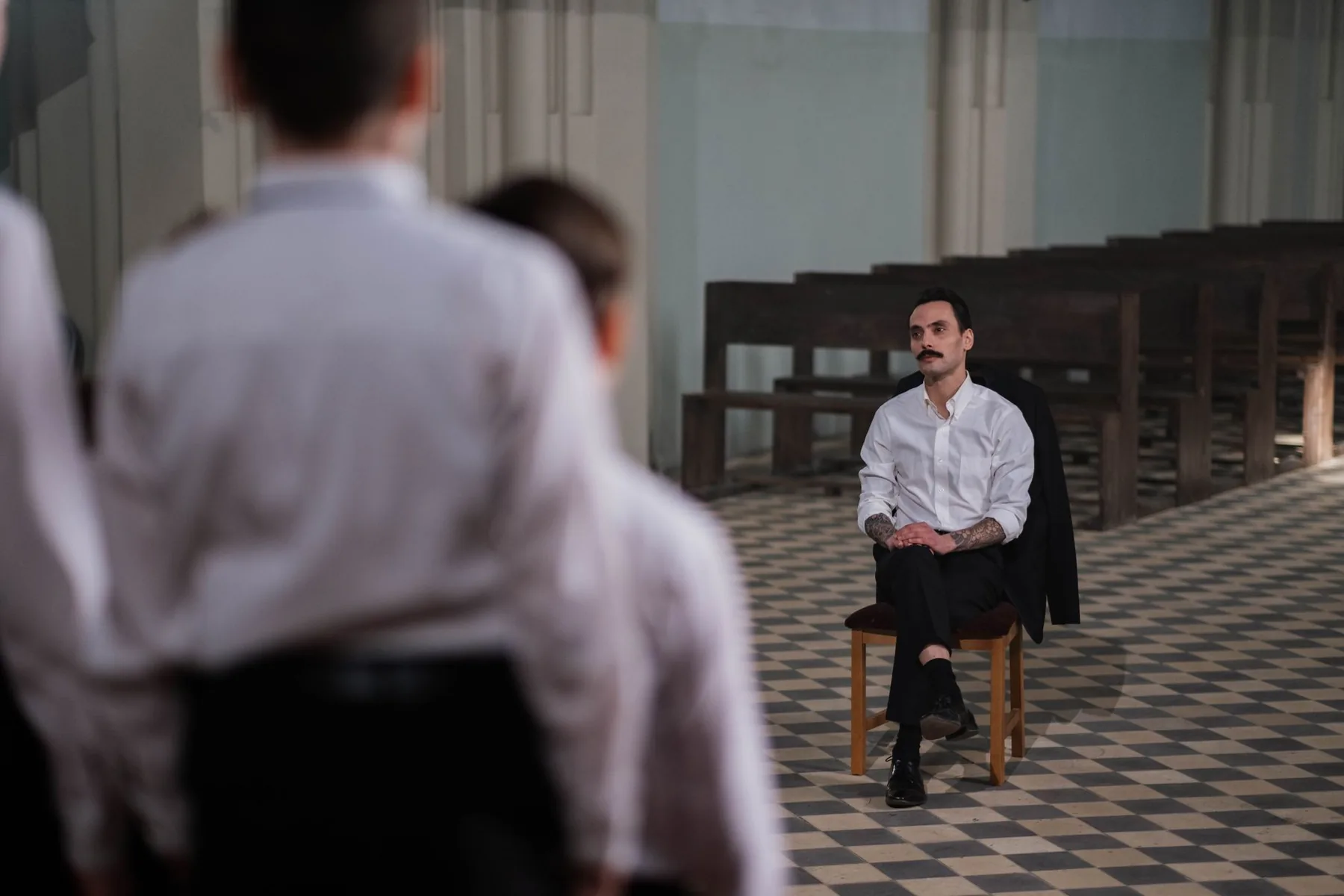
For more than forty years, this hymn has echoed through churches and moved the faithful with its melody and profound words. Composed by Jean-Claude Gianadda, it holds a central place in modern liturgical music.
Ranked among the most popular hymns in 2016, according to a Secli study, it transcends religious boundaries. Its appearance in the film Those Happy Days (2006) shows its cultural influence.
Through an analysis of its symbols and themes, we will explore its origin, its spiritual reach, and its use during celebrations. Faith, communion, and the divine search are beautifully expressed in it.
This hymn continues to accompany sacred moments, from Masses to weddings, offering a universal prayer at the heart of believers.
The Origin and Author of the Hymn “Trouver dans ma vie ta présence”
In 1981, a hymn would go on to win the hearts of the faithful around the world. Carried by a captivating melody, this hymn is the work of Jean-Claude Gianadda, a name inseparable from modern liturgical music.
Jean-Claude Gianadda: A Prolific Composer
Born in the 1940s, Jean-Claude Gianadda has composed more than 500 works since the 1970s. His accessible style answered the needs of the post-Vatican II period, when parishes were looking for hymns that were easy to sing.
Among his creations, only Tu fais ta demeure en nous surpassed this hymn in popularity, according to the 2016 Secli study.
The Creation of the Hymn in 1981 and Its Immediate Success
Written in only 48 hours, the text and music were circulated through the Alléluia hymnbooks. In less than five years, it became a classic, used in many settings: prisons, hospitals, and even cinema.
| Hymn | Year Created | 2016 Ranking |
|---|---|---|
| Trouver dans ma vie ta présence | 1981 | 2nd |
| Tu fais ta demeure en nous | 1978 | 1st |
Its appearance in Those Happy Days (2006) confirmed its status as an archetypal Catholic hymn, one that transcends generations.
Analysis of the Lyrics and Their Spiritual Meaning
Behind each verse lies an intimate dialogue with the divine. This hymn, structured in three stanzas, blends faith and biblical symbols to guide the soul toward deep communion.
A Search for the Divine
The refrain *”Burning in the echo of your voice”* illustrates a dynamic relationship with God. As Luke 12:35 emphasizes, the burning lamp symbolizes spiritual vigilance. This theme also resonates in the Psalms, where night and light intertwine.
A Symbol of Faith and Hope
*”Keeping a lamp lit”* goes beyond metaphor. It is a call to remain steadfast in trial, as Auguste Glardon did when facing illness and grief. The lamp embodies unconditional love, even in darkness.
Commitment in the Relationship with God
The verse *”Choosing trust with you”* reflects a spiritual covenant. Inspired by Ignatian spirituality, it invites discernment.
Never be afraid to entrust an unknown future to a known God.
A promise that illuminates every prayer.
The Hymn’s Popularity in Catholic Parishes
Second in the 2016 Secli ranking, this hymn remains a parish staple. According to SNPLS statistics, it is used in 78% of French churches. Such widespread adoption testifies to its universality.
Its success lies in its simplicity. With a melody spanning 9 notes and a 3/4 rhythm, it is accessible to everyone. From children’s choirs to senior congregations, anyone can make its notes their own.
Translated into 15 languages, including Latin and Creole, it crosses borders. This adaptation shows its ability to unite the faithful throughout the world. A rare example in liturgical music.
Father Martin, from the Diocese of Lyon, confirms its impact: “This hymn creates immediate communion during celebrations.” It is especially valued during Easter vigils and penitential Masses.
Compared with Peuple de Dieu, marche joyeux, its longevity is remarkable. As the history of liturgical hymns shows, few hymns withstand the years so well.
Carried by collective prayer, it continues to illuminate the days of faith. Proof that simple melodies often touch the deepest places.
“Trouver dans ma vie ta présence” in Religious Weddings
In French churches, this hymn accompanies nearly two thirds of weddings. According to the Bishops’ Conference (2022), it is chosen in 63% of ceremonies. Its text, bearing a living faith, perfectly suits the commitment of the spouses.
A Symbolic Hymn for the Union of the Spouses
The words *”Choosing trust with you”* resonate like a vow. For many couples, this verse embodies their promise before God. The heart of the message? A love built day after day.
Compared with *Qu’il est formidable d’aimer*, often reserved for the recessional, this hymn punctuates the offertory or communion. Its tempo of 72 bpm, ideal for the organ, makes it easy to perform.
The Importance of Divine Presence in Marriage
The divine presence evoked in the refrain recalls that marriage is a covenant. As Father André-Marie emphasizes: *”This hymn turns the church into a shared home where God dwells.”*
Used even in inter-ritual weddings, it becomes a source of unity. Couples find in it a melody that goes beyond words, touching what is essential: love as self-gift.
Comparison with Other Popular Religious Hymns
French sacred music includes several timeless masterpieces. Among them, three hymns stand out for their frequent use during celebrations.
“Qu’il est formidable d’aimer”: Gianadda’s Other Success
Created in 2005 by Jean-Claude Gianadda, this wedding hymn appears in 41% of weddings. Its duple structure (2/4) contrasts with the triple rhythm (3/4) of “Trouver dans ma vie ta présence”.
The theme of human love as a reflection of the divine is central to it. “God invites us to live this love fully”, explains Sister Marie-Noëlle.
“Peuple de Dieu”: A Hymn to the Community
Ranked 5th in the Secli hit parade, this 1997 hymn celebrates the Church as a family. Its stirring refrain makes it a pillar of Sunday Masses.
Unlike Gianadda’s personal hymns, it adopts a collective perspective. Its success marked the charismatic renewal of the 1990s.
| Title | Year | Main Use | Rhythm |
|---|---|---|---|
| Trouver dans ma vie ta présence | 1981 | Weddings/vigils | 3/4 |
| Qu’il est formidable d’aimer | 2005 | Weddings | 2/4 |
| Peuple de Dieu, marche joyeux | 1997 | Masses | 4/4 |
These three hymns account for 120,000 scores sold annually. Jean-Claude Gianadda appears as the master of personal hymns, while “Peuple de Dieu” embodies communal praise.
Each melody answers a different spiritual need, just as the psalms answer the many situations of life.
Conclusion: The Spiritual Legacy of a Timeless Hymn
A hymn that crosses the decades without losing its spiritual force. Its theological simplicity and melodic universality make it an inexhaustible source of comfort. Increasingly used in hospital chaplaincies, it touches hearts far beyond churches.
Bishop Colomb, during World Youth Day 2023, praised its power to bring people together: “This hymn unites generations in one faith.” Planned for the Louange et Joie 2025 hymnbook, it remains a pillar of sacred music.
Like akathists, it invites meditation. Jean-Claude Gianadda gave the world a melody in which divine love is revealed in every note. A presence that, even today, lights the paths of grace.
FAQ
Who composed the hymn "Trouver dans ma vie ta présence"?
What is the spiritual meaning of the lyrics?
Why is this hymn often used in religious weddings?
How does this hymn compare with other religious hymns?
Where can this hymn be heard or sung today?
Source Links
- https://music.apple.com/us/song/trouver-dans-ma-vie-ta-pr%C3%A9sence/952884759
- https://www.vatican.va/archive/hist_councils/ii_vatican_council/documents/vat-ii_instr_19670305_musicam-sacram_en.html
- https://www.vaticanstate.va/en/state-and-government/general-informations/saint-of-the-day/2778-october-6-saint-bruno-of-cologne.html
- https://chartreux.org/en/presentation-rapide-2/
- https://oasisinternationalpublishing.com/project/psalm-42-reflection/
- https://biblehub.com/commentaries/isaiah/41-10.htm
- https://www.loyolapress.com/catholic-resources/saints/saints-stories-for-all-ages/saint-bruno/
- https://www.liturgyoffice.org.uk/Resources/Marriage/Marriage-Structure.shtml
- https://www.catholicweddinghelp.com/topics/catholic-wedding-music.htm
- https://en.orthodoxwiki.org/Akathist