
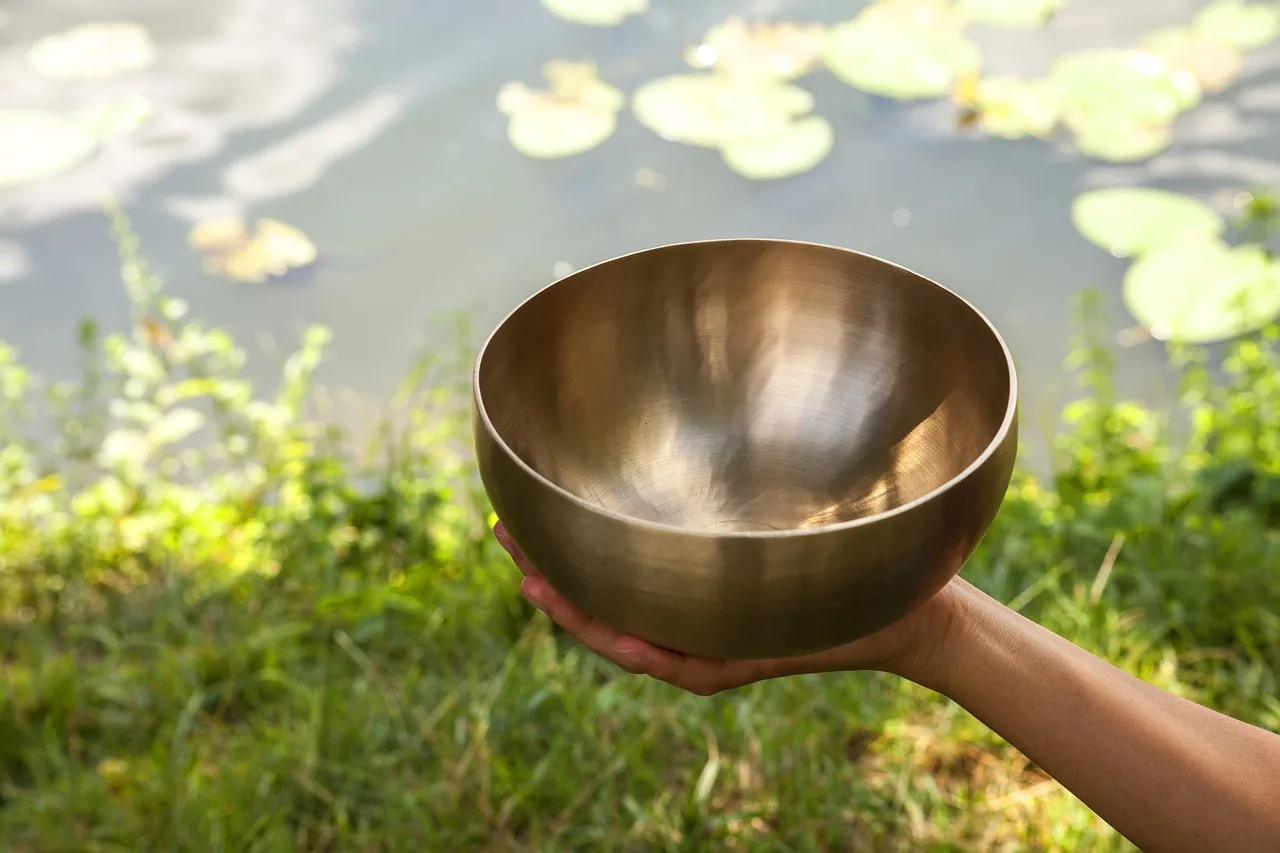
What is the promise of the “7 metals” really worth for a singing instrument?
Since the 1960s, this idea has grown in popularity. Studies of old instruments often show a bronze base (copper + tin).
In this article, we clarify the vocabulary used in France: Tibetan bowls, singing bowls, old versus modern production. These terms are sometimes used interchangeably.
Approach: practical fact-checking. We will look at composition, manufacturing, traceability and concrete criteria for sound quality.
The public often associates vibrations with relaxation and meditation. We explain these links without promising unproven medical effects.
You will see what will be checked: historical origins, the list of metals cited, real proportions and accessible testing methods.
Guiding idea: the essentials often come down to bronze and craftsmanship, more than traces of rare alloys. This angle will help you spot marketing claims and choose a suitable instrument.
Understanding the promise of “Tibetan bowls” and singing bowls today
In markets and online, promises around sound instruments are multiplying.
Why the topic keeps coming up in shops and on the Internet in France
Demand has increased with e-commerce, wellness shops and sound therapy. Listings often use an attractive commercial label, without any official standard.
What is attributed to vibrations, sounds and relaxation
Vibrations are credited with reducing stress, improving meditation or producing a perceived rebalancing.
These claims often belong to personal experience, not medical proof. Sounds encourage attention and create an atmosphere conducive to calm.
Typical seller messages and why they deserve verification
Common formulas: thousand-year-old tradition, sacred alloy, chakra tuning.
“An instrument should convince through its sound, not only through a list of metals.”
What the article will verify and the notion of quality
We will distinguish symbolic tradition, real composition, artisanal or industrial manufacturing, and plausible effects.
Quality is judged by harmonic richness, sound sustain and the consistency of the seller’s claims. Inform yourself before buying according to your use: meditation, relaxation, bodywork or simple atmosphere.
| Aspect | Common promise | What we will check |
|---|---|---|
| Composition | Sacred alloy | Analysis, traceability |
| Manufacturing | Hand-hammered | Physical clues, cost |
| Sound | Rich in harmonics | Simple mallet test |
Origins and historical evolution: from utilitarian bowl to sound-therapy instrument
Before their modern revival, these objects were mainly used in daily life across the Himalayan region.
Records show bowls used as containers, for offerings, cooking and monastic practices. Few sources describe systematic musical use.
The modern reinterpretation appeared mainly in the 1960s. Tourism and export turned utilitarian pieces into instruments sold for relaxation. This reinterpretation explains the popularity of the term “singing bowl” today.
Scientific analyses confirm this link to the material: an Oxford study (Dr Peter Northrup, 2010) of more than one hundred pieces dated from the 16th to the 19th century shows a dominance of bronze. Most examples are almost exclusively composed of copper and tin, with very few traces of other metals.
Artisanal tradition versus modern narrative
It is important to distinguish the tradition linked to hammering and bronze work from the tradition narrative associating planetary symbols or sacred numbers.
The question is not “old = better,” but: what is documented and what has been reconstructed?
When buying, be wary of claims that automatically turn an old object into a sound-therapy instrument. Also consult our detailed analysis of history and meanings.
Why do people talk about 7 metals: the symbolism of the number seven in tradition
The number seven often stands out as a simple, memorable symbolic framework.
Appeal: a short list makes transmission easier. According to tradition, linking chakras, notes and celestial bodies makes the discourse accessible to ritual and wellness practices.
The often-cited list of metals includes: iron, silver, gold, copper, mercury, tin and lead.
Correspondences frequently invoked:
| Chakra | Note | Celestial body |
|---|---|---|
| Root | C | Saturn |
| Heart | A | Sun |
| Crown | B | Moon |
These astrological links use the Sun, the Moon and the five visible planets. They offer a simple symbolic logic.
Belief guides attention: it often changes the sensory experience without proving the composition.
Reading grid: appreciate the ritual value if it speaks to you. Check the real composition if the purchase rests on a technical promise.
To go deeper into the historical and practical sources, see our guide everything you need to know about singing bowls.
7 metals of the Tibetan singing bowl: myth, reality and what to check
Technical sources and analyses show one constant: a bronze base (copper + tin) dominates most old instruments.
Historically, the presence of a simple alloy is the most plausible path. Studies (Oxford 2010, Concordia 1995) indicate that the real composition rarely matches the diversity announced by modern narratives.
The popularization of the legend mainly belongs to a commercial and narrative movement: an easy-to-remember claim, a sacred aura and differentiation on sales websites.
When legend becomes a sales argument
The promise loses its value when it replaces verifiable information. A slogan about composition is worth little without analysis, traceability or workshop details.
- A bowl can contain traces of other metals without proving a traditional recipe.
- Ask: bronze base? Cast or hammered? Workshop origin? Analysis available? Return policy?
“Quality is judged by sound and seller transparency.”
Transition: the rest of the article details the precise list of metals cited and the attributes assigned to them.
Which metals are we talking about exactly? The list and what is attributed to them
The often-cited list brings together seven well-known elements. To remove ambiguity, here are the names used: iron, lead, silver, gold, tin, copper, mercury.
Copper and tin form the heart of the alloy. Their presence creates the mechanical base and acoustic quality. Most historical instruments rely on this pair.
Possible traces: iron, silver, gold
These elements may appear as traces depending on batches or workshop practices. Their presence does not mean they determine the sound.
Mercury and lead: controversial mentions
These two metals often appear in the narratives. They are rarely confirmed without laboratory testing. Remain cautious about listings that use these names to attract buyers.
| Element cited | Typical role | Verifiability |
|---|---|---|
| Copper | Acoustic base | Common, measurable |
| Tin | Hardness and tone | Common, measurable |
| Iron / Silver / Gold | Possible traces, symbolism | Often low, requires analysis |
| Mercury / Lead | Controversial mention | Rarely demonstrated without testing |
Practical rule: prioritize seller transparency and analyses before buying. The next transition examines exactly what metallurgical studies measure.
Real composition and proportions: what metallurgical analyses show
Metallurgical analyses provide concrete figures when the claims remain vague.
A real analysis gives measurable percentages of the alloy. These figures are more reliable than a marketing label.
Key studies and results
- Oxford 2010 (Dr Peter Northrup): more than one hundred pieces from the 16th to the 19th century, mostly composed of about 99% bronze. Less than 2% showed trace iron.
- Concordia 1995: modern examples may cite several metals, but copper and tin remain overwhelmingly dominant; the others remain as traces.
Why the ratio comes up often
The compromise around about 77% copper and 22% tin promotes stability, hardness and harmonic richness sought by artisans. It is a working balance that influences sustain.
Role of impurities
Micro-traces can nuance the sound color or patina. They bring variations, not an acoustic revolution.
For buying: prioritize transparency about the base alloy and manufacturing work rather than a simple enumeration of elements.
Can you find bowls with more or fewer metals? Alloy, brass, crystal
The variety of metal recipes reflects both uses and commercial logic. A traditional workshop will often favor a simple alloy. A producer focused on the Western market may multiply components to sell a story.
2-metal bowls (bronze): simplicity and historical consistency. Copper and tin remain the most stable base. These pieces are common for meditation and sound practice.
Multi-alloy bowls (5, 7, 9, 13 elements): modern additions, such as zinc or nickel, appear. Listings sometimes promise a “more powerful” sound or specific virtues. Without analysis, these promises may be commercial storytelling.
Alternative: quartz crystal. Crystal bowls offer a different timbre, purer and less metallic. It is a relevant choice for anyone seeking another experience or wary of alloys.
Multiplying elements is not proof of authenticity; manufacturing consistency matters more.
For professional use, prioritize harmonic regularity. For ritual or decorative use, other compromises may suit you. To learn more about uses and instrument origins, see our complete guide on everything you need to know about singing bowls.
How to check for the presence of 7 metals without a laboratory? Limits and realistic methods
Checking for metallic elements without specialized equipment requires method and caution. You cannot confirm a complex composition with the naked eye, even with patina or engraving.
Spectrometry (XRF): it provides precise percentages and detects traces. This is the relevant technique for reliable validation. Expect around EUR300 to EUR500 depending on the provider and the depth of analysis.
This cost is justified for a heritage purchase, a collection or a professional sale. For a first bowl for personal use, it is often disproportionate.
- Without a laboratory, require a clear description of the alloy, workshop and process (casting, hammering).
- Ask for macro photos, proof of origin (Nepal/India/Bhutan/Tibet) and a return policy.
- Be wary if the mention of metals is the only marketing argument: it is a weak signal.
Seller transparency matters more than a long list of unproven elements.
In practice, prioritize consistency in the discourse, traceability and sound quality when buying. The next section will show how to identify concrete clues in manufacturing and patina.
Recognizing a quality bowl and avoiding counterfeits: manufacturing, patina, price
Spotting an honest piece requires a trained eye for shape, surface and finishing. Before buying, look at several simple details that reveal the manufacturing process and the expected sound consistency.
Hand hammering vs industrial casting
Clues of artisanal hammering:
- Visible micro-irregularities on the wall.
- Non-repetitive hammer marks.
- Variations in thickness and a “living” rim.
Signs of a cast model:
- Perfect circularity and an overly uniform wall.
- Repetitive decoration or “mirror” finish.
- A mass-produced feel in the hand.
Patina, tool marks and decoration
A credible patina shows coherent wear areas, variable colors and irregular use marks.
Conversely, a uniform tone and identical engravings on several pieces often indicate artificial aging or mass production.
Warning signs from sellers
Beware of listings that list ingredients without origin or proof. Identical series, an abnormally low price or photos with little variety are red flags.
Too low a price = probably casting or a cheap alloy. High price does not guarantee authenticity.
Anti-counterfeit method: compare several pieces, ask for photos of the bottom and rim, and require information about the workshop and process.
To learn more about recognizing an authentic piece, see our guide to recognizing a genuine instrument.
Are the metals dangerous to health? Lead, mercury, allergies and precautions
For practitioners, contact safety and the possible presence of toxic components are legitimate concerns.
What the sources say: some sellers mention lead or mercury as traces. The studies consulted found no documented case of poisoning linked to normal use during relaxation sessions.
Trace presence does not mean proven risk. A metal present in infinitesimal amounts does not require the same vigilance as industrial exposure.
Who should be cautious: people with allergies or hypersensitivity, uses involving prolonged skin contact, or frequent handling without hand washing.
Simple precautions:
- avoid prolonged moisture on the surface,
- do not use as a food container if in doubt,
- wash your hands after long contact if the skin reacts.
Reassuring options: choosing a well-documented bronze instrument (copper/tin) reduces uncertainty. Crystal bowls are an alternative for anyone who prefers to avoid all metal.
The body’s comfort comes first: choose the object that supports your relaxation and serenity.
To explore choices by use, see our guide to everything you need to know about bowls; the next section focuses on sound and practical tests.
Is the sound of a “7-metal” bowl really superior? What matters to the ear
Sound quality is judged first by ear, not by a long enumeration. Careful listening reveals the value of a singing bowl faster than any product sheet.
Harmonics and sustain:
Harmonics and sustain: how to judge sound richness in practice
Listen to the attack, then the sustain. Clear harmonics and long sustain show good sound quality. The absence of buzzing and the stability of vibrations are signs of quality.
Why the copper/tin ratio matters more than trace metals
The copper-tin pair defines the heart of the alloy. Manufacturing (hammering, thickness) strongly influences the sounds. Trace elements bring nuances, rarely an acoustic revolution.
A simple test protocol with a mallet
Hold the bowl on your palm or on a cushion. Strike it lightly for the attack, then rub the rim with a steady mallet.
- Try wood, felt and suede to compare.
- Check the sustain and the absence of unwanted noise.
- Notice the feel of the vibrations under your palm.
Choosing according to use
For meditation, prefer a stable timbre. For relaxation, look for enveloping low sounds. For bodywork, test vibration transmission.
| Criterion | What to listen for | Positive indicator |
|---|---|---|
| Harmonics | Richness of partials | Multiple clear harmonics |
| Sustain | Duration after attack | Long, stable sustain |
| Vibrations | Transmission by touch | Uniform vibrations, no drones |
| Mallet response | Reaction depending on impact point | Regular response with different mallets |
Practical rule: buy with your ears and your hand as much as with a description. Manufacturing and the copper/tin ratio matter more than unproven lists of elements.
Conclusion
In summary, analyses show that bronze (copper + tin) dominates the makeup of old Tibetan bowls. The popularization around seven metals often remains narrative; the presence of other elements appears mainly as traces.
To choose, prioritize quality: hammered manufacturing, rich sound and stable sustain, clear traceability. Listen to several pieces, test with a mallet, observe the wall, rim and patina.
Consider the effects as a personal experience linked to sound, not as a therapeutic promise. A well-made Tibetan bowl that is pleasing to the ear is worth more than an unproven label.
To go further, read our analysis of singing bowls.