
Purpose of the article: to explain clearly what this sound reference means and how to use it simply, without marketing slogans.
Important clarification: an instrument that produces 528 Hz is not always the same as an object tuned to a standard reference. Here, we are talking about tuning and reference points.
We will place 528 among other common references (440, 432, 528) and compare their sound, feel, and practical use.
You will come away with concrete reference points: choice criteria based on your goal, the material, and the context, as well as a reproducible daily method.
Limits: the alleged DNA-repair effects are not proven. However, use in sound therapy can support relaxation and stress reduction.
We will also discuss vibrations and felt experience: why some people choose a specific frequency to sleep better or soothe their emotions.
Well-being warning: this article is intended to support relaxation, not to provide medical treatment.
Understanding the frequency of a Tibetan singing bowl and its vibrations
Understanding the relationship between frequency, harmonics, and bodily sensation makes listening more conscious.
Frequency (Hz): what a sound wave actually measures
Frequency indicates the number of cycles per second in a wave. The higher the value, the higher the sound seems.
To the ear, this becomes a different pitch, which is useful for comparing several frequencies with one another.
Fundamental note and harmonics
A singing bowl produces a fundamental note accompanied by harmonics. The material and size define the main note.
Harmonics create a rich texture that makes the sounds enveloping, close to a small inner music.
Resonance and body-mind perception
Resonance creates vibrations felt in the chest, belly, or hands.
The context (silence, posture, breathing) modulates perception. Conscious listening helps you observe the response of the body and the mind.
“Resonance makes audible what the body perceives even before the mind does.”
| Element | Acoustic impact | Bodily perception |
|---|---|---|
| Size | Lower fundamental note if the bowl is large | Deep vibrations (torso, belly) |
| Thickness | Richer harmonics | Feeling of being enveloped |
| Rubbing vs striking | Stability vs clear attack | Duration of the perceived resonance |
To go deeper into tuning and sound reference points, read a tuning guide.
Why 440 Hz, 432 Hz, and 528 Hz coexist in singing bowls
Tuning references are reference choices, not mystical powers. ISO 16:1975 set A at 440 Hz as the modern standard for music. This makes coherence between instruments and ensembles easier.
Historically, orchestras have varied: 442 Hz (New York), 447 Hz (Vienna), 448 Hz (Berlin), or around 450 Hz (Moscow). These variations show that several reference points are plausible depending on the context.
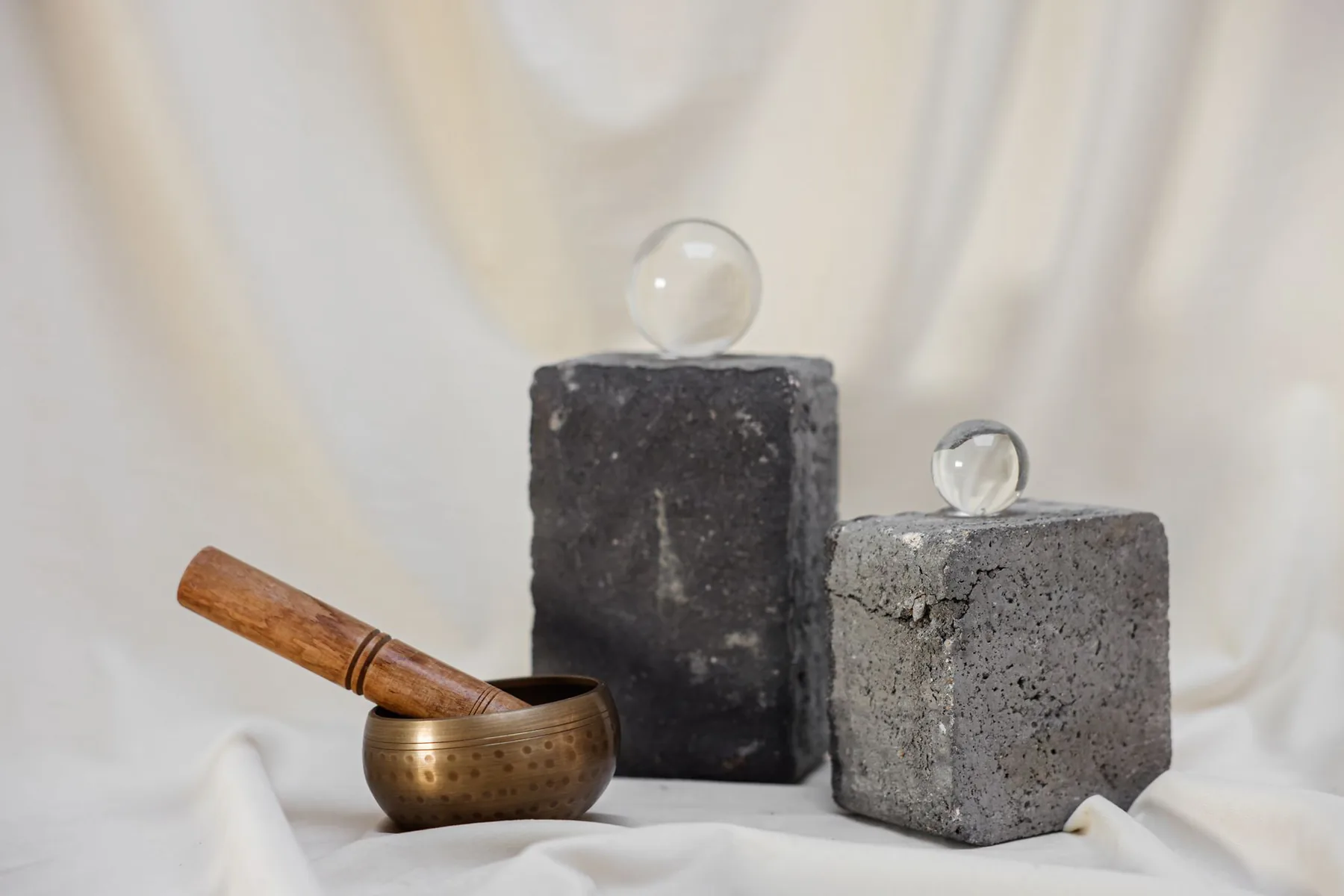
When the reference changes, all notes move. For example, if A shifts from 440 to 432, G drops from 392 to 385 and C from about 261.6 to 256.9. It is a mathematical domino effect.
| Reference | Perception | Use |
|---|---|---|
| 432 | lower, often perceived as gentle | relaxation, personal preference |
| 440 | standard, neutral | orchestral music, clarity |
| 528 | higher, more incisive | intentional reference, sound therapy |
Be careful with marketing: a “440 bowl” indicates tuning within a system where A=440, not necessarily the unique production of a 440 Hz wave. Choosing between these references remains above all a matter of intention and experience, with perceived effects that vary depending on the listener.
To explore how these reference points fit into an energy practice, see how to harmonize your energy. The next section explains the 528 reference precisely and what you can expect from it.
Tibetan singing bowl 528 Hz: what does this frequency mean
Practical definition: the 528 frequency is first and foremost a tuning reference used in certain music and relaxation practices. It appears in teachings called “sacred solfeggio.” It is a reference point, not a cure-all.
“Miracle frequency” and the origin of the promises
Texts and recordings have popularized the idea that it can repair DNA. This is a symbolic interpretation rather than scientific proof.
Intentions and common uses
Practitioners often mention opening the heart, compassion, and personal transformation. Others speak of renewed energy, better intuition, or greater ease of expression.
Pragmatic reading: even though DNA repair through sound has not been demonstrated, a session can support calm, presence, and an atmosphere conducive to inner work.
“A simple intention — to soothe, forgive, or recenter — often guides the experience more than the exact measurement of the sound.”
The next section looks at the desired effects on stress, sleep, and emotional balance.
Desired effects and possible benefits for stress, sleep, and emotional balance
The relaxation sought here is simple and practical: calming the mind, reducing tension, and improving sleep through a short, regular sound routine.
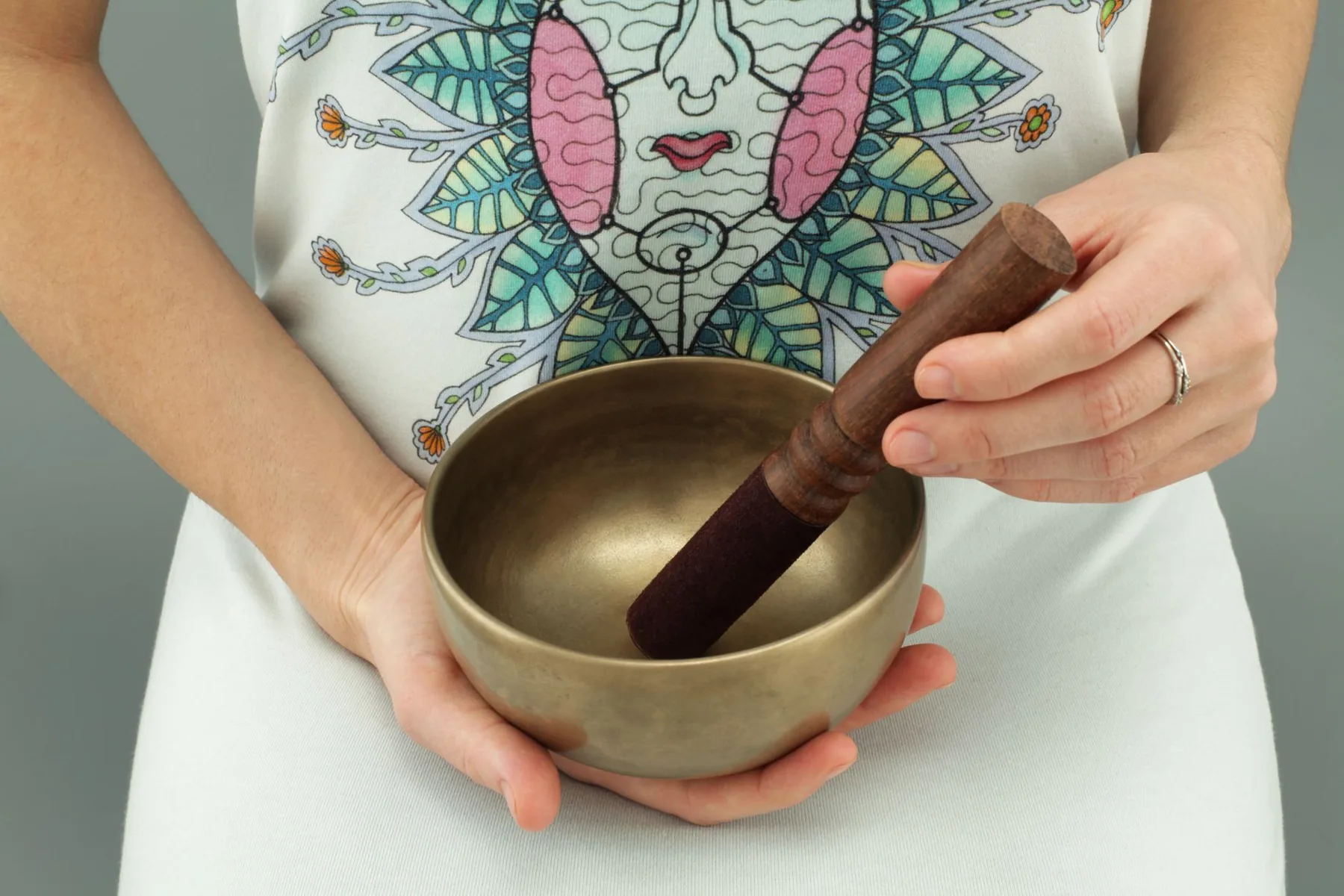
Deep relaxation and calming
During a session, listening encourages the mind to slow down. Breathing settles, rumination decreases, and the body enters a relaxed state.
These mechanisms support deep relaxation, which often prepares the way for falling asleep faster.
Energy, mood, and pain: reported benefits
Many people describe steadier energy and a lighter mood after short sessions (5 to 15 minutes).
Muscle relaxation is also reported, and sometimes a perceived reduction in pain. These are reported benefits, not medical guarantees.
What belongs to subjective experience
Expectations, setting, and acoustics strongly influence the effects. The placebo effect is a normal mechanism that can amplify the perceived benefit.
Practice tip: repeat the same duration, in the same place and at the same volume, to assess the impact on your emotional balance and sleep.
“A simple, repeated routine reveals the effects better than an isolated session.”
Metal Tibetan bowls or crystal singing bowl: impact on quality and precision
Depending on whether you choose an alloy or crystal, the listening experience and vibrations differ.
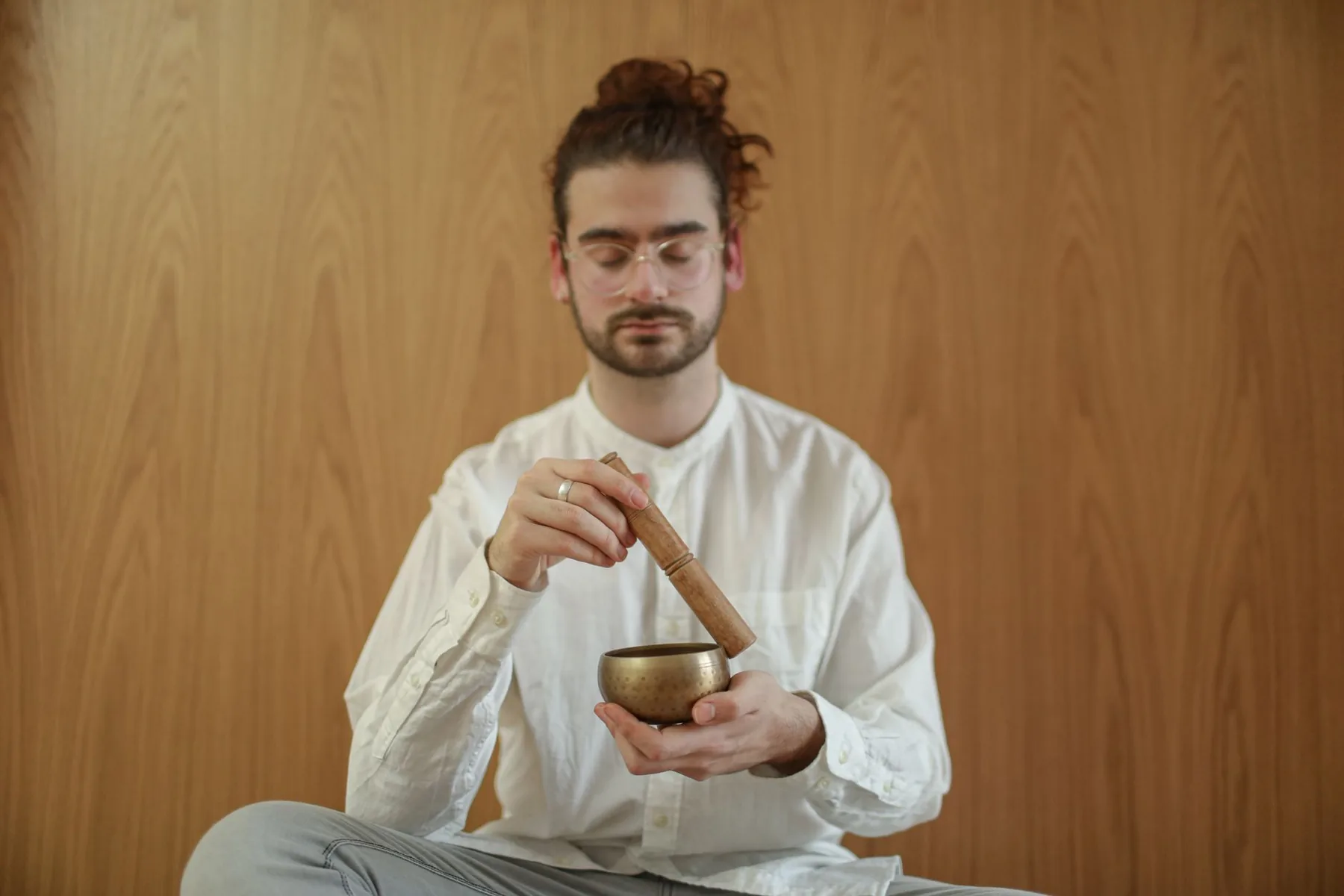
Metal alloys: rich harmonics
Metal instruments produce a fundamental note followed by a series of harmonics. This creates broad resonance and an enveloping sensation.
This richness is ideal for sound baths and overall relaxation.
Quartz and crystal: a purer note
Quartz crystal offers a more stable and purer note. Its dominant frequency is easier to control.
This suits you if you are looking for a directional note and clearer precision.
Why precision “to the nearest hertz” is harder with metal
Craftsmanship, variations in thickness, and the composition of the metals make exact stability rare.
An alloy object cannot easily be retuned after it has been made.
| Criterion | Metals (alloy) | Crystal (quartz) |
|---|---|---|
| Harmonics | Multiple, rich | Few, clearer |
| Note stability | Variable depending on craftsmanship | More stable |
| Sustain | Long, complex | Clear, regular |
| Advertised precision | Check it (often approximate) | Often more reliable |
Buying tip: be wary of overly strict promises for a metal instrument advertised as exact. Use a frequency-analysis app (e.g. Spectroid) to check the dominant frequency. Also think about the harmonics: they count toward sound quality.
To go deeper into checking and tuning, read this tuning guide. Once the material is identified, choose the note according to your goal of meditation, harmony, and balance.
Choosing the right frequency for your meditation practice and goals
To guide your meditation, always start with the intention before choosing the sound.
Simple framework: goal → reference → material → real test. Note the reaction of the body and mind after two minutes of listening.
Relaxation and grounding: when to test 432 Hz
If you are looking for calm, a gentler feeling, and a slightly lower sound, try 432. Testimonials often describe grounding and rapid relaxation.
Mental clarity and presence: staying with 440 Hz
For a practice compatible with modern music and a clear sense of presence, the 440 reference offers useful everyday neutrality.
Heart, intention, and transformation: favoring 528
If your sessions focus on opening the heart, intention, and a higher sound color, test 528. The effect remains subjective, but it can support emotional transformation.
Chakras and notes from C to B: flexible markers
Use correspondences such as C→root, F→heart, A→third eye as tools, not dogma. Adapt them according to what you feel.
Set of bowls vs single bowl
A set allows progression and transitions between registers. A single bowl simplifies the routine. Choose according to your budget, available space, and how regular your practice is.
“Test several instruments, note your breathing, relaxation, and attention: experience guides better than theory.”
How to use it: a guided daily session with a 528 Hz Tibetan singing bowl
Settle in and follow this simple protocol to integrate a short sound session into your daily life.
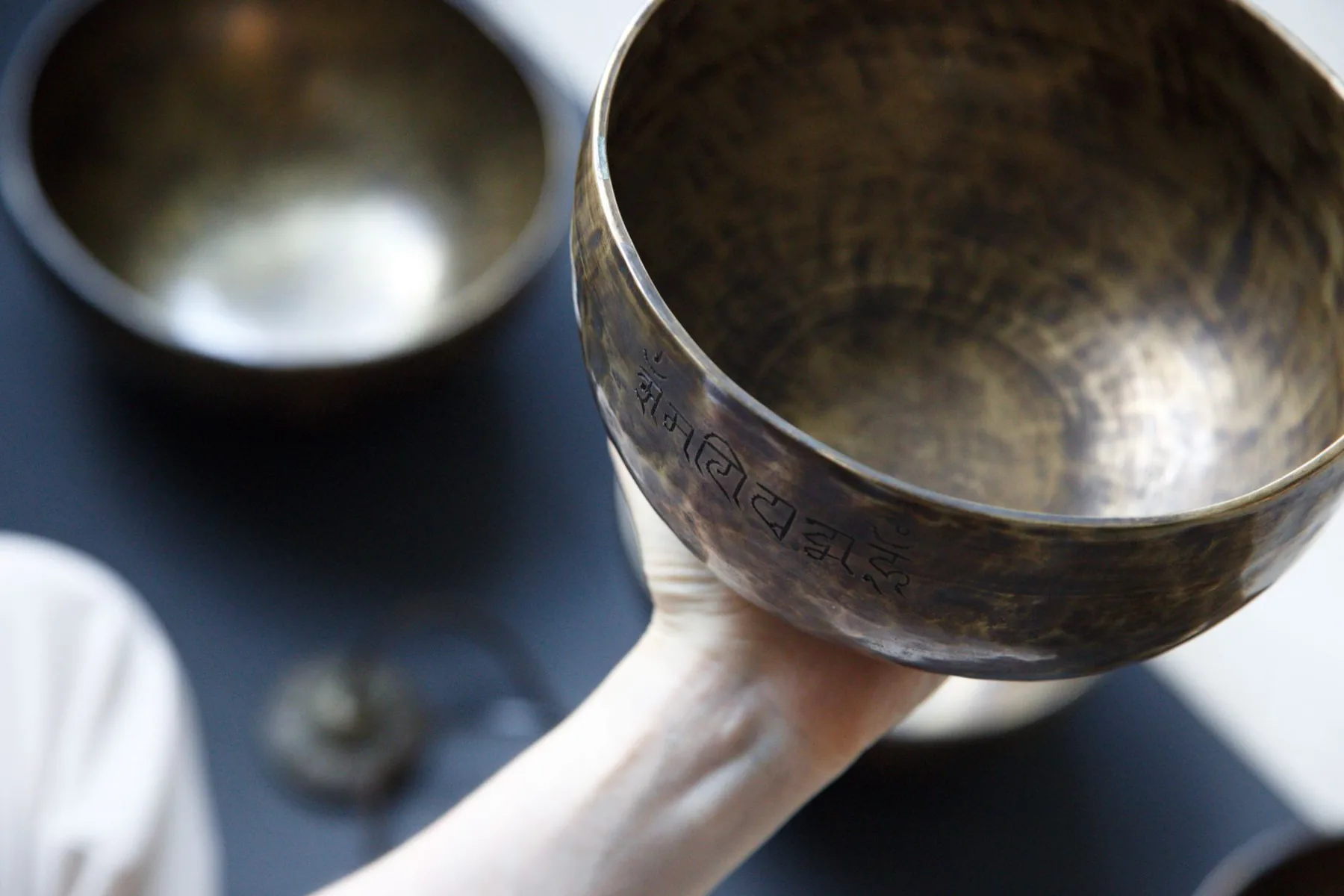
Preparing the space, posture, and intention
Quiet the room, put your phone on airplane mode, and place the bowl on a cushion. Adopt a stable posture, seated or lying down.
Formulate a short intention, for example “soothe the heart”, and keep it in mind during the session.
Striking and rubbing technique
Strike gently near the rim to activate the fundamental, then use steady circular rubbing to make the instrument “sing.”
Adjust the pressure and angle until you obtain stable resonance and constant vibrations.
Duration, volume, and cardiac coherence
Beginner: 5 to 10 minutes, moderate volume, with silent pauses to listen to the sound decay.
Routine: 10 to 20 minutes, alternate 1 minute of singing and 30 seconds of silence. Practice cardiac coherence, 5 seconds inhaling and 5 seconds exhaling, at the start and then during the session.
Feeling journal and verification
After each session, note: perceived stress (0 to 10), sleep quality, energy level, dominant emotion, and what the session shifted.
If precision matters, measure the dominant note with an app (e.g. Spectroid) and accept that harmonics and acoustics change the sensation.
“Regularity turns occasional listening into a reproducible well-being tool.”
To go further, read a tuning guide before buying or checking your instrument.
Conclusion
In short, remember that the 528 reference mainly serves as a tool for intention and listening. Its value is measured through regular practice and by observing what you feel.
Deep effects that are often claimed, such as DNA repair, are not scientifically proven. However, repeated listening often helps reduce stress and support better sleep.
Choose according to the goal (grounding, clarity, heart), the material (rich metal vs precise crystal), and test it in your own context. Keep a feeling journal over several days.
Use this sound as a tool for presence and harmony, not as a miracle solution. To learn more about sacred frequencies, read the guide.