
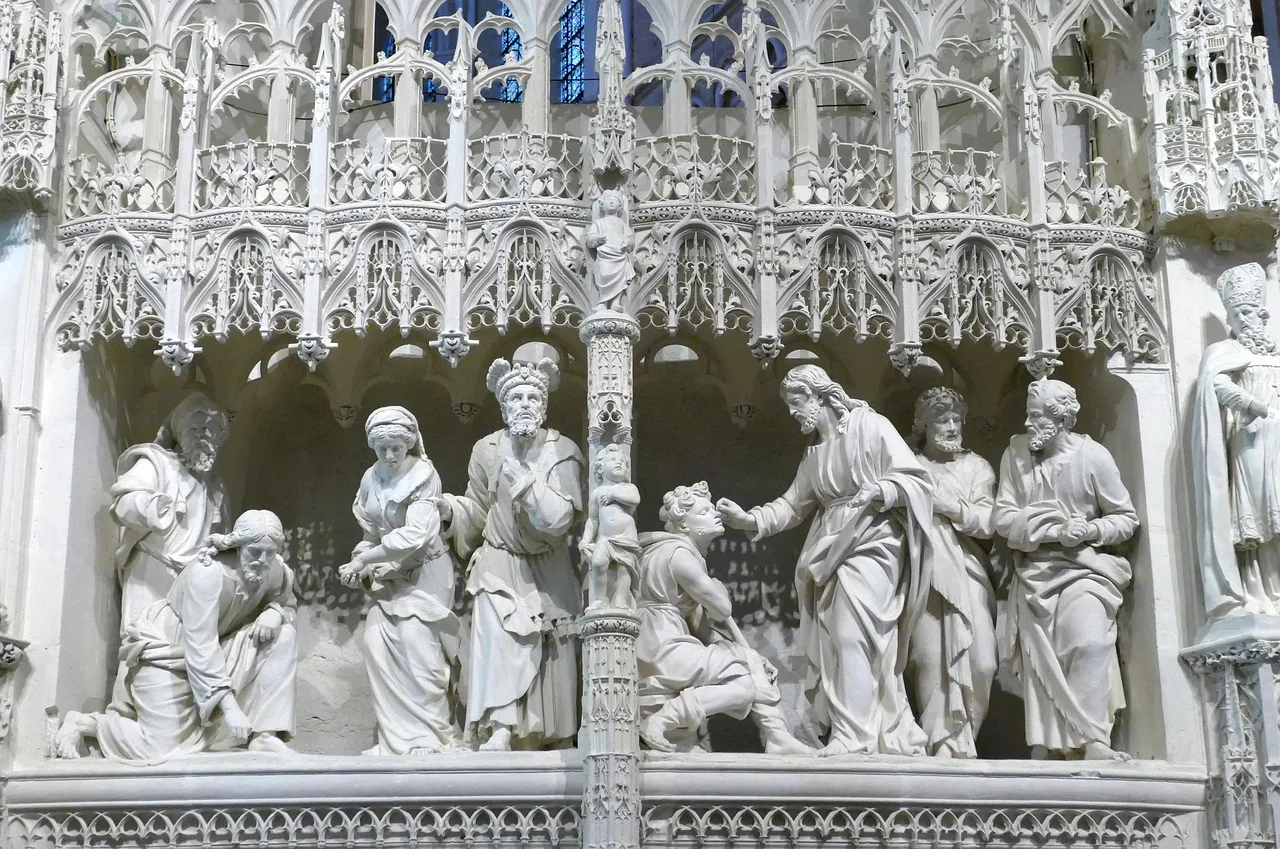
Devotion to Mary holds a central place in the Catholic tradition. Among its most vibrant expressions, sacred melodies play an essential role. They accompany the faithful during solemn celebrations and moments of intimate prayer.
Whether ancient or contemporary, these musical works reflect a deep spiritual richness. Composed by artists such as J. Berthier or D. Rimaud, they unite communities around one shared movement of faith. From pilgrimages to liturgical services, their reach is universal.
This guide explores beautiful Marian hymns, their origins and their meaning. To go further, discover a varied selection ranging from the Magnificat to modern hymns. Each piece embodies a unique tribute to the mother of Christ.
Why sing in honor of the Virgin Mary?
For centuries, sacred music has held a privileged place in the expression of faith. It makes it possible to translate into melody what words alone cannot fully say. When it concerns the Mother of God, these compositions take on an even deeper dimension.
A tradition rooted in the Catholic faith
The Second Vatican Council emphasized Mary’s role as a model of faith and a sign of hope. This vision inspires generations of believers. Marian hymns, such as the Salve Regina, express this devotion through poetic texts and captivating melodies.
Historically, these songs have roots in Byzantine traditions. They were enriched over the centuries, incorporating local influences. In France, the Angelus remains a living example of this popular piety.
Mary, a central figure of devotion and inspiration
Pilgrimages, such as those to Lourdes or Medjugorje, show the faithful’s attachment to her. Songs play a key role there, creating an atmosphere of recollection and joy. They remind us that Mary is an intercessor before the Lord.
Here are a few reasons why these melodies endure:
| Reason | Example |
|---|---|
| Community unity | Songs during Marian Masses |
| Transmission of faith | Teaching hymns to children |
| Artistic expression | Modern compositions inspired by Mary |
To go further, discover how sacred music celebrates this emblematic figure. Whether ancient or contemporary, these works reflect a vibrant spirituality.
Traditional hymns to honor Mary
Marian sacred music unites generations in the same fervor. These hymns, handed down for centuries, carry a vibrant faith and a deep connection with heaven. Discover three pillars of this tradition.
The Angelus: a sung prayer three times a day
Recited or sung, the Angelus gives rhythm to the believer’s day. Its text evokes the Annunciation, combining the Hail Mary with biblical verses. Practiced at 6 a.m., noon and 6 p.m., it invites a spiritual pause.
To include it in your routine:
- Use reminder apps.
- Connect it with a quiet moment (a meal, a walk).
- Choose simple melodies as a family.
Crowned with Stars: a Mass classic
This hymn, often sung for the Assumption, draws its inspiration from Revelation 12:1. Its words describe Mary crowned with stars, a symbol of her glory in heaven. Verses 3 and 4 emphasize her role as protector.
Example of symbolism:
| Element | Meaning |
|---|---|
| Crown | Victory over evil |
| Stars | Divine light |
| Blue mantle | Maternal protection |
Salve Regina: the Marian hymn par excellence
The Salve Regina, composed in the 11th century, often closes vigils. Its Latin text (Salve, Regina, Mater misericordiae) expresses a moving supplication. Composers such as Fauré have revisited it, blending tradition and modernity.
Comparison of versions:
| Version | Characteristics |
|---|---|
| Gregorian | Monodic, in Latin |
| Modern | Polyphonic harmonies |
| Diocesan | 7 recorded variations |
This universal song connects the faithful across borders.
Modern and vibrant songs for Mary
Today, new hymns captivate the faithful with their dynamism. These compositions blend tradition with lively rhythms, reflecting a living and joyful faith.
Look to the Star: a call to hope
Inspired by Saint Bernard, this song evokes divine light through poetic metaphors. Its 30 recorded versions testify to its universality.
“Look to the star, call upon Mary: she will guide you to harbor.”
Used during World Youth Day, it gathers young people around key themes:
- Hope: the words recall that Mary guides us toward Christ.
- Unity: simple melodies encourage group singing.
- Modernity: current arrangements appeal to new generations.
I Will Go to See Her One Day: the expression of filial love
With its 10 verses, this song from the Emmanuel Community expresses a deep desire: to meet Mary face to face. The word “day” appears 17 times, symbolizing the longing for heaven.
Compared with Giannada’s works from the 1980s, it stands out through:
| Element | I Will Go to See Her One Day | Giannada |
|---|---|---|
| Rhythm | Lively, suited to gatherings | Meditative, slow |
| Theme | Filial love and hope | Mystical contemplation |
One young person testifies: “This song helps me keep trusting, especially in times of trial.”
Religious songs to celebrate the Virgin Mary on special occasions
Certain spiritual occasions deserve particular attention. Hymns dedicated to the mother of Christ take on an even deeper dimension there.
The official hymn of pilgrimages
“In our homes, be Queen!” resonates especially at Lourdes. This song, adopted as the national hymn of pilgrimages, unites thousands of faithful.
Its text evokes:
- Maternal protection
- Hope for the sick
- The joy of spiritual encounters
Variations of the Ave Maria for feast days
The Ave Maria exists in many versions according to culture. Among the most famous:
| Composer | Style | Distinctive feature |
|---|---|---|
| Schubert | Classical | Fluid and soothing melody |
| Gounod | Romantic | Piano accompaniment |
| Slavic version | Traditional | Folk rhythms |
For August 15, two options are often available:
- “With Mary, let us rejoice” – joyful and lively
- “Blessed are you, Lord” – more solemn
The Zdravo Kraljice Mira, a Croatian song from Medjugorje, shows how each culture honors this figure. Its simple words especially touch young people.
Tips for choosing:
- Favor Gregorian chant for traditional Masses.
- Choose modern versions for gatherings.
- Adapt the choice to the shrine visited (for example: Alme Pater at La Salette).
These melodies, often mentioning the heavens, create a bridge between earth and spirituality. They transform every celebration into a unique moment.
Conclusion: singing to Mary, an expression of faith and joy
74% of French parishes include these hymns, a sign of their enduring place. Between Gregorian tradition and contemporary rhythms, they embody vibrant filial love. These melodies, such as the Magnificat, unite generations in the same joy.
Create your own repertoire by blending personal piety with shared heritage. One believer testifies: “These songs transform our gatherings into moments of shared faith.” To go further, discover the booklet “Sing to Mary” (Editions du Cerf).
Preserving this musical treasure means honoring the Blessed Virgin while enriching our spirituality. Let these notes carry your prayer toward the heavens.
FAQ
Why sing in honor of the Virgin Mary?
What are the most popular traditional hymns?
Are there modern songs dedicated to Mary?
Which songs should be chosen for a pilgrimage?
Why is the Ave Maria so important?
How can these songs be included in a celebration?
Source Links
- https://www.usccb.org/prayers/hail-holy-queen-salve-regina
- https://www.catholic.org/prayers/prayer.php?p=54
- https://www.ewtnnews.com/?redirectedfrom=cna
- https://udayton.edu/error_page.php?errorDomain=udayton.edu&errorPath=%2Fimri%2Fmary%2Fm%2Fmarian-feasts.php
- https://en.wikipedia.org/wiki/May_devotions_to_the_Blessed_Virgin_Mary
- https://dominicanfriars.org/mary-mother-of-st-dominic/
- https://www.metmuseum.org/essays/the-cult-of-the-virgin-mary-in-the-middle-ages
- https://giamusic.com/sacred-music/category/wedding-music
- https://www.ocp.org/en-us/mother-mary
- https://www.cpdl.org/wiki/index.php/Salve_Regina
- https://www.catholicculture.org/culture/liturgicalyear/calendar/day.cfm?date=2026-08-22
- https://bible.usccb.org/bible/readings/081522-day.cfm