
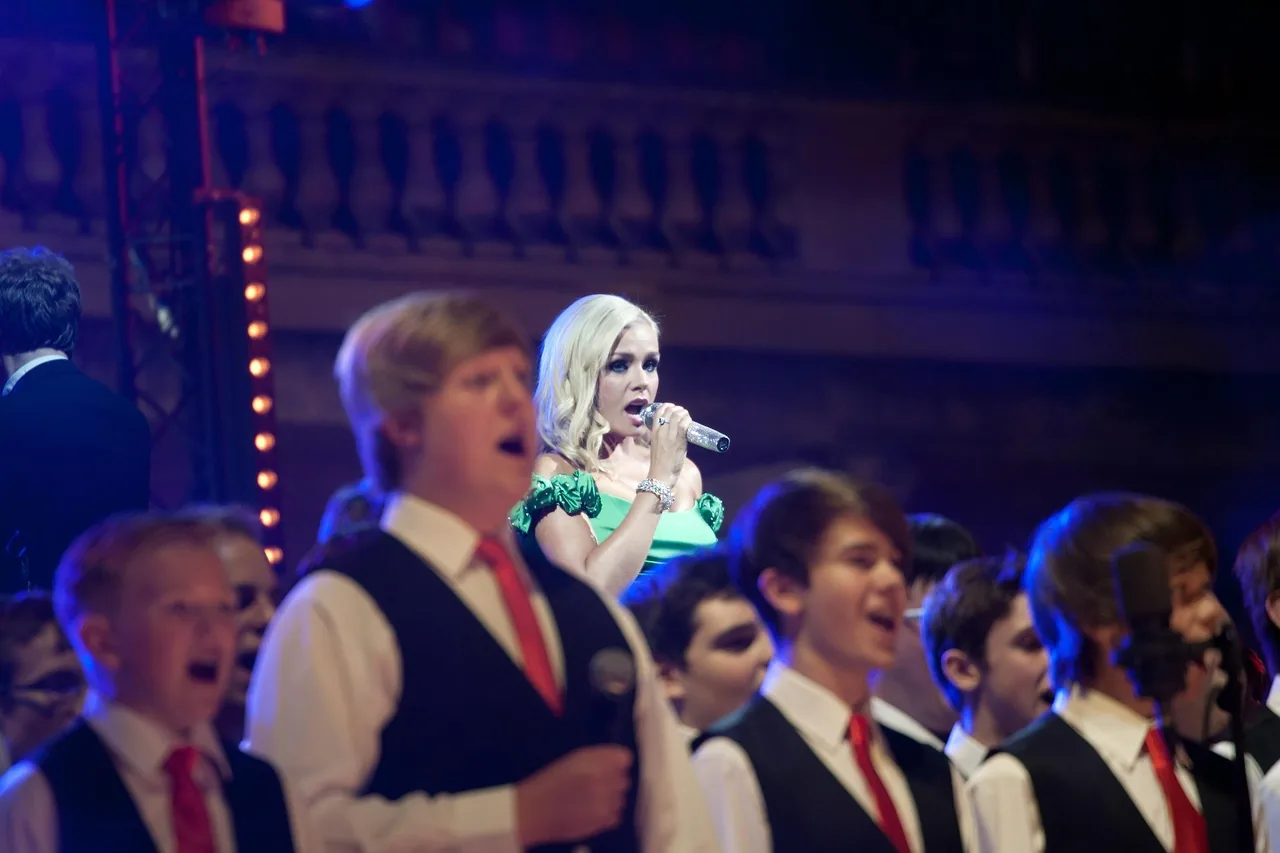
This emblematic hymn of Catholic religious music has captivated hearts for decades. Composed by Jean-Claude Gianadda, it shines through its universal message of love and sharing.
Especially appreciated at weddings and liturgical services, this hymn moves listeners through its simplicity and depth. The first stanza illustrates this committed lyricism: “When all we have are our hands to reach out or to give…”.
The themes of self-giving and Eucharistic symbols are expressed with remarkable beauty. The human voice becomes here an instrument of grace, carrying a melody that resonates in souls.
Discover the complete score to deepen your exploration of this musical masterpiece.
Discover the hymn “How Wonderful It Is to Love”
From its creation in 1977, this hymn left its mark on sacred music. Jean-Claude Gianadda recorded it as part of an anthology of 115 tracks, now available in MP3 format.
In the 1980s, the first interpretations won over parishes. Live versions, often taken up at weddings, add a communal touch.
Among the adaptations, the karaoke version makes it possible to sing with accompaniment. The album Famous Church Hymns for Marriage vol. 3 (track 21) is one example.
To listen to it, several options are available:
- MP3 download on dedicated platforms
- Purchase of CDs such as “Tout Donner”, compiling 26 liturgical songs
The repetitive structure of the verses makes it easy to memorize. This simplicity explains its lasting success.
How Wonderful It Is to Love: lyrics and spiritual meaning
Across its four stanzas, this hymn reveals a rare theological depth. Each line becomes a meditation on human and divine commitment.
When all we have are our hands to reach out: the offering of oneself
The first stanza celebrates the body as a sacred instrument. “Hands to give”, “eyes to smile”: these ordinary gestures become acts of grace.
In the Christian tradition, this offering recalls the service of deacons. It echoes John 13:34: “Love one another”.
When all we have is our sorrow to speak: sharing and vulnerability
Sorrows confessed create authentic communion. The text values fragility as a path toward the other person.
This dialectic inspires sharing groups. As one participant notes:
“To carry our burdens together is already to build the Kingdom”
When bread and wine taste of truth
The third verse reveals a strong Eucharistic symbolism. Bread and wine embody the eternal Covenant.
| Symbol | Meaning |
|---|---|
| Bread | Body of Christ, spiritual nourishment |
| Wine | Blood poured out, joy of the heavenly banquet |
When there is his presence: faith and hope
The final stanza evokes a collective mystical experience. The “road” becomes a pilgrimage toward peace.
This divine presence transforms assemblies, especially during weddings. It unites hearts beyond words.
In conclusion, these lyrics weave a unique bond between human self-giving and divine grace. A hymn that continues to inspire generations of believers.
Jean-Claude Gianadda and the musical legacy of this hymn
A musical legacy that crosses generations and continents. Jean-Claude Gianadda, a committed composer since 1975, created a universal hymn. His work resonates as much in French churches as with Harmonie du Sahel, a vibrant African version.
The many interpretations and MP3 versions
Eight different albums include this hymn, including the album CHERCHER (1985). Studio versions capture its acoustic truth, while live versions add communicative energy.
Collaboration with musicians such as Laurent Castell enriches the arrangements. Today, MP3s dominate:
- Top downloads on religious platforms
- Karaoke version for parish prayer evenings
A hymn for weddings and liturgical celebrations
This hymn symbolizes love, making it ideal for weddings. One testimony emphasizes:
“Hearing these words during our union was a moment of grace.”
Communities also use it for Sunday Masses. Easy to memorize, it unites voices in the same fervor.
Conclusion
This hymn carries a universal message: love as self-giving. It remains deeply relevant in modern spiritual life. Its simplicity touches both young and old.
Instrumental versions offer a beautiful opportunity for meditation. They highlight the melody without words, for inward listening. A different way to experience this masterpiece.
As a key phrase puts it so well: “When all we have is our life and we want to give it”. These words sum up all the faith and hope carried by this text.
To go further, discover the scores and liturgical resources. They make it possible to sing or play this piece in community.
FAQ
Who composed the hymn "How Wonderful It Is to Love"?
What is the main theme of the lyrics?
Where can you listen to an MP3 version of this hymn?
Why is this hymn often chosen for weddings?
What do the references to bread and wine mean in the text?
Are there recent adaptations of this hymn?
Source Links
- https://www.usccb.org/topics/marriage-and-family-life-ministries/principles-ministry-couples-preparing-marriage
- https://www.ewtn.com/catholicism/library/hymns-at-mass-some-observations-on-what-we-sing-in-church-1255
- https://www.hymnary.org/text/love_one_another_for_love_is_of_god
- https://musicbrainz.org/release-group/f58ef885-e035-46c4-a56b-5046acbfef7f/details
- https://imslp.org/wiki/Nearer_My_God_to_Thee_(Thomas,_John_Rogers)
- https://www.cccb.ca/document/music-at-your-wedding/
- https://www.encyclopedia.com/arts/dictionaries-thesauruses-pictures-and-press-releases/nearer-my-god-thee
- https://welcomingchildren.catholic.edu/hymns/
- https://www.ocp.org/en-us/liturgy_planning
- https://www.cccb.ca/liturgy-sacraments/resources-in-english/new-cccb-hymnal/
- https://journals.openedition.org/kernos/1611?lang=en
- https://www.holyspiritspeaks.org/fellowship-about-the-song-for-love/
- https://www.vatican.va/content/benedict-xvi/en/apost_exhortations/documents/hf_ben-xvi_exh_20070222_sacramentum-caritatis.html