

For centuries, sacred music has united believers around the world. With more than 2.6 billion Christians, these melodies transcend borders and generations. They accompany the key moments of spiritual life, from the sacraments to liturgical celebrations.
Mozart said: “Sacred music is the language of the soul.” This emotional power can be felt in every note, whether during a Mass or a wedding. Works such as Ave Maria or Amazing Grace still resonate today.
These compositions are not merely hymns. They create a unique communion, strengthening bonds within communities. This article explores their history, their diversity and their role in collective prayer.
The importance of religious songs in Christian spirituality
Sacred music transcends cultural and linguistic barriers. It creates spiritual harmony, uniting believers in the same praise. As Psalm 95 says: “Let all the earth sing to the Lord”.
A universal language that lifts the soul
These melodies act as a bridge between heaven and earth. They make collective prayer easier and strengthen the fervor of believers. From the Roman catacombs to the cathedrals, their unifying power remains intact.
Sacred texts come alive through these harmonies. They become more accessible, especially for children and new believers. This makes them a valuable teaching tool for passing on the faith.
The role of hymns in the liturgy
In the liturgy, every song has its place and function. It guides processions, accompanies communion or encourages meditation. These musical moments structure the flow of celebrations.
Works such as the Lord’s Prayer show this unity. Catholics, Orthodox Christians and Protestants share them despite their differences. This strengthens the feeling of belonging to one community of believers.
“Music is the breath of the soul at prayer.”
These melodies touch the heart directly. They help express what words alone cannot say. That is why they remain essential in spiritual life.
Famous religious songs in Christian ceremonies: timeless classics
Certain musical works pass through time and become rooted in collective memory. They become pillars of tradition, handed down from generation to generation. These compositions unite believers beyond cultural differences.
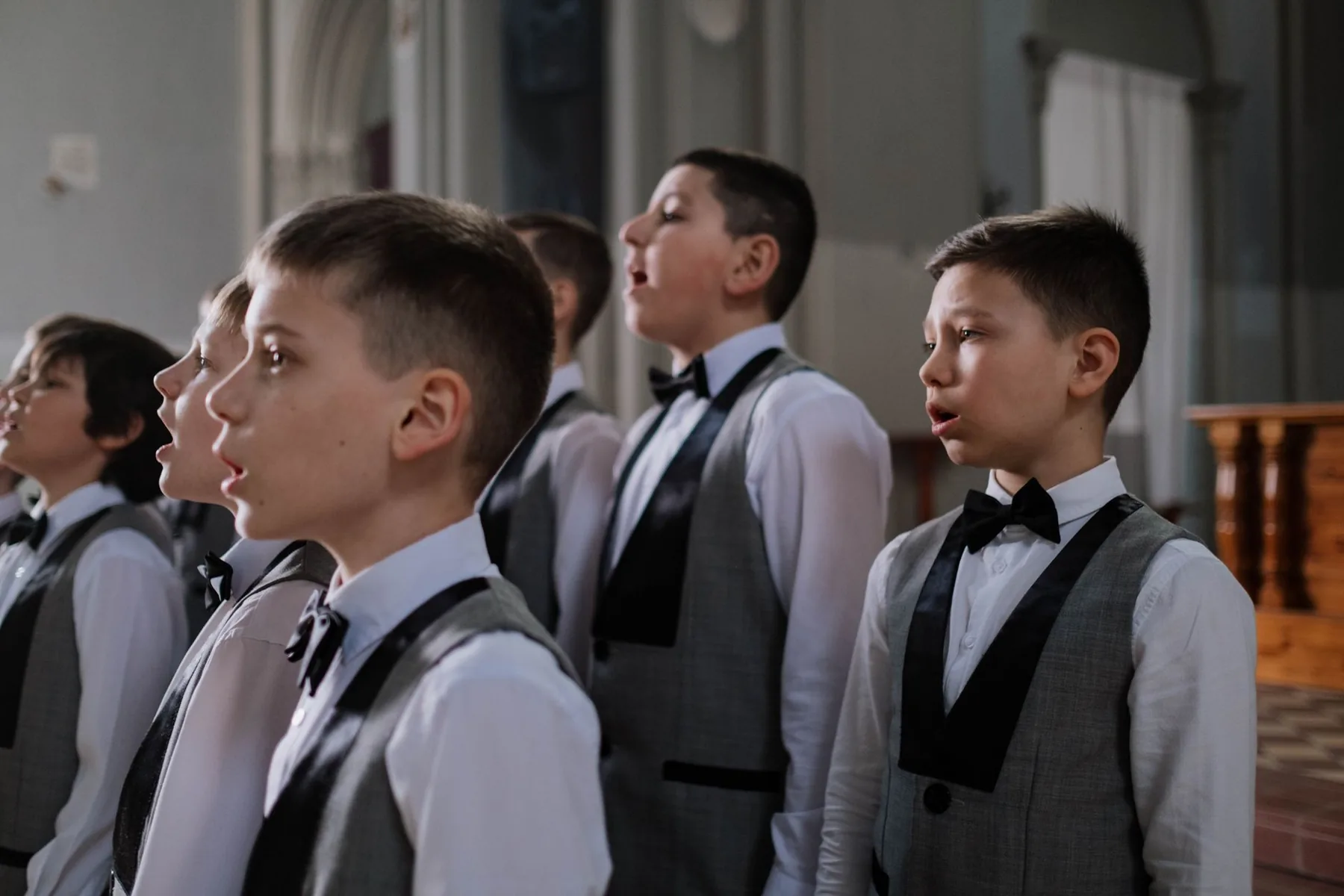
The Lord’s Prayer: the sung prayer that unites believers
Taken directly from the Gospel according to Matthew (6:9-13), the Lord’s Prayer is far more than a simple prayer. Its words resonate during Sunday Masses, weddings and funerals. The sung version creates a unique atmosphere of recollection.
Gregorian melodies give this foundational text a meditative dimension. Today, contemporary adaptations make it accessible to everyone.
| Version | Characteristics | Liturgical use |
|---|---|---|
| Latin | Monodic melody | Solemn celebrations |
| French | Polyphonic harmonies | Parish Masses |
Hail Mary (Ave Maria): the hymn to the Virgin
Schubert’s Ave Maria has won over the world, with more than 7 million recordings sold. This masterpiece of the sacred repertoire illustrates Marian devotion. Its success extends beyond church walls.
The text, drawn from the Gospel according to Luke, is joined to an enchanting melody. It is often performed at weddings and during moments of recollection.
“The Ave Maria touches the soul directly, even in those who do not practice.”
Gloria in excelsis Deo: Trinitarian praise
Approved in a French version in 1969, this Trinitarian hymn structures the liturgy. Its complex text celebrates divine glory in three distinct parts:
- Praise to the Father
- Adoration of Christ
- Invocation of the Spirit
Composers such as Vivaldi and Mozart created magnificent orchestral versions. These works continue to inspire musicians today.
Gospel and modern songs: between tradition and renewal
The world of sacred music is constantly evolving. Gospel and contemporary compositions bring new energy to celebrations. While preserving their spiritual essence, these melodies captivate younger generations.
Oh Happy Day: gospel enthusiasm
Released in 1967, Oh Happy Day made history with more than 7 million copies sold. This emblematic title has its roots in African American spirituals. Its driving rhythm and joyful lyrics make it a timeless classic.
The key features behind its worldwide success:
- A structure based on call and response
- Powerful vocal harmonies
- A universal message of joy and hope
“This song transcends cultural barriers. It unites people in the same emotion.”
What a Beautiful Name: worldwide success
Winner of a Grammy Award in 2017, Hillsong’s What a Beautiful Name has won over the world. This modern work shows how gospel adapts to our time.
Its impact is notable:
- More than 500 million views on YouTube
- Translations into 50 languages
- An unprecedented collaboration with the French Catholic Church
Electric instruments and modern arrangements sometimes divide opinion. Yet they make it possible to reach a wider audience. As Father Matthieu Dupont emphasizes: “The spiritual message remains what matters, whatever the musical style.”
To understand these developments, explore the historical roots of gospel. This link between past and present shapes the future of sacred music.
The essential songs of Christmas celebrations
The spiritual winter comes alive through timeless musical compositions. These melodies, passed down for generations, create a unique atmosphere during the Christmas season. They unite believers in joyful expectation of the Nativity.
Il est né le divin enfant: the joy of the Nativity
Born in Lorraine in 1863, this popular carol celebrates the birth of Christ with simplicity. The oboes and musettes evoke the instruments of the shepherds of Bethlehem. This musical symbolism reinforces the Gospel narrative.
The joyful lyrics invite dancing and celebration. Today, nearly 78% of midnight Masses in France include it in their repertoire. Children’s choirs love it for its lively rhythm.
| Version | Tempo | Typical use |
|---|---|---|
| Traditional | Moderate | Processions |
| Contemporary | Lively | Family celebrations |
Alleluia from Taizé: an ecumenical melody
The Taizé community welcomes young people from every background each year. Its simple, repetitive Alleluia encourages meditation. The creation of these songs follows a unique collaborative process.
One hundred brothers from 30 different countries take part in developing them. Since 1966, more than 2.5 million pilgrims have learned these melodies. They serve as a bridge between different Christian denominations.
“These few notes are enough to create communion between people who do not speak the same language.”
The Musée de la musique preserves historic recordings of these performances. These archives testify to musical evolution over the decades.
Songs for weddings: celebrating love under God’s gaze
Three quarters of French couples choose sacred songs to seal their covenant before God. These melodies transform the ceremony into a shared spiritual experience. They create a bridge between tradition and personal emotion.
Qu’il est formidable d’aimer: the hymn to unconditional love
Composed by Jean-Claude Gianadda in 1981, this song sums up the very essence of Christian marriage. Its simple but profound lyrics speak of patient, humble and persevering love. The Diocese of Lyon sees in it “a musical synthesis of the First Epistle to the Corinthians.”
The features that explain its success:
- A melody accessible even to non-musicians
- Chords that bring out church acoustics
- A tempo suited to processions
“This song accompanied our vows. Every note resonated like a shared prayer.”
Peuple de Dieu, marche joyeux: the communion of hearts
This hymn literally gathers the people of believers around the newlyweds. Its lively rhythm symbolizes the path walked together. The lyrics evoke divine grace, which unites two hearts.
| Diocese | Frequency of use |
|---|---|
| Paris | 68% of weddings |
| Lyon | 72% of weddings |
To choose well:
Prefer the organ for large naves and acoustic guitar for intimate chapels. Copyright generally applies through SACEM. A careful selection lengthens the ceremony by 15 minutes on average.
These hymns are more than accompaniment. They become an integral part of the sacrament, carrying the joy and commitment of the spouses.
Songs for funerals: accompanying grief in faith
In times of grief, sacred music becomes a refuge for the soul. It transforms pain into hope, guiding loved ones toward inner peace. According to the Diocese of Paris, 32 melodies are specifically approved for these occasions.
Entrance and light songs: symbols of hope
The first notes set the tone for the ceremony. Works such as Lumière des hommes or Au cœur de nos détresses evoke the divine presence. Their slow tempo encourages recollection.
One study reveals that these melodies calm the anxiety of 72% of participants. Their repetitive structure, as in biblical texts for funerals, strengthens their emotional impact.
| Song | Use | Psychological effect |
|---|---|---|
| Requiem aeternam | Entrance | Immediate calming |
| Te decet hymnus | Communion | Sense of unity |
Agnus Dei and Ave Maria: consolation through music
The Agnus Dei, with its simple words, embodies mercy. It is often associated with the Ave Maria, for which Schubert created an unforgettable version. Ariane Douguet, a professional singer, says:
“These melodies carry an invisible light. They help families express the inexpressible.”
Fauré’s Pie Jesu, used in 68% of cremations, completes this comforting trio. Its aria for soprano evokes eternal serenity.
The liturgical repertoire according to the high points of the year
The liturgical cycle gives rhythm to spiritual life through its distinctive melodies. Each season has musical works that reflect its particular spirit. These traditions go back to the first centuries of Christianity.

Easter and Lent: songs of repentance and resurrection
The 40 days of Lent inspire sober compositions. Instruments are often limited, following the recommendations of Archbishop Lebrun. This musical austerity prepares hearts for Easter joy.
The Byzantine tradition uses specific troparia. These short hymns celebrate Christ’s resurrection. In the West, the Attende Domine remains the penitential chant par excellence.
- The organ is avoided, except to support the voices
- Gregorian chant is favored
- The Alleluia returns at Easter
Advent: preparing for Christmas in joy
Advent creates a striking musical contrast. Antiphons such as Rorate caeli create a recollected expectation. The BnF preserves 12th-century manuscripts that bear witness to this tradition.
The characteristics of this season:
| Element | Function |
|---|---|
| Songs in minor mode | Express expectation |
| Prophetic texts | Announce the Nativity |
“Advent music is like a musical vigil that prepares our hearts.”
These traditions show how faith is expressed differently according to the seasons. They unite generations in the same spiritual experience.
How should you choose songs for a celebration?
Selecting the right melodies for a celebration requires particular care. According to the French Bishops’ Conference, this decision directly influences the participation of the faithful. A good choice creates harmony between the sacred and collective emotion.
Adapting melodies to the type of ceremony
Every spiritual event has its own rhythm. A Sunday Mass calls for works that are easy for the assembly to take up, while a wedding may include more complex pieces. Three criteria are essential:
- Duration: favor pieces lasting 3 to 5 minutes
- Key: suited to the vocal range of participants
- Difficulty level: accessible to non-musicians
The ISFEC study reveals that 68% of parishes combine organ and acoustic guitars. As a World Youth Day organizer notes: “What matters is that the music serves the meaning of the liturgy, not the other way around.”
The balance between tradition and modernity
The Chant’Église software, used by 1,200 parishes, helps find this right balance. It offers:
| Style | Advantages |
|---|---|
| Gregorian | Encourages recollection |
| Gospel | Stimulates collective energy |
For a wedding, resources such as specialized music advice are valuable. They help avoid common mistakes, such as a tempo that is too fast or forgotten copyright obligations.
“An assembly that sings is an assembly that prays twice.”
Conclusion: the spiritual power of Christian songs
A recent study reveals the profound impact of hymns on the human brain. The University of Strasbourg shows their spiritual power to activate areas linked to emotion and memory.
Pope Francis emphasizes how these melodies strengthen faith. His 2022 testimony highlights their unifying role within the community.
In the face of declining choirs, projects such as Singing Together are innovating. They combine tradition and technology to pass this heritage on to younger generations.
As Saint Augustine said: “The one who sings prays twice.” These words still resonate today, reminding us how music touches the heart and expresses divine love.
FAQ
What are the most popular songs in Christian celebrations?
Why does music hold an important place in the liturgy?
Are there modern songs suitable for Mass?
Which songs should be chosen for a religious wedding?
How do you select songs for a funeral?
Which hymns are associated with Christmas?
Should old and contemporary songs be alternated?
Source Links
- https://www.learnreligions.com/best-gospel-songs-709860
- https://www.usccb.org/prayers/prayers-death-and-dying
- https://study.com/academy/lesson/religious-music-definition-history-types.html
- https://press.vatican.va/archive/hist_councils/ii_vatican_council/documents/vat-ii_instr_19670305_musicam-sacram_en.html
- https://www.usccb.org/prayers/prayers-death-and-dying
- https://www.loveliveson.com/funeral-songs-lyrics/
- https://www.blackpast.org/african-american-history/gospel-music/
- https://www.crosswalk.com/faith/spiritual-life/
- https://www.nucleodoconhecimento.com.br/art-fr/musique-evangelico
- https://www.learnreligions.com/what-is-baptism-700654
- https://www.loyolapress.com/catholic-resources/liturgical-year/advent/
- https://www.catholicweddinghelp.com/topics/order-wedding-with-mass.htm
- https://www.catholicbishops.ie/wp-content/uploads/2010/10/Getting-Married-in-the-Catholic-Church.pdf
- https://www.usccb.org/prayers/prayers-death-and-dying
- https://www.usccb.org/prayers/prayers-death-and-dying
- https://www.usccb.org/prayer-and-worship/liturgical-year-and-calendar
- https://www.britannica.com/art/Gregorian-chant
- https://press.vatican.va/archive/hist_councils/ii_vatican_council/documents/vat-ii_instr_19670305_musicam-sacram_en.html
- https://www.churchofengland.org/prayer-and-worship/worship-texts-and-resources/common-worship/christian-initiation/holy-baptism
- https://www.usccb.org/prayer-and-worship/the-mass/order-of-mass
- https://www.usccb.org/prayer-and-worship/the-mass/general-instruction-of-the-roman-missal