
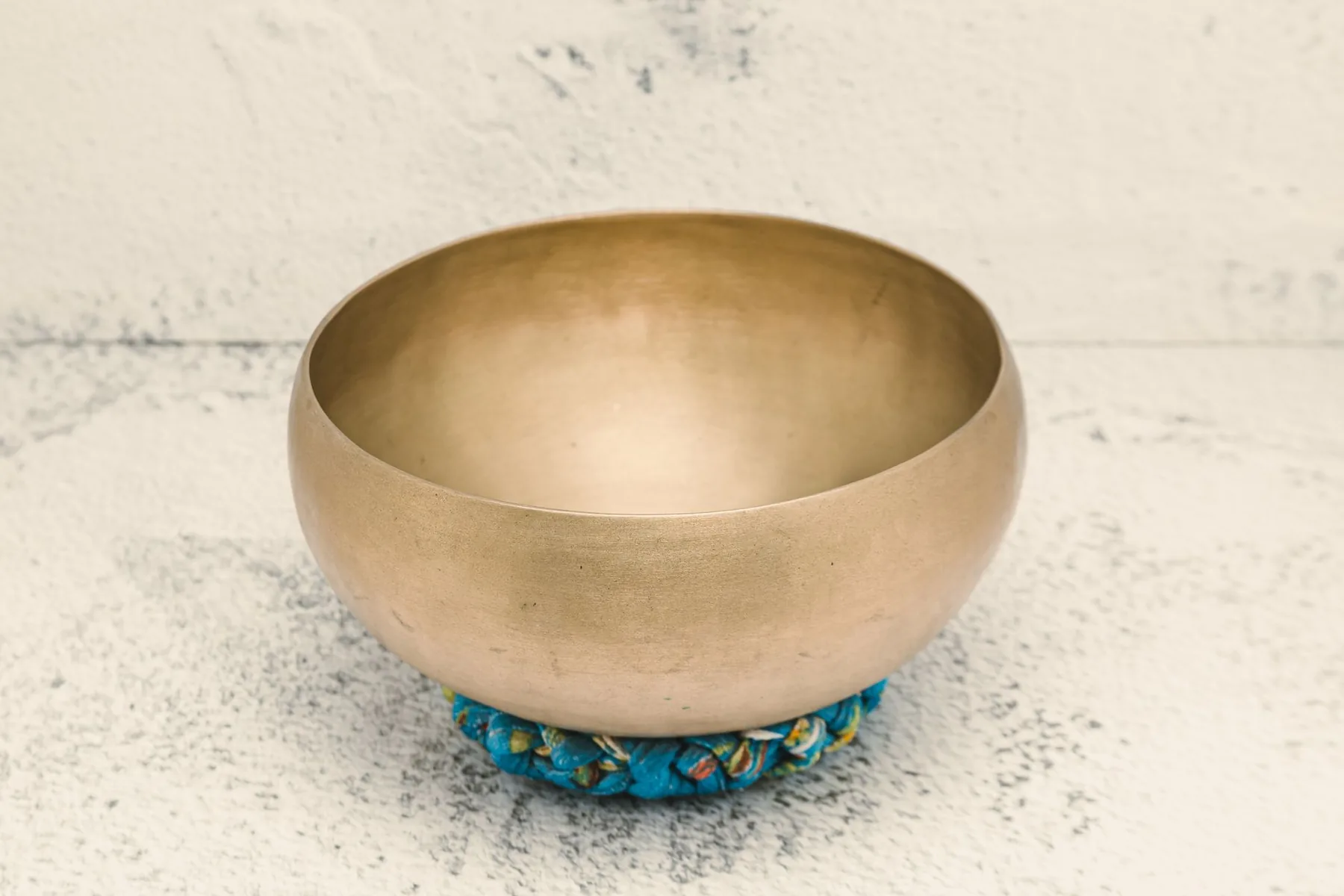
Today, distinguishing an old Tibetan singing bowl from a modern object is difficult. The market mixes hammered pieces, molded models and decorative objects. In France, that makes both choosing and knowing what price to pay more complicated.
This buying guide offers a clear checklist: check the craftsmanship, alloys, patina, provenance and, above all, the sound.
We follow a progressive assessment: first the visible appearance, then the questions to ask, and finally listening to the harmonics and sustain.
Goal: help you compare several singing bowls and avoid mass-produced counterfeits, online as well as in shops.
Remember: authenticity does not always mean a better experience. Depending on your use — meditation, relaxation or sound therapy — sound quality and vibrations come first.
Understanding what is meant by an “authentic” Tibetan singing bowl today
The idea of “authentic” varies greatly depending on who is speaking and why.
There is no international specification that imposes a minimum age, a fixed number of metals or a single place of manufacture. Some experts emphasize age (50–60 years), others hammering in Tibet or Nepal, and others cite the famous “7 metals.” These criteria can contradict one another.
Three practical categories before buying
- Antique: period piece, often rare, sometimes inconsistent.
- Traditional: sober style and craftsmanship close to historical uses.
- Handcrafted: modern handmade bowl; quality depends on the workshop.
| Category | Strength | Limit | Recommended use |
|---|---|---|---|
| Antique | History, rarity | Price, uneven sound quality | Collection, story |
| Traditional | Consistent sound, understated look | May be modern | Meditation, relaxation |
| Handcrafted | Accessibility, customization | Quality varies with the alloy | Regular practice |
The myth of the “7 metals” is often commercial. Historical composition has varied; the label alone is not enough. To decide, refocus on use: meditation and relaxation favor sound and vibration quality. If history matters most, require consistency between the stated age, origin, condition and price.
The following sections turn these principles into concrete observations and questions to ask before any purchase. To explore certain terms and misconceptions in more depth, see this detailed article: differences and misconceptions.
Recognizing an authentic Tibetan singing bowl: reliable clues to check before buying
A few visible signs can help distinguish handcrafted production from industrial manufacturing.
Craftsmanship and surface
A hand-hammered bowl shows micro-irregularities and percussion marks. The surface is not perfectly smooth.
By contrast, a molded bowl has a uniform, shiny finish, a sign of mass production.
Origin and story
Check for consistency: provenance (Tibet/China, Nepal, India, Bhutan), who bought it and the purchase context. A precise story is worth more than a simple label.
Design, alloy and patina
Antique bowls are often understated. Very regular symbols may come from modern acid engraving.
Historically, bronze (copper + tin) is common. Brass (copper + zinc) is yellower and less traditional.
A natural patina varies across the surface; uniform aging may be artificial.
Tones and harmonics
A good singing bowl offers sustain, harmonics and stable vibrations. If you are a beginner, compare several pieces and look for a rich sound rather than a hollow tone.
| Clue | What it indicates | What to check |
|---|---|---|
| Micro-irregularities | Hand hammering | Surface, rim, impact marks |
| Uniform finish | Industrial molding | Perfect symmetry, absence of marks |
| Uneven patina | Natural aging | Color variations, worn areas |
| Repeated engravings | Modern decoration | Engraving technique, regularity |
Mini-checklist: craftsmanship, origin, engravings, alloy, patina, sound. Compare before buying and, if needed, consult a detailed guide on how to recognize a real bowl.
Buying method: testing a singing bowl without being misled
Before buying, test the sound and the provenance: this helps avoid disappointing purchases. In a shop or online, a few simple checks reduce the risks.
Seller warning signs
Avoid series of identical models with the same motifs. Vague descriptions — “7 metals” without details — are suspicious.
Beware of generic photos and the lack of views of the rim or base. Undocumented provenance is a warning sign.
What you should ask
Ask these questions: exact origin, manufacturing technique (hand-hammered or molded), material or alloy, size and weight.
When buying online, require an audio recording of the exact bowl, not a “similar” model. Ask about the return policy and shipping conditions.
Testing in a shop and remotely
In store, strike it, then rub it. Listen to the stability of the sound and feel the vibrations in your palm. If the sound “breaks” quickly, quality is limited.
Remotely, ask for clear photos of the percussion marks and rim. A clean recording reveals sustain and harmonics.
Distinguishing noise from sound
Many bowls can make noise. But for a real experience — harmonization, relaxation, useful vibrations — look for a rich, stable sound with harmonics.
Take your time: compare 2–3 pieces, repeat the gestures and avoid impulse buying. On the French market, the best sellers often provide audio and manufacturing details.
To deepen your checks before buying a bowl online, read this detailed article: real or fake: buying guide.
Price and value: realistic benchmarks on the French market
On the French market, price often reveals more about marketing than technique. A useful benchmark: an instrument sold for around €30 is very probably molded and not the result of genuine traditional hammering.
Why an entry-level bowl is rarely hand-hammered
Hammering takes time and skilled labor. Finishing and sound-control costs increase the price.
When price proves nothing
A high price can hide a marketing premium: mentions of “7 metals” or claimed rarity are not enough. The stated composition often remains impossible to verify without analysis.
- Alloy: the proportion of tin in bronze and the quality of the metal influence sound and price.
- Finishes: polishing and acoustic tuning justify a real added cost.
For good value for money, set a budget, listen to several pieces and choose a transparent seller.
Strategy: compare tone, provenance and return policy rather than giving in to promises. The French online market offers a wide choice, but transparency remains the best buying criterion.
Choosing the size and note according to your use (meditation, relaxation, sound therapy)
Size determines frequency and use. A larger diameter and heavier weight produce a lower note and broader projection. Conversely, smaller models offer high, direct sounds.
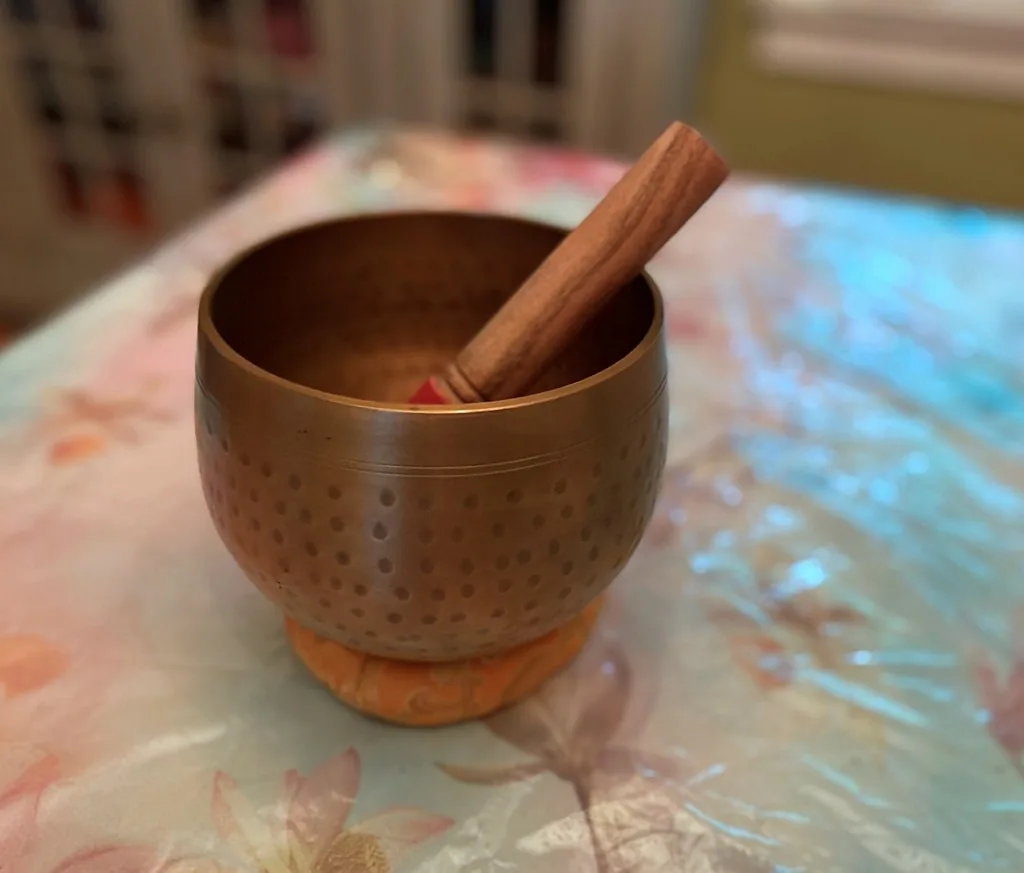
For meditation and relaxation, prioritize sound stability. Look for long sustain and pitch that feels pleasant to the ear.
In sound therapy, a generous format can fill the space and act on several people or on a place. For cleansing stones, a minimum size of around 15 cm is usually enough.
Practical tips for choosing
- Compare two similar sizes and listen to the sustain.
- Check that rubbing remains easy without forcing.
- Choose according to your context: apartment, practice room or travel.
| Size (cm) | Recommended use | Sound characteristic |
|---|---|---|
| ≤ 12 | Portable practice, high notes | Fast attack, short sustain |
| 15 (benchmark) | Stone cleansing, personal meditation | Good harmonic richness, versatile |
| 20–25+ | Sound therapy, cleansing a place | Low, enveloping, wide projection |
Note and tuning: for energy work and chakras, feeling matters more than the advertised “perfect note.” Test rather than buying from a specification sheet.
To learn more about choosing alloys and quality according to size, read this article on metals and composition: alloy and quality.
Antique bowls and “antiques”: benefits, risks and precautions
Choosing an antique piece means evaluating both its past and its acoustic result. Antique bowls often offer a strong sound personality and rich harmonics.
This “signature” comes from irregularities, hand strikes and time. It can create an experience that is hard to find in modern manufacture.
What to check
- Examine the rim and inside under light to spot cracks or repairs.
- Listen for a “buzz” or weak sustain.
- Check the patina and the presence of verdigris without giving in to sensationalism.
Risks and practical advice
Internal cracks can affect sustain over the long term. Some repairs stabilize the object but change its tone.
Recommended approach: require a coherent story, observable condition and a chance to hear the exact piece. If one of these elements does not fit, reconsider the purchase.
Where to buy a reliable Tibetan singing bowl: online, in a shop or directly in the Himalayas
Choosing where to buy requires as much method as ear: the channel affects access to information, the ability to test and the risk of mistakes.

Buying online or in a physical shop
In a shop, you touch the instrument, test the rubbing motion and feel the vibrations. These gestures help you judge sustain.
Online, the main advantage is choice, and often audio recordings. But you depend on the quality of the photos and files provided.
Building a relationship of trust
There is no official body that certifies provenance. Favor transparent sellers who document the source, give the weight and size, and provide a recording of the exact product.
Workshops and buying “at the source”
Visiting a workshop gives better visibility into manufacturing. However, buying on site does not automatically guarantee the composition or the absence of mass production.
- Online criteria: product audio, macro photos, precise description, return policy.
- If you are a beginner, prioritize after-sales service and returns; for a practitioner, prioritize listening; for a collector, require the provenance story.
How to tell whether a Tibetan singing bowl is
authentic?
Conclusion
The final decision rarely rests on a single characteristic; you need to consider the piece as a whole.
Examine the craftsmanship, surface, origin story, alloy, patina and, above all, listening. These elements form a set of clues that goes beyond any commercial label.
Choose according to your practice: meditation, relaxation, sound therapy or harmonization. Prefer sound and sustain to spectacular ornaments.
Practical tip: compare several Tibetan bowls, ask for a recording when buying remotely, test the vibration if possible and favor a transparent seller.
Simple principle: the right instrument is the one whose sound, sustain and vibratory sensation suit you, with coherent provenance.