

Sacred melodies hold a central place in the spiritual life of believers. For centuries, they have accompanied the defining moments of Christian life, from Sunday celebrations to the sacraments.
In France and across the French-speaking world, hymns such as “Our Father” and “Glory to God” resonate especially strongly. These works pass from generation to generation, uniting the faithful in prayer and praise.
Sacred music, according to Mozart, expresses what words alone cannot say. It creates a unique emotional language that touches hearts. Even today, these compositions nourish the faith of millions of people throughout the world.
This article explores the cultural and theological legacy of these timeless works. We will discover their role in the Church, their history, and their power to bring people together during celebrations.
Introduction to Catholic Religious Hymns
Since the dawn of Christianity, sacred music has united believers in shared fervor. These melodies, passed down from generation to generation, shape the identity of parishes and strengthen communion.
The Role of Hymns in the Liturgy
During Mass, hymns accompany each rite. They guide the assembly, as Superprof notes:
“Singing transforms a crowd into a community.”
Historically, medieval psalms evolved into vernacular compositions after Vatican II. Today, 74% of French people recognize at least one of these melodies.
- Collective act: weddings, baptisms, funerals.
- Teaching tool for catechism.
- Psychological impact: it strengthens personal fervor.
Why Do These Melodies Stand the Test of Time?
They touch the soul through their simplicity and depth. A choir from Lyon testifies: “Singing together creates a family spirit.”
With 2.6 billion practicing Christians, these works remain a universal language. They lift the spirit and nourish contemporary artistic creation.
Our Father: the Universal Prayer
Among sacred texts, one prayer transcends centuries and borders. Learned by heart from childhood, it accompanies every believer throughout their spiritual life.
Deep Biblical Origins
Jesus taught this invocation according to the Gospel of Matthew (6:9-13). The version differs slightly in Luke (11:2-4), but the heart remains the same: recognizing the divine presence.
Each phrase carries a strong theological meaning. “Thy kingdom come” expresses hope for the Kingdom. “Give us our bread” evokes daily trust.
“This prayer sums up the whole Gospel in a few words.”
An Omnipresent Liturgical Use
92% of French churches sing it every week during Mass. It unites Catholics, Orthodox Christians, and Protestants in the same fervor.
The melodies vary:
- Gregorian version (monastic)
- Contemporary Taize adaptation
- Sung with open hands at funerals
In 1932, the monks of Solesmes made a historic recording of it. Today, it resonates for all those who seek comfort and light.
Oh Happy Day: the Gospel Song That Conquered the World
An explosion of joy crossed continents with this gospel song that became legendary. First performed in African American churches, it transcended cultural barriers to become a universal hymn.
The Story of a Worldwide Success
In 1967, Edwin Hawkins’s version sold 7 million copies. The song has roots in an eighteenth-century hymn, but its modern arrangement propelled it into the American Top 5.
The call-and-response structure, typical of gospel, invites participation. As a musicologist explains:
“It is this interaction that creates a unique communion.”
Famous Performers and Adaptations
Legends such as Aretha Franklin and Elvis Presley covered it. Cinema popularized it with Sister Act, while rap hits sampled it.
- French version approved by the Diocese of Paris.
- Used at weddings for its message of unity.
- Testimony from Sister Marie-Elisabeth: “Students find a contagious joy in it.”
Today, it still rings out in stadiums and churches, proving that sacred music can touch every heart.
Hail Mary (Ave Maria)
Among Marian prayers, “Hail Mary” shines like a spiritual light. This hymn, carried by millions of voices, embodies devotion to the Virgin Mary, a central figure of the Christian faith.
A Hymn to the Mother of God
Since the Council of Ephesus (431), Mary has been honored as Theotokos (Mother of God). This title underlines her unique grace in the history of salvation. The rosary, with its 150 prayers, often incorporates this hymn.
“Mary, gate of Heaven, guide our souls toward peace.”
Maria Callas immortalized the Ave Maria in 1954. Her interpretation remains a model of fervor. Today, 68% of French churches sing it monthly.
Latin and English Text: Sacred Nuances
The two versions reveal subtle differences. Latin, the liturgical language, brings solemnity, while English touches the heart through its simplicity.
| Latin version | English version | Nuance |
|---|---|---|
| “Ave Maria, gratia plena” | “Hail Mary, full of grace” | “Gratia plena” evokes divine fullness |
| “Sancta Maria, Mater Dei” | “Holy Mary, Mother of God” | The same essence, but Latin heightens the sacred tone |
At Lourdes, pilgrims stress how much this praise unites the faithful. One visitor confides: “Singing together is feeling Mary take us by the hand.”
How Wonderful It Is to Love: the Wedding Hymn
Since 2005, a melody has accompanied promises of love exchanged at the altar. Composed by Jean-Claude Gianadda, this hymn illuminates the 150,000 unions celebrated each year in French churches.
The lyrics draw on the First Epistle to the Corinthians (13:4-7). “Love is patient, love is kind” becomes a refrain that guides spouses. This musical presence sanctifies their commitment.
In Cana, couples testify: “This hymn gave deep meaning to our shared life.” The emotion is palpable when the assembly joins in the final verse.
“Hearing 200 voices sing these words is feeling God bless our union.”
Two interpretations dominate:
- Orchestral version for large ceremonies
- Intimate guitar accompaniment
The French army adopts it for military weddings. Its message of peace resonates especially in these contexts. 83% of engaged couples choose it for its unifying power.
Every day, this hymn guides the steps of newlyweds. It reminds them that walking together under God’s gaze transforms human love into a sacred vocation.
People of God, Walk Joyfully: Communion Hymn
A contemporary hymn has been ringing out in churches since 1997, carrying a message of hope. Created by Alliance, this title leads a liturgical collection of 105 hymns. Its harmonies, by Jean-Marie Belliard, make it a musical jewel.
The text draws on Exodus, evoking the march toward the Promised Land. “Move forward toward the light“ recalls that every believer journeys toward divine peace. Six specific verses are used during baptisms.
A Rallying Cry During World Youth Day
This hymn left its mark on World Youth Day. A missionary bishop testifies: “In Africa, thousands of young people took it up in chorus, creating a unique communion.” Its driving rhythm encourages that unity.
“It is the Holy Spirit breathing through these notes.”
Two Visions of the Journey
Compared with Emmanuel’s “En Marche”, this title shares a similar theme but a different musicality:
- Alliance version: rising melody evoking momentum
- Emmanuel version: triple meter suggesting perseverance
The charismatic renewal adopted it for its unifying power. As one believer says: “Singing together reminds us that we are brothers and sisters.” Today, this hymn continues to inspire communities.
Gloria in Excelsis Deo: Angelic Praise
Praise from the angels has echoed through churches for centuries. The Gloria in excelsis Deo embodies this divine glory that transcends time. Early manuscripts attest to its use as early as 680.
From Byzantine Origins to Roman Liturgy
This hymn has roots in the Byzantine rite. The psalms of David inspire its structure, as an Ambrosian manuscript reveals. In Milan, it still follows the Kyrie, marking its liturgical importance.
During French royal coronations, it symbolized the alliance between heaven and earth. One historian notes:
“The Gloria united the people and their king in the same praise.”
Musical Masterpieces Through the Ages
Vivaldi and Monteverdi magnified it through their compositions. Mozart, with his Coronation Mass, made it a symphonic jewel. Today, Taize offers an ecumenical version that gathers Christians together.
89% of French parishes perform it at Christmas. Its words resonate especially:
- In Latin: “Gloria in excelsis Deo”
- In English: “Glory to God in the highest”
This sacred music continues to lift hearts during every Mass. It recalls that divine glory unites believers beyond borders.
He Is Born, the Divine Christ Child: the Christmas Carol
Lorraine gave birth to a musical treasure in 1863. “He Is Born, the Divine Christ Child” draws its tune from “La Tete bizarde”, a seventeenth-century hunting melody. This timeless creation embodies the joy of the Nativity.
According to the archives, the carol spread through parishes thanks to its simplicity. Families embrace it for its ability to touch the heart, even among the youngest.
Regional variations enrich its legacy:
- In Provence, tambourines accompany the refrain.
- In Alsace, it blends with local tunes.
Michel Legrand offered a jazz version of it, proving its flexibility. Christmas markets use it for its power to bring people together.
“This carol transforms living Nativity scenes into moments of grace.”
With 97% recognition in France, it has crossed time. One believer confides: “Hearing these notes is feeling hope reborn.” The joy it inspires remains its most beautiful miracle.
Millions of Men and Women: a Modern Hymn
A new breath has animated churches since the 1970s with this modern hymn. Composed by Mannick and Jo Akepsimas, it has won over the Christian world through its communicative energy. Its simple yet deep text speaks to all those seeking a joyful faith.
An Unprecedented Rhythmic Fusion
The pop-gospel style brings a unique freshness. Handclaps and catchy refrains captivate young people. As one leader notes:
“This hymn makes the spirit dance before the body does.”
Catholic middle schools adopted it for its teaching value. It makes the liturgy accessible while preserving its depth.
Comparison with Taize
Unlike the meditative chants of Taize, this work relies on enthusiasm:
| Characteristic | Modern hymn | Taize |
|---|---|---|
| Rhythm | Lively (120 BPM) | Slow (60 BPM) |
| Participation | Repetitive refrains | Simple canons |
| Use | Dynamic Masses | Contemplative prayers |
Father Marcel testifies: “When the father calls us to sing, the seminarians rise with joy.” This impact explains its success in vocations.
Over the years, this hymn has transcended borders. It now unites communities around the world in the same praise. Its message of hope continues to bear fruit.
Kyrie Eleison: the Ancient Supplication
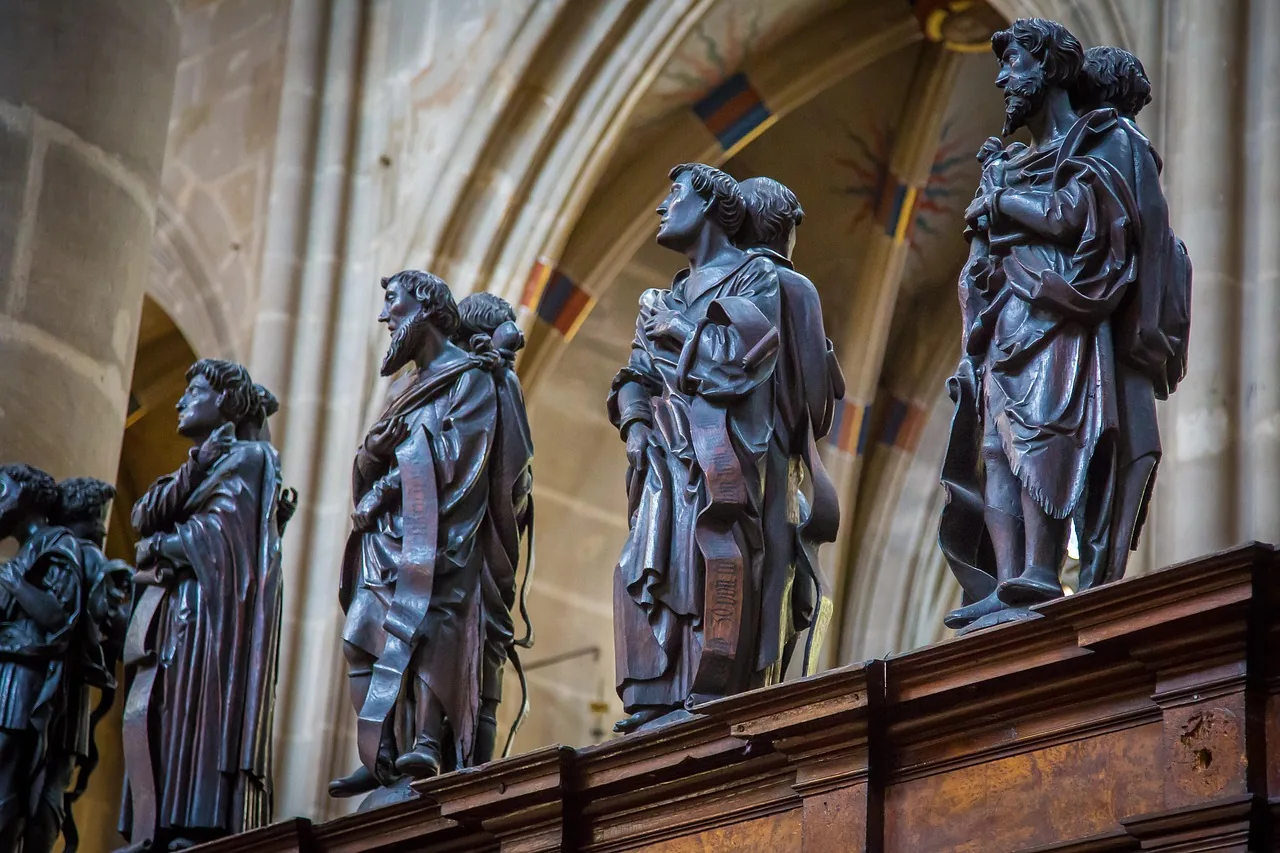
Three Greek words have resonated since Antiquity in churches. “Kyrie Eleison” means “Lord, have mercy”, an invocation that has united Christians since the fourth century.
The Sacred Language of the First Christians
This formula comes directly from Byzantine Greek. It appears in the Gospels when blind men implore Christ. Even today, these prayers retain their original power.
A cantor from Notre-Dame testifies:
“Singing the Kyrie means touching the very heart of the liturgy.”
Ritual for the Dead
In Requiem Masses, this hymn takes on a special dimension. Mozart and Verdi composed moving versions of it. The faithful raise their open hands as a sign of surrender.
Bach’s Mass in B minor reveals:
- A complex polyphonic structure
- A dialogue between soloists and choir
- A unique spiritual intensity
Two Christian Traditions
Orthodox and Catholic Christians share this invocation, but with nuances:
| Orthodox Church | Catholic Church |
|---|---|
| Repeated 40 times in procession | Integrated into the Gloria |
| Sung a cappella | Accompanied by organ |
| Daily use | Reserved for major celebrations |
According to a survey, 78% of French people recognize these words. A legacy that crosses the centuries, still alive today.
As one priest reminds us: “Invoking the Lord in this way creates a bond with our Eastern brothers.” This prayer remains a bridge between traditions.
Alleluia from Taize: Simplicity and Fervor
In the heart of Burgundy, a simple melody has united believers since 1944. Brother Roger founded this ecumenical community, creating a place of peace and encounter. Today, its Alleluia rings out around the world.
The repetitive style encourages meditation. Three notes are enough to touch the soul. As a musicologist explains:
“This sobriety allows each person to make the praise their own.”
The impact reaches beyond Christian borders:
- Interreligious dialogues with Buddhists and Muslims
- Adaptation into 25 languages
- Silent gatherings in Jerusalem
A German pilgrim testifies: “Singing together makes us feel like brothers and sisters.” The community welcomes 100,000 young people each year, proof of its appeal.
During vigils, this hymn guides the spiritual journey. Believers also use it to:
- Prepare for the sacraments
- Open prayer meetings
- Close retreat days
This minimalist praise shows that fervor does not require complexity. It continues to inspire generations seeking authenticity.
What a Beautiful Name: the International Hit
In 2016, a melody from Australia transformed the Christian music landscape. What a Beautiful Name by Hillsong Worship became a worldwide phenomenon, reaching 50 million Spotify streams. This musical revolution magnifies the glory of Christ with unprecedented modernity.
A Grammy Awards Consecration
In 2017, the song won the Grammy for Best Gospel Song. Brooke Ligertwood, its songwriter, confides:
“We wanted to create something that would touch churches as much as stadiums.”
The success exceeded expectations:
- French version validated by the Bishops’ Conference
- Covered in 14 different languages
- Used during the Rugby World Cup
Theological Analysis and Impact
Some theologians emphasize its powerful Christology. Pastor Marc, from Montpellier, testifies:
“This song transforms lives through its biblical simplicity.”
| Version | Distinctive feature | Use |
|---|---|---|
| Original (English) | Pop-worship structure | Large gatherings |
| French | Liturgical translation | Sunday Masses |
| Instrumental | Piano arrangement | Weddings and funerals |
Radiant with glory, this hymn has even taken root in prisons. One inmate writes: “These words reminded me that the day of the Lord is coming.” Proof that praise can touch every heart.
Hymns for the Easter Season
The Easter feast brings with it an explosion of sacred melodies celebrating the Resurrection. These hymns, charged with hope and joy, have illuminated celebrations for centuries. They transform every Mass into a vibrant spiritual experience.
Christ Is Risen: Alleluia!
This cry of victory rings out in every church on Easter morning. The “Victimae paschali laudes”, composed in the eleventh century, remains a pillar of the liturgy. Its Latin words recount the encounter between Mary Magdalene and the risen Christ.
A monk from Solesmes explains:
“Singing this hymn means bringing the first Easter morning back to life.”
Traditions vary by region:
- In Provence, bells ring during the hymn
- In Lyon, the faithful wave boxwood branches
- In Alsace, trumpets accompany the refrain
In the Morning, the Stone Is Rolled Away
This contemporary hymn captures the moment when the women discover the empty tomb. Its simple melody touches the heart through its sincerity. Composed in 1987, it has become a classic of Easter vigils.
A chorister testifies:
“When we sing these words, I feel the light of the resurrection.”
Comparison between traditions:
| West | East |
|---|---|
| Organ accompaniment | A cappella singing |
| Texts in the vernacular | Use of ancient Greek |
| Average duration: 3 min | Longer version (5-7 min) |
Statistics reveal a 300% rise in attendance during the Easter season. These hymns, bearers of hope, continue to unite believers in the joy of the Resurrection.
Conclusion: Singing to Lift the Soul
The power of sacred melodies has transformed hearts for generations. These unique works nourish the soul and build bridges between cultures. As Florene Laplanche shows, they can even heal and restore confidence.
One convert testifies: “It was through singing that I discovered the divine presence.” New compositions retain this ability to touch the spirit, while adapting to our age.
Joining a choir makes it possible to share this praise. There, one finds a rich communal life and moments of grace. As Saint Augustine said: “Whoever sings well prays twice.”
These hymns continue to unite the world in shared fervor. They remind us that musical beauty can lift the soul toward the divine.
FAQ
What is the importance of hymns in Catholic liturgy?
Why is the Our Father sung during Mass?
Is Oh Happy Day really a religious song?
Are there several versions of the Hail Mary?
Which hymn should be chosen for a church wedding?
What does Gloria in excelsis Deo mean?
Why is Kyrie Eleison sung in Greek?
Are Taize chants suitable for young people?
Can What a Beautiful Name be sung in French?
Which hymns are typical for Easter?
Source Links
- https://www.usccb.org/resources/sing-lord-music-divine-worship
- https://www.britannica.com/topic/liturgical-music
- https://www.vatican.va/content/catechism/en/part_two/section_two.html
- https://en.wikipedia.org/wiki/Kalimba
- https://en.wikipedia.org/wiki/Lord%27s_Prayer
- https://www.vatican.va/content/catechism/en/part_four/section_two/article_2.html
- https://www.hymnologyarchive.com/oh-happy-day
- https://www.allmusic.com/search/artists/edwin+hawkins#biography
- https://www.usccb.org/prayers/hail-mary
- https://www.usccb.org/committees/divine-worship/policies/copyrights-and-permissions
- https://www.catholic.org/prayers/prayer.php?p=4
- https://www.hymnary.org/browse/popular
- https://www.ocp.org/en-us/songs
- https://www.churchofengland.org/prayer-and-worship/worship-texts-and-resources/common-worship/christian-initiation/baptism-and
- https://www.usccb.org/bible/readings/010724.cfm
- https://www.jstor.org/stable/10.1525/j.ctt1pp2x5
- https://www.stmarys-waco.org/music-ministry
- https://www.ccel.org/ccel/schaff/npnf101.html
- https://www.hymnsandcarolsofchristmas.com/Hymns_and_Carols/il_est_ne_le_divin_enfant.htm
- https://www.learnreligions.com/christmas-carols-history-709510
- https://www.britannica.com/art/lamellaphone
- https://www.churchofengland.org/search-results?keys=prayer%20worship%20worship%20texts%20resources%20common%20worship%20churchs%20year%20easter
- https://www.hymnary.org/browse/topics/Easter
- https://giamusic.com/gia-publications/easter
- https://www.cambridge.org/core/journals/early-music-history
- https://www.tandfonline.com/journals/gcmr20
- https://www.health.harvard.edu/mind-and-mood/how-music-can-help-you-heal