
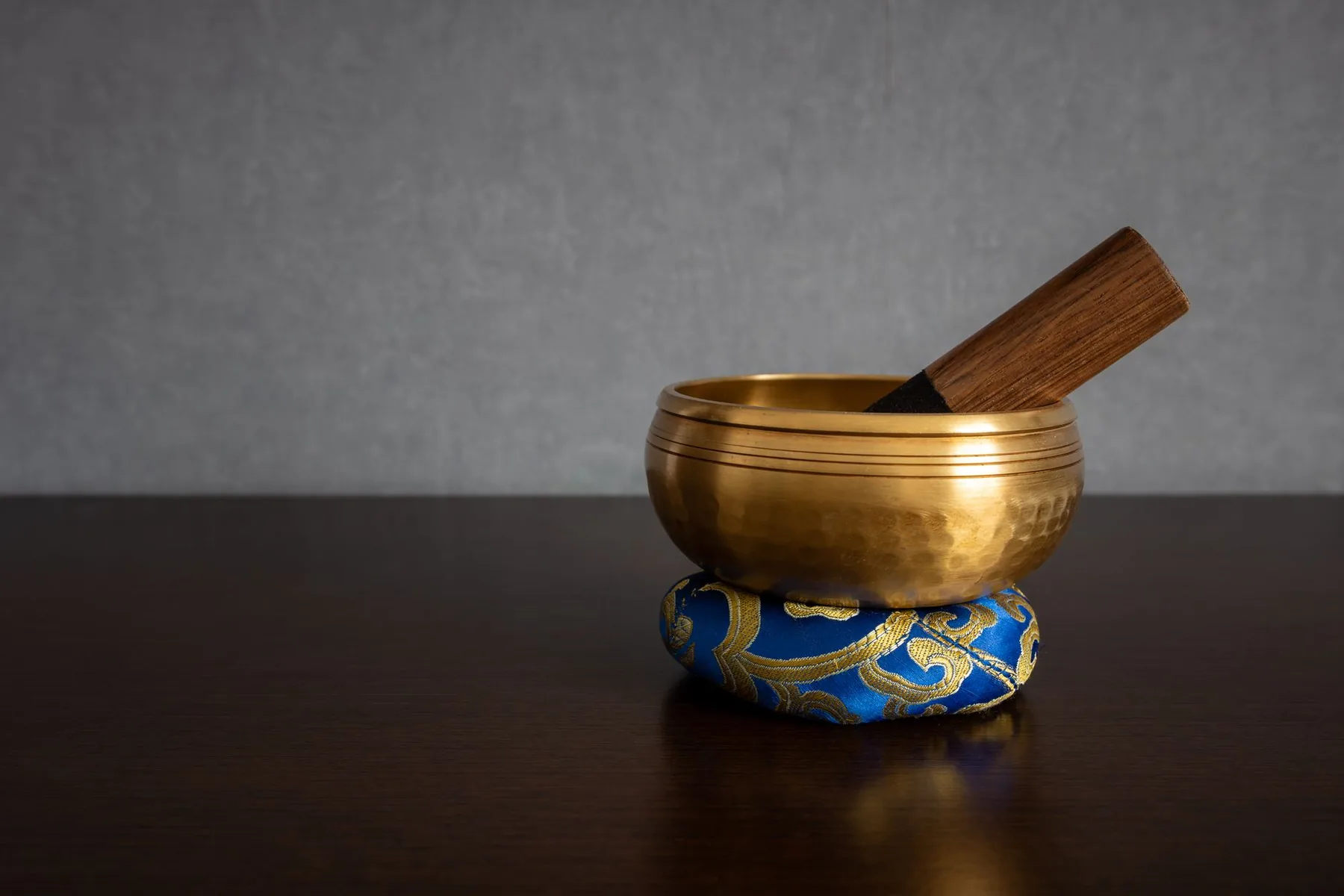
Set the scene: this article explains how to use singing bowls to turn an ordinary room into a meditation and relaxation space. You will find a step-by-step method: intention, preparation, technique, session flow, and integration.
Vocabulary clarification: we distinguish between the bowl (the instrument), bowls (a set), and Tibetan bowls (origin and tone). We will also cover sound therapy, vibrations, and atmosphere (light, posture, scents, silence).
What you will gain: practical guidelines to encourage calm and well-being at home, with safety precautions and no promises of healing. The plan includes striking and rubbing techniques, common mistakes, a session routine, and “sound bath” or “sound massage” variations.
To try the practice in France, consider yoga studios, spas, or retreats. For a guided experience, discover a workshop offered here: sound bath workshop with Geraldine Jippe, which gives a useful indication of content and pricing.
Understanding Tibetan bowls and their sound vibrations
Understanding the vocabulary helps you choose the right tool. A Tibetan bowl often refers to an alloy vessel. The term singing bowl evokes its function: producing a sustained sound. In the plural, singing bowls brings these instruments together within the same family.
Vibrations and resonance: the essentials
The vibrations create a resonance made of harmonics and a variable sustain. Two similar instruments can offer very different tones. The duration and richness of the sound explain why the felt effect changes.
Sound therapy and effects on the body and mind
Sound therapy uses these sound vibrations to support deep relaxation. Sound becomes a point of attention and helps reduce mental noise.
Brain waves and practical markers
Some observations show a shift from faster waves toward alpha or theta waves, linked to a calmer state and better mental clarity. This is not therapeutic proof, but it is a useful framework.
- Tip: a sound that is too loud is tiring; choose a good instrument and adjust the intensity.
- Key point: knowing these basics helps you choose the right instrument and build a realistic session.
To learn more about selection and characteristics, see this singing bowl guide.
Sounds of Tibetan Bowls: How to Create a Relaxing Atmosphere
Defining a single intention turns a session into a focused practice. For example, choose quick relaxation, meditation, sleep preparation, or stress relief.
Simple and realistic formats: 5-10 minutes for a daily pause, 15-20 minutes for a wellness routine, 30 minutes for immersion. In a guided workshop, 60-90 minutes remains common.
The intention influences the settings: volume, sound duration, silences, and space for breathing. Morning = clarity; lunch break = stress management; late afternoon = decompression; evening = sleep preparation.
- Notice the effects: less agitation, a slower rhythm, a better inner state.
- Practical rule: a short, regular daily practice is better than a rare long session.
- Caution: in cases of intense stress or anxiety, these sounds may help but do not replace medical or psychological care.
Preparing a Zen Space for a Meditation and Wellness Session
Setting up a quiet corner at home reduces friction and encourages regular practice. A pared-down space makes it easier to enter a state of relaxation and supports the daily ritual.
Comfort and setup
Choose a cushion (zafu) or a stable chair. Add a mat and a blanket to avoid tensing up.
Your posture should allow you to breathe freely. Comfort prevents the body from pulling attention away from the sound vibrations.
Light, soft music, and silence
Favor dimmed or natural light. Avoid screens and decide whether you prefer total silence or very discreet music.
The bowl remains the main voice; keep music in the background if you use it.
Scents, opening ritual, and dedicated place
Air the room for two minutes, then purify the space by gently making the instrument sing for a short use of the bowls. Diffuse natural incense or essential oils with caution (asthma, pregnancy, children).
Reserve a dedicated place: leave the cushion, bowl, and mallet in the same spot. This strengthens the habit and the feeling of grounding.
- 60-second checklist: cushion, water, phone in airplane mode, soft light, closed door.
Mastering Techniques to Produce a Harmonious Sound
Mastering the attack and rubbing motion allows you to obtain a clear, stable sound. Here are two essential gestures and simple adjustments for beautiful vibrations.
Mallet striking technique
Aim for the outer rim of the bowl with a supple motion. Strike moderately: enough to trigger resonance, but not so much that it assaults the ear.
Let the sound fade before repeating if the goal is relaxation. This improves the quality and the perceived effects.
Rubbing technique on the rim
After a light strike, keep the mallet in contact and move it around steadily. Seek stability rather than power.
A regular circular movement produces a continuous singing tone and stabilizes the vibration without forcing the contact.
Fine adjustments and sensations
Pressure: light to medium. Speed: constant. Angle: tilted according to the mallet. Adjust the volume to the room and the distance from the body for comfortable listening.
Wait for a sensation of vibration in the hand and sound surrounding you. If it is too loud, slow down or increase the distance.
Common mistakes and solutions
- Muffled sound: do not hold the bowl too tightly; place it on a cushion.
- Squeaking: slow down and reduce pressure.
- Lack of resonance: use a felt or leather mallet, and avoid a hard support.
Quality marker: a better-quality instrument offers longer resonance and a rich harmonic spectrum, which makes the techniques easier and improves the effects.
Building a Relaxing Atmosphere During the Session
Before entering meditation, take a short moment to recenter yourself. Set the intention, adjust your posture, and invite calm. A first clear sound will serve as the signal to begin the session.
Opening: long breaths, centering, and first strike
Simple script: take three long breaths. Release your shoulders between each breath.
Then give a first light strike as a starting point. This gesture marks the official beginning of the session.
During the practice: mindful breathing, visualization, and listening to vibrations
Alternate rubbing phases for a continuous singing tone with silent pauses. Follow the birth of the sound, its full volume, then its disappearance.
Offer short visualizations: a light expanding, a wave withdrawing, or a body scan synchronized with the sound vibrations.
When the mind wanders, return first to the tone, then to the breath. This management supports mental clarity and deep relaxation.
Closing: letting the sound fade, gradual return, and grounding
Reduce the intensity, space out the strikes, and let the final sound fade completely.
Gently move your fingers and neck, and open your eyes slowly. To extend the sense of well-being, drink water and note one bodily sensation before returning to your screens.
Integrating Chakras, Energy, and Harmonization with Tibetan Bowls
Associating notes with energy centers is a widespread practice, but it should be approached with nuance. Tradition proposes correspondences between a note and a chakra. There is no robust scientific evidence validating these links.
Use this grid as a reference point, not as dogma. Choose an instrument whose tone resonates with your intention: grounding, soothing, or opening. Perceived resonance matters more than searching for a perfect frequency.
For an immersive sound bath, place 1 to 3 Tibetan bowls around the body: head, side, and feet. Vary the distance to modulate the intensity and create a sound envelope.
In sound massage, place the bowl on clothing with consent. Watch the weight and the selected area. Start very gently, avoid painful areas, and stop at the slightest dizziness or discomfort.
| Goal | Arrangement | Precautions |
|---|---|---|
| Harmonization | 1-3 bowls around the body | Adjusted intensity |
| Sound massage | Bowl placed on the clothed body | Consent, reduced weight |
| Personal listening | Choose according to sensation | Avoid sensitive areas |
Objective: encourage overall relaxation and a sense of smoother energy, without any medical promise. For professional care or massage, train in a workshop and consult this singing bowl guide.
Possible Benefits for Stress, Anxiety, Sleep, and General Well-Being
Short, repeated practice seems to produce concrete benefits for recovery and mental clarity. The most plausible benefits include quick relaxation, reduced mental tension, and noticeable muscle release.
Relaxation and stress reduction
Anti-stress method: 5 minutes of slow breathing, then 3 sound/silence cycles at low volume. This sequence encourages deep relaxation without overstimulation.
Sleep: evening routine
For sleep, favor 7-12 minutes, dim light, and slow rubbing motions. Finish with complete silence to prepare for falling asleep.
Mental clarity and meditation
Use sound as an attentional anchor to support meditation and improve concentration. This helps beginners return to the present more quickly.
Pain and discomfort
Testimonials and preliminary studies mention a reduction in certain pains (migraines, arthritis). These results remain mixed; seek medical advice if pain persists.
| Effect | Practice | Precaution |
|---|---|---|
| Stress reduction | 5 min of breathing + 3 cycles | Gentle volume |
| Improved sleep | 7-12 min, low light | Avoid overstimulation |
| Mental clarity | Regular sessions | Calm setting |
| Pain | Possible complement to care | Consult if it persists |
General well-being marker: regular practice often helps restore better emotional balance and a quicker return to calm after a busy day. To go further, discover the benefits of Tibetan bowls.
Contraindications and Precautions Before Using Tibetan Bowls
Safety comes first: some people should ask for medical advice before any session.
Epilepsy and psychiatric disorders
Epilepsy: certain sensory stimuli can trigger seizures. Ask for medical advice before participating in sound care or intensifying the practice.
Severe psychiatric disorders: altered states of consciousness can be destabilizing. Favor a highly supervised setting and a specialist’s advice.
Hearing implants and medical devices
Hearing aids and cochlear implants may be disturbed by waves and vibrations. Move the instrument away, reduce the volume, and consult the manufacturer or health professional.
Pregnancy and children
Pregnancy: use caution, especially during the first trimester. Prefer short sessions and gentle sounds; validate the approach with a professional.
Children: adapt duration, volume, and distance. Avoid prolonged sessions for younger children.
- Basic rule: safety comes before intensity and duration.
- Stop immediately in case of ear pain, headaches, dizziness, rising anxiety, or bodily discomfort if an instrument is placed on the body.
| Situation | Recommended action | Why |
|---|---|---|
| Epilepsy | Ask for medical advice | Risk of seizure |
| Hearing implants | Reduce volume, move away | Possible interference |
| Pregnancy | Gentle sounds, short sessions | Caution and comfort |
Choosing, Maintaining, and Practicing with a Quality Tibetan Bowl
A good instrument begins with a sound that moves you from the first notes. The choice is between alloy bowls (often called “seven-metal” bowls) and crystal bowls. The first offer a warm tone and rich harmonics. The second provide a pure, clear sound and long sustain.
Practical criteria and personal resonance
Listen to the resonance duration, test the rubbing motion, and choose the size according to the use: small for a daily routine, large for immersion.
Simple rule: the best Tibetan bowl is still the one whose tone immediately soothes you.
Care and storage
Clean with a soft cloth, avoid harsh products and excessive water for alloys. Store on a cushion or in a cover to prevent shocks.
Guided practice and places in France
In a workshop, you learn gestures, placements, and intensity control. A guided session often lasts 60-90 minutes; observed prices range from EUR 40 to EUR 120 depending on the place and practitioner.
Experience it in a yoga studio, spa, retreat, or online. To compare instruments and types, see the crystal/alloy comparison here: crystal vs. alloy comparison.
Conclusion
To conclude, remember the essentials that make daily practice easier. A simple method is enough: a clear intention, an uncluttered space, and striking and rubbing techniques. Follow the three-part flow – opening, practice, closing – to establish a useful ritual.
Regular practice: 5-10 minutes every day is better than a rare long session. It creates the habit and multiplies the well-being effects.
Pleasure and safety go hand in hand: moderate volume, listening to the body, and stopping in case of discomfort. If you have risk factors, ask for medical advice.
Test different instruments, adjust the environment, and consider a workshop or practitioner for structured care. To go further, discover the benefits and continue your exploration.
This short article aims to give you practical guidelines: with regularity and caution, these instruments can become a simple anchor for reducing pressure and supporting daily well-being.