
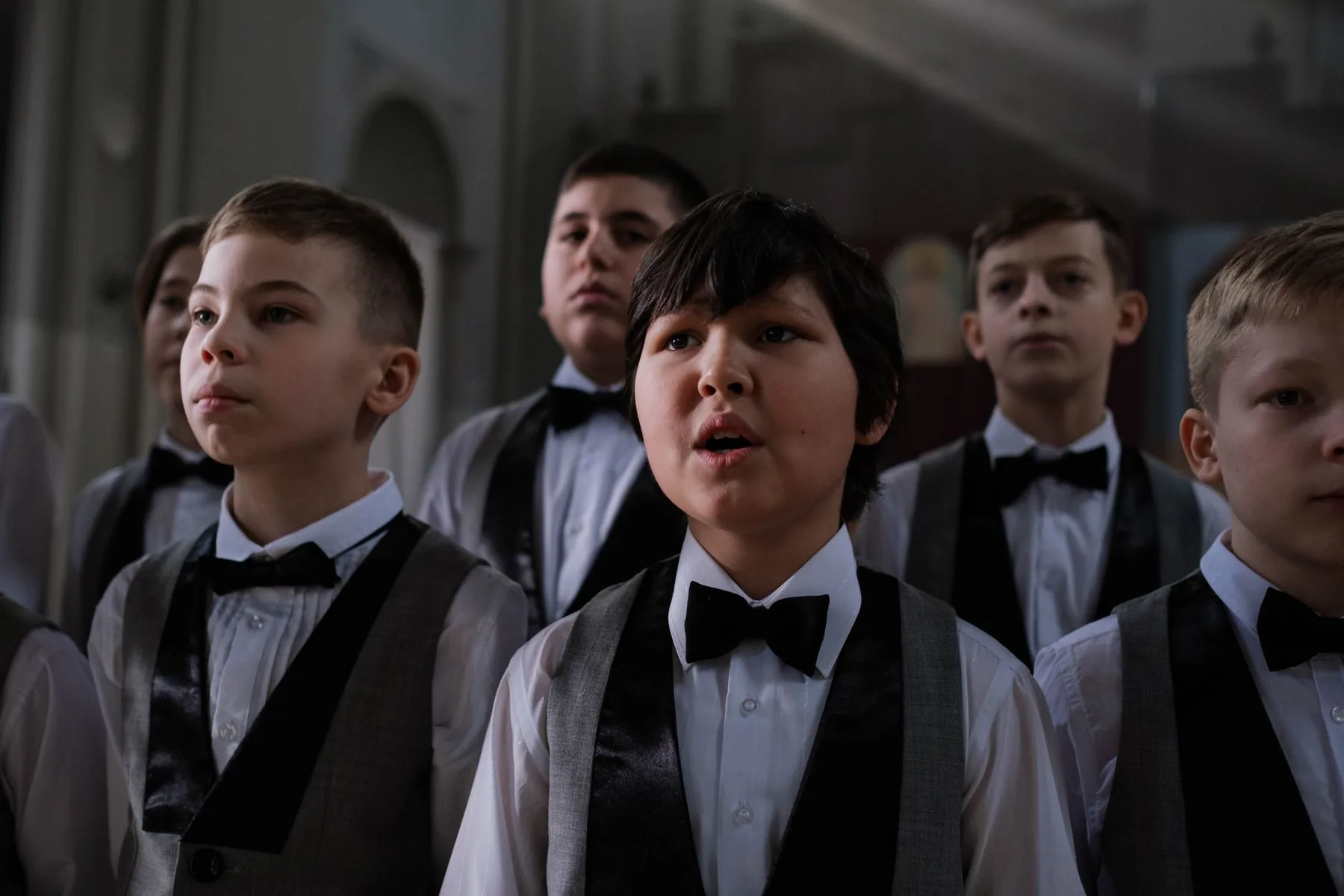
A biblical text drawn from the Gospel of Luke, this song carries a profound message. It expresses grace and faith, while offering a subversive vision of the world. In it, Mary celebrates the greatness of God through her own life.
Structured in two parts, it blends personal praise with a call to divine justice. The quotation “He has brought down the powerful from their thrones, and lifted up the lowly” still resonates today. This passage challenges us through its relevance to social inequality.
Used daily in monasteries, this text remains central to the liturgy. It unites Catholics and Protestants, bearing witness to a shared spirituality. To go deeper, explore its role in Marian spirituality.
Introduction to the Magnificat
Carried by a humble servant, this message crosses the ages with undiminished force. Its words, engraved in the Gospel, resonate like an echo from past centuries, binding generations together in one hope.
A Marian hymn with deep roots
As early as the Old Testament, women such as Miriam (Exodus 15) and Hannah (1 Samuel 2) sang of divine justice. Their praise foreshadows Mary’s, weaving a covenant between biblical narratives. The Fathers of the Church saw in it a spiritual manifesto.
Saint Augustine sums up this search:
Our heart is restless until it rests in you
. An invitation to seek peace in faith.
Why this text still resonates today
Its themes are timeless: justice for the oppressed, humility before power. During the pandemic, communities took it up again to support the most vulnerable.
His holy name unites Catholics and Protestants. Prayed daily in monasteries, it remains a pillar of the liturgy. A song that transcends time, still alive today.
Biblical Origins of the Magnificat
Delve into the biblical roots of this inspiring text. Its words resonate like an echo of Scripture, weaving a link between the Old and New Testaments.

The Context of the Visitation in the Gospel of Luke
The Visitation takes place in Ein Karem, in Roman Judea. Mary visits Elizabeth, her cousin. This episode from the Gospel highlights the action of the Holy Spirit.
The canticle is born in this moment of encounter. It expresses prophetic joy, rooted in Israel’s history.
Old Testament References in the Text
There are 17 explicit references to the Old Testament. Psalm 103 and Hannah’s song (1 Samuel 2) inspire its structure.
These literary covenants reveal a universal message: God casts down the powerful and raises up the lowly.
Mary and the Women of Israel: Miriam, Hannah, and Leah
Like Miriam after the crossing of the Red Sea, Mary sings of deliverance. Hannah, the mother of Samuel, offers a model of praise.
These women embody a prophetic tradition. Their voices cross the centuries to nourish faith.
Analysis of the Words of the Magnificat
Through its verses, a prophetic voice is heard, blending adoration and protest. This canticle, often reduced to a gentle prayer, in fact carries a subversive force. Exegetes point out that 54% of its lines deal with social justice.
“My Soul Magnifies the Lord”: Personal Praise
The expression “My soul magnifies” draws its roots from biblical Hebrew. The term soul (נפש, *nefesh*) evokes the whole person, body and spirit. This praise reflects *kenosis*, the mystery of divine self-emptying so dear to Saint Paul.
Antithetical parallelism, typical of Hebrew poetry, structures the text. For example:
- “He has filled the hungry with good things” / “He has sent the rich away empty.”
- “He has lifted up the lowly” / “He has brought down the powerful.”
“He Has Brought Down the Powerful”: the Divine Revolution
This striking verse echoes the Beatitudes (Matthew 5:3-12). The Qumran manuscripts reveal stylistic similarities with Essene hymns centered on justice.
Christian charitable action draws inspiration from it:
- welcoming migrants, in the spirit of “God raises up the humiliated”;
- sharing resources, in response to “He has filled the hungry with good things.”
“The Lord shows mercy to those who fear him, from generation to generation.”
This text is not only a hymn. It is a manifesto for a world where the lowly find their place.
The Magnificat in Christian Tradition
Since the earliest centuries, this sacred text has shaped Christian spirituality. Its influence extends from patristic commentaries to monastic rituals, weaving a covenant between faith and practice.
The Interpretation of the Fathers of the Church
Fathers such as Ambrose of Milan saw in it a model of humility. Their exegesis emphasizes Mary’s response to the divine call:
“The faithful soul does not seek to understand, but to let itself be filled.”
Bernard of Clairvaux deepened this vision in the twelfth century, linking the canticle to contemplation.
The Place of the Magnificat in the Liturgy
Integrated into the liturgies from the fourth century onward, it structures Byzantine and Roman Vespers. Here are its uses compared:
| Rite | Frequency | Context |
|---|---|---|
| Byzantine | Daily | Vespers and Marian feasts |
| Roman | Daily (Liturgy of the Hours) | Evening prayer |
Benedictine monasteries made it a pillar, strengthening its role in communal prayer.
The Magnificat and Martin Luther
At the heart of the Reformation, a biblical text marked Martin Luther by its spiritual depth. His 1521 commentary reveals a passionate reading, blending faith and social commitment.
Luther’s Admiration for This Song
The reformer delivered 80 sermons on Mary, emphasizing her humility. For him, the words of the canticle were a model for Christian life. He wrote:
“Mary shows how God raises up those who trust in him.”
His controversy with Erasmus concerned the role of the mother of Christ. Luther rejected excessive veneration, but saw in her an example of submission to God.
The Theology of Grace in the Magnificat
Luther saw in it a manifesto of divine grace. The verse “He has filled the hungry with good things” illustrated for him transformative justice. This reading influenced Lutheran piety, especially in Scandinavia.
Comparison of Protestant interpretations:
| Theologian | Approach | Liturgical impact |
|---|---|---|
| Luther | Grace and humility | Congregational hymns |
| Calvin | Rejection of Marian veneration | Use limited to psalms |
Bach drew inspiration from this grace in his compositions. Today, Lutheran sermons take up these themes to speak about social justice.
Theological Interpretations of the Magnificat
This biblical canticle has inspired deep reflection for centuries on the relationship between God and humanity. Three key dimensions emerge: divine justice, humility as a spiritual path, and eternal mercy.
A Manifesto of Divine Justice
Gustavo Gutiérrez, father of liberation theology, saw in this text a call to action:
“God chooses the little ones to transform the world.”
This vision still has influence today:
- Latin American communities use it against oppression;
- French bishops cite its verses to denounce inequality.
Humility as a Spiritual Way
John Paul II emphasized in Dives in Misericordia:
“Mary shows that true greatness is born of service.”
This radical humility is lived concretely:
- in monasteries, through the sharing of tasks;
- at Lourdes, where volunteers wash the feet of the sick.
The Mercy of God “From Age to Age”
The phrase “His mercy extends from age to age” reveals an endless promise. Vatican II saw in it a call to:
- welcome migrants as brothers and sisters;
- pray for those who fear God in trial.
Women’s groups reread this text to value the place of women in the Church.
The Magnificat in Sacred Music
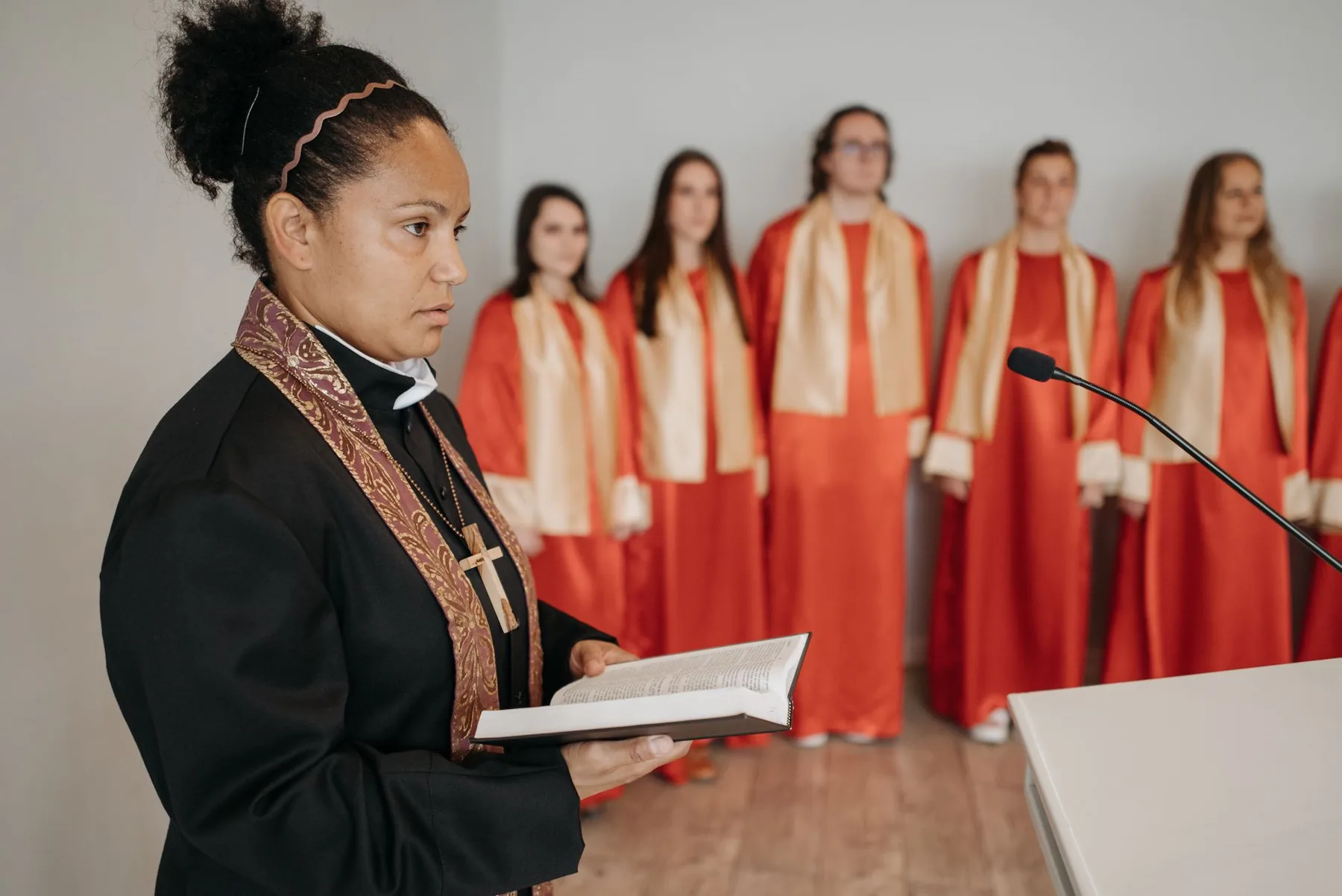
Since the Middle Ages, composers have transformed these words into musical masterpieces. Among the 234 works listed, some have marked history through their innovation and spiritual depth.
Classical Compositions Inspired by the Text
The Renaissance saw the birth of complex polyphonies. Claudio Monteverdi (1640) and Giovanni Pergolesi (1732) created contrasting versions:
- Monteverdi uses monumental choirs;
- Pergolesi favors vocal intimacy;
- Vivaldi integrates instrumental solos.
“The alto expresses the heart of the message with rare intensity.”
Marc-Antoine Charpentier, a French composer, adds his touch with luminous harmonies. These works convey the joy of the original words.
Johann Sebastian Bach’s Magnificat
The BWV 243 version (1723) remains a summit of German Baroque music. Bach unfolds all his genius there:
| Element | Innovation | Impact |
|---|---|---|
| Structure | 12 varied movements | Narrative dynamism |
| Instruments | Trumpets and timpani | A festive sound world |
| Choirs | Five-part polyphony | Theological depth |
Contemporary interpreters such as John Rutter renew this song. Arvo Pärt offers a minimalist version, in which every word takes on particular relief.
These compositions show how music can reveal new facets of a thousand-year-old text. An invitation to listen with the heart.
The Magnificat as Personal Prayer
In the silence of the evening or on waking, these biblical words become a light for the heart. Far more than a liturgical text, they offer a path for encountering God in daily life.
How to Integrate the Magnificat into Your Spiritual Life
Lectio divina turns this song into an intimate dialogue. Here is a simple method:
- Read a verse slowly, such as “He has filled the hungry with good things”;
- Meditate on its meaning for today;
- Pray in your own words;
- Contemplate God’s action in silence.
In Ignatian retreats, this text guides reflection. It helps discern the movements of the soul, as this spiritual analysis emphasizes.
“Every word of the Magnificat is a seed that bears fruit in patience.”
Testimonies of Believers Inspired by This Song
Lives transformed by these words:
| Person | Experience | Impact |
|---|---|---|
| Jean, 58 | Conversion during illness | Discovery of grace in trial |
| Marie-Claire, nurse | Prayer with the dying | Comfort through “His mercy extends” |
Franciscans find in it an echo of their ideal of poverty. This song then becomes an embodied prayer, a call to live the Gospel.
For many, these words have become a spiritual breath. They unite the heart with what is essential, day after day.
The Magnificat Today
In a world marked by inequality, these ancient words find a new echo. The 2023 Oxfam report reveals that the richest 1% own 45% of the world’s wealth. This context gives special resonance to the verse: “He has brought down the powerful from their thrones”.
Pope Francis’s Interpretation
In Evangelii Gaudium (2013), the pope cites this text as a model of social justice. He sees in it a call to:
- denounce structures of exclusion;
- promote an economy at the service of the poor;
- live an embodied spirituality.
“True power is service.”
Alignment with the Sustainable Development Goals
This biblical song meets the priorities of the UN:
| SDG | Link with the text | Concrete action |
|---|---|---|
| Reduced inequalities | “He has lifted up the lowly” | Programs for access to education |
| Zero hunger | “He has filled the hungry with good things” | Community food banks |
Inspiration for Social Commitment
In Latin America, groups read this text before acting to:
- defend Indigenous rights;
- fight land grabbing;
- welcome migrants.
Brazilian theologian Leonardo Boff emphasizes:
“This song denounces the idolatries of power and money.”
These words cross time to illuminate our choices in life. They remind us that true justice begins by looking toward the margins.
The Magnificat and Social Movements
In the face of injustice, this biblical text becomes a spiritual weapon. Its message of justice and hope inspires generations of activists. From Brazilian favelas to South African townships, it resonates like a cry of liberation.
Use of the Text by Liberation Theologians
Dom Helder Câmara saw in these words a manifesto:
“God does not remain neutral. He takes the side of the poor.”
Three concrete applications:
- resistance during the Argentine dictatorship (1976-1983);
- theological basis at Medellín (1968) for the preferential option;
- inspiration for American Black theology against racism.
The Vatican has sometimes criticized overly political readings. But Pope Francis encourages an engaged interpretation.
A Song of Hope for the Oppressed
Oscar Romero proclaimed it before his assassination:
“When we fight for justice, we do not die. We bear fruit.”
Contemporary examples:
| Movement | Action | Link with the text |
|---|---|---|
| Agricultural unions | Struggle for land | “He has filled the hungry with good things” |
| Indigenous communities | Defense of rights | “He has lifted up the lowly” |
This song crosses the centuries without losing its force. It reminds us that faith must be embodied in the world.
Resources for Going Deeper into the Magnificat
To go further in understanding this biblical text, here are varied resources. They will help you explore its words from different angles.
Recommended Reading
Discover key books to deepen your reflection:
- Commentary on the Magnificat by Martin Luther (ISBN 978-2830913584) – An engaged theological analysis.
- The Prayer of the Poor by Gustavo Gutiérrez – Explores the social dimension of the text.
For daily study, these apps are useful:
- Bible+ – Compare translations.
- Pray as You Go – Guided meditations including this canticle.
Online courses also offer modules on biblical poetry. The Collège des Bernardins offers an excellent one.
Musical Recordings to Discover
Sacred music offers unique interpretations. Here is a selection:
| Composer | Style | Period |
|---|---|---|
| Johann Sebastian Bach | German Baroque | 1723 |
| Arvo Pärt | Minimalist | 1989 |
France Musique offers a complete catalog. Harpa Dei offers Gregorian versions.
Conclusion
This biblical song unites history, theology, and spirituality in a unique message. For two thousand years, it has nourished the grace of believers through the ages.
Its call to divine justice remains urgently relevant. Mary’s words trace a path for our spiritual life today.
Benedict XVI summed it up: “Mary is a teacher of prayer; she teaches us to say yes to God”. This invitation resonates in our world in search of meaning.
How can we respond to this inheritance? By sharing this text with others. By living our faith concretely. By working for greater justice around us.
The beauty of these words continues to transform hearts. It is up to us to bear witness to it.
FAQ
What is the biblical origin of the Magnificat?
Why is the Magnificat important in the Christian tradition?
How is the Magnificat used in the liturgy?
Why did Martin Luther admire this song?
Which composers set the Magnificat to music?
How can one pray with the Magnificat today?
Why do people speak of a "divine revolution" in this text?
Source Links
- https://www.biblegateway.com/resources/ivp-nt/Marys-Hymn-Praise-Magnificat
- https://www.workingpreacher.org/commentaries/revised-common-lectionary/fourth-sunday-of-advent-3/commentary-on-luke-139-45-46-55-6
- https://www.vatican.va/content/benedict-xvi/en/audiences/2006/documents/hf_ben-xvi_aud_20060215.html
- https://www.churchofengland.org/search-results?keys=prayer%20worship%20worship%20texts%20resources%20common%20worship%20daily%20prayer%20evening%20prayer
- https://us.magnificat.net/
- https://www.biblegateway.com/passage/?search=Luke%201%3A46-55&version=NRSVUE
- https://www.workingpreacher.org/commentaries/revised-common-lectionary/fourth-sunday-of-advent-3/commentary-on-luke-146-55
- https://www.ewtn.com/catholicism/library/magnificat-12821
- https://www.learnreligions.com/what-is-gnosticism-700683
- https://www.ewtnnews.com/?redirectedfrom=cna
- https://www.lcms.org/about/beliefs/faqs/doctrine#mary
- https://www.jstor.org/stable/3163642
- https://www.usccb.org/prayers/magnificat
- https://www.encyclopedia.com/philosophy-and-religion/christianity/roman-catholic-and-orthodox-churches-general-terms-and-concepts/liberation-theology#3407706698
- https://www.allmusic.com/composition/magnificat-for-soloists-chorus-orchestra-rv-610-mc0002363120
- https://us.magnificat.net/faq/
- https://www.carmelitaniscalzi.com/en/documents/
- https://prayasyougo.org/
- https://www.biblestudytools.com/
- https://www.gramophone.co.uk/reviews/review?slug=bach-magnificat-kuijken
- https://ministrymatters.com/2021-11-20_ready-to-go_advent_sermon_the_young_king_by_oscar_wilde/